
Tool 8 - Management processes
Image

This tool assesses the adequacy of management processes by checking if there are relevant policies and procedures in place, and whether these are being implemented according to good practice and desired standards.


Specific objectives of the Tool
  1. To review whether the rules and procedures guiding management processes are clear, and whether they are being followed.
  2. To identify how existing management processes can be improved, and whether additional management processes are required.
Background information

Management is about processes, or what is done in pursuit of defined objectives. How people go about doing things (i.e., the quality of those processes) can sometimes matter more than the results of the processes themselves. For example, are processes clear, informed and participatory, or are they unclear and decided by a few people on an ad hoc basis? At what point do management processes become widely accepted and implemented based on agreed rules and procedures?

The number, complexity and type of management processes can vary significantly between World Heritage properties. These processes can also overlap and be implemented at multiple levels, making them interconnected and hard to distinguish. Tool 8 helps you to explore the most critical processes for effectively managing a World Heritage property A cultural, natural or mixed heritage place inscribed on the World Heritage List and therefore considered to be of OUV for humanity. The responsibility for nominating a property to the World Heritage List falls upon the State(s) Party(ies) where it is located. The World Heritage Committee decides whether a property should be inscribed on the World Heritage List, taking into account the technical recommendations of the Advisory Bodies following rigorous evaluation processes.
When used as a general term, World Heritage refers to all the natural, cultural and mixed properties inscribed on the World Heritage List.
or other heritage place.

Management processes The series of processes that together contribute to the management of the World Heritage property A cultural, natural or mixed heritage place inscribed on the World Heritage List and therefore considered to be of OUV for humanity. The responsibility for nominating a property to the World Heritage List falls upon the State(s) Party(ies) where it is located. The World Heritage Committee decides whether a property should be inscribed on the World Heritage List, taking into account the technical recommendations of the Advisory Bodies following rigorous evaluation processes.
When used as a general term, World Heritage refers to all the natural, cultural and mixed properties inscribed on the World Heritage List.
. In broad terms, the following processes are considered:decision-making processes;planning processes;implementation processes;monitoring and evaluation processes.
 These broad processes in themselves can involve other processes (e.g. visitor management, community engagement, human and financial resource management) to effectively manage the World Heritage property A cultural, natural or mixed heritage place inscribed on the World Heritage List and therefore considered to be of OUV for humanity. The responsibility for nominating a property to the World Heritage List falls upon the State(s) Party(ies) where it is located. The World Heritage Committee decides whether a property should be inscribed on the World Heritage List, taking into account the technical recommendations of the Advisory Bodies following rigorous evaluation processes.
When used as a general term, World Heritage refers to all the natural, cultural and mixed properties inscribed on the World Heritage List.
. Processes should be based on a range of accepted procedures, standards and benchmarks so there is a clear idea of what the process entails, what is expected to deliver and the extent to which established or accepted processes are being followed.
can be formal – based on policies, laws and regulations – or informal – based on traditions, cultural practices, social relationships and trust. In all cases, processes should be based on a range of accepted (written and unwritten) rules and procedures, so that everyone involved is aware of what each process involves, how it is implemented and what it is expected to deliver. Therefore, this tool assesses the efficiency and appropriateness of formal and informal management processes, where ‘efficiency’ is concerned with the ability to get things done in an agreed way, and ‘appropriateness’ is concerned with suitability with regard to the particular context of the World Heritage property A cultural, natural or mixed heritage place inscribed on the World Heritage List and therefore considered to be of OUV for humanity. The responsibility for nominating a property to the World Heritage List falls upon the State(s) Party(ies) where it is located. The World Heritage Committee decides whether a property should be inscribed on the World Heritage List, taking into account the technical recommendations of the Advisory Bodies following rigorous evaluation processes.
When used as a general term, World Heritage refers to all the natural, cultural and mixed properties inscribed on the World Heritage List.
or other heritage place.

Completing Tool 8 will help you to answer two basic questions:

  • Are key management processes in place and are they based on clear and agreed rules, appropriate policies and procedures, and on good conservation practices?
  • What aspects of existing management processes require review, and can they be improved to better manage the property?

The tool is structured around two worksheets:

  • Worksheet 8a is a multiple-choice questionnaire, with each required response based on a rating system. This worksheet focuses on three main processes: decision-making, planning and community engagement. Your responses will enable you to assess whether good practices are being followed and implemented.
  • Worksheet 8b is also structured as a questionnaire but each question requires a simple response. The processes included in this worksheet are as important as those in Worksheet 8a but are analysed in less detail because there are other methodologies that can help you further analyse these questions (Box 5.6).

The processes included in these worksheets are not exhaustive. Therefore, you can adapt the worksheets by adding additional questions and/or listing other processes that you consider important in relation to the management system you are working with. The majority of the processes listed in the worksheets are relevant to most World Heritage properties and other heritage places. However, if you feel that some questions are not relevant, they can be excluded from the worksheet, provided that you justify why.

The questions included in both Worksheets 8a and 8b are designed to give you an overview of the adequacy of the management processes. Where greater detail may be required for any one management process, you can use other existing resource materials (see Box 5.6).

Completing Worksheet 8a

As mentioned above, the way in which decisions are made can be as important as who makes them. For example, are decisions made using transparent, inclusive processes, respectful of rights and according to agreed rules and procedures? Are rights-holders significantly affected by a decision given the opportunity to have their say about it? Decision-making processes are central to effective and equitable governance and management, as are management planning processes. Planning involves deciding on desired management outcomes, determining what actions and activities need to be undertaken in order to achieve those outcomes, defining time-frames, and allocating adequate resources.

Often, planning is reduced to the production of a management plan. However, planning is a process, so the adequateness of that process needs to be examined. While a management plan can be the main output of a planning process, it is equally important to consider how the plan was developed. The actual implementation of the plan often depends on the planning process behind it. In some situations, people may feel less committed to implement a plan that they did not contribute to developing. Implementation issues are dealt with in more detail in Tool 9.

Active and meaningful engagement of local communities and Indigenous peoples in the management of World Heritage All inherited assets that people value for reasons beyond mere utility. Heritage is a broad concept and includes shared legacies from the natural environment, the creations of humans and the creations and interactions of humans and nature. It encompasses built, terrestrial, freshwater and marine environments, landscapes and seascapes, biodiversity, geodiversity, collections, cultural practices, knowledge, living experiences, etc. properties and other heritage places depends on the processes in place that allow them to exercise their rights, contribute to decisions and benefit from conservation efforts. Participatory processes, in which communities share decision-making power and responsibility, while often complex, can reduce conflict and improve conservation outcomes.

Since Worksheet 8a offers a multiple-choice questionnaire and applies a rating system, it can be tempting to go through these questions quickly and without adequate reflection. Therefore, it is fundamental that you justify the reasons for each choice and that you complete the last two columns in detail. When examining the different processes, make sure that you establish the necessary links with previous tools – and in particular Tool 4 (‘ Governance The interactions among structures, processes and traditions that determine how power and responsibilities are exercised, how decisions are taken and how different actors have their say in relation to the identification, protection and management of the World Heritage All inherited assets that people value for reasons beyond mere utility. Heritage is a broad concept and includes shared legacies from the natural environment, the creations of humans and the creations and interactions of humans and nature. It encompasses built, terrestrial, freshwater and marine environments, landscapes and seascapes, biodiversity, geodiversity, collections, cultural practices, knowledge, living experiences, etc. property or the heritage place. arrangements’) and Tool 6 (‘ Management planning The process used to establish how to get from the present situation (here) to a desired state or point in the future (there). This requires a clear understanding of the present situation and deciding what is to be achieved, within a specific budget, what actions to take and what the time-frame will be. Planning for a World Heritage property A cultural, natural or mixed heritage place inscribed on the World Heritage List and therefore considered to be of OUV for humanity. The responsibility for nominating a property to the World Heritage List falls upon the State(s) Party(ies) where it is located. The World Heritage Committee decides whether a property should be inscribed on the World Heritage List, taking into account the technical recommendations of the Advisory Bodies following rigorous evaluation processes.
When used as a general term, World Heritage refers to all the natural, cultural and mixed properties inscribed on the World Heritage List.
or other heritage place can involve many different types of planning at various geographic scales and organizational levels.The management plan is the main product of the management planning process for a World Heritage property A cultural, natural or mixed heritage place inscribed on the World Heritage List and therefore considered to be of OUV for humanity. The responsibility for nominating a property to the World Heritage List falls upon the State(s) Party(ies) where it is located. The World Heritage Committee decides whether a property should be inscribed on the World Heritage List, taking into account the technical recommendations of the Advisory Bodies following rigorous evaluation processes.
When used as a general term, World Heritage refers to all the natural, cultural and mixed properties inscribed on the World Heritage List.
. As a process, management planning does not end with the production of the management plan but continues through its implementation, monitoring and evaluation. The management plan can be accompanied by a number of other plans or related documents that derive from or support it, such as conservation plans, disaster risk management plans, sustainable tourism or visitor management plans or strategies, interpretation plans, business plans, etc.
framework’).

Worksheet 8a. Assessment of key management processes
Completing Worksheet 8b

As mentioned previously, the types, complexity and extent of management processes can vary widely from one World Heritage property A cultural, natural or mixed heritage place inscribed on the World Heritage List and therefore considered to be of OUV for humanity. The responsibility for nominating a property to the World Heritage List falls upon the State(s) Party(ies) where it is located. The World Heritage Committee decides whether a property should be inscribed on the World Heritage List, taking into account the technical recommendations of the Advisory Bodies following rigorous evaluation processes.
When used as a general term, World Heritage refers to all the natural, cultural and mixed properties inscribed on the World Heritage List.
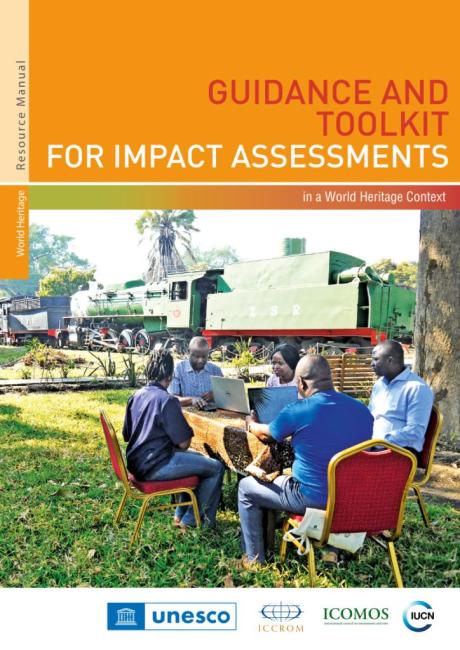
to another. Worksheet 8b complements Worksheet 8a but is more generic because it addresses other management processes that can be explored in more detail by other existing tools, such as the Guidance and Toolkit on Impact Les effets ou les conséquences d’un facteur sur les attributs du site du patrimoine, tant sur le plan de l’état de conservation des attributs que sur celui de leur capacité à transmettre les valeurs de patrimoine/conservation. L’impact représente la différence entre l’état environnemental futur suite à la mise en oeuvre d’un projet de développement et l’état futur en l’absence de ce projet. Il convient de noter qu’un impact implique l’existence d’une source d’impact (par exemple, les nuisances sonores d’un site industriel), d’un récepteur ou d’un attribut du bien du patrimoine mondial qui en est affecté (par exemple, les habitants vivant à proximité) et d’un support ou parcours par lequel l’intervention ou le matériau préjudiciable peut atteindre le récepteur (par exemple, l’air). Les impacts peuvent être positifs ou négatifs, ainsi que directs ou indirects, actuels ou potentiels, et provenir du site du patrimoine, de toute zone tampon existante et au-delà.Voir également : Impacts indirects Les impacts indirects sont des impacts sur l’environnement qui ne sont pas le résultat direct du projet, et qui sont souvent générés à distance ou à la suite d’un parcours complexe.
Ils sont parfois qualifiés d’impacts de deuxième ou de troisième niveau, ou d’impacts
secondaires.Voir également : Impact, impacts directs, impacts cumulatifs
, impacts indirects, impacts cumulatifs
Assessments
(2022) or the Managing Disaster A serious disruption of the functioning of a community or a society due to hazards interacting with conditions of exposure, vulnerability and capacity, causing widespread human, material, economic or environmental and heritage losses and impacts, which exceed the ability of the affected community or society to cope using its own resources. Risks for World Heritage (2010) (Box 5.6).

Worksheet 8b also addresses what can be called ‘organizational processes linked to administrative functions’, which enable managers to fulfil their responsibilities. Other processes, such as visitor management, communication, education and interpretation, and research, are also covered in Worksheet 8b, since conservation is also about ensuring that heritage plays a role in the lives of local communities and in enriching the experiences of visitors.

Tourism and visitor management can be a challenging element for many World Heritage properties, which requires specific and detailed processes, strategies and tools. For this reason, a dedicated programme has been developed under the direction of the UNESCO World Heritage Centre The UNESCO World Heritage Centre is a technical administrative body within UNESCO, established in 1992 and appointed by the Director-General of UNESCO. It acts as the Secretariat of the World Heritage Convention The Convention Concerning the Protection of the World Cultural and Natural Heritage is an international treaty adopted by the UN in 1972 that defines the kind of natural or cultural sites which can be considered for inscription on the World Heritage List for their Outstanding Universal Value for all humankind. Commonly known as the World Heritage Convention, it establishes how the international community as a whole is responsible for
the protection of such heritage and sets out the duties of States Parties in identifying potential sites that may be eligible for inscription onto the World Heritage List and their role in protecting and preserving them. By signing the Convention, each country pledges to conserve not only the sites situated on its territory that have been recognized as being of Outstanding Universal Value, but also to protect its national heritage and to be involved in international efforts to protect, conserve and promote the heritage of humankind.
, is the focal point and coordinator within UNESCO for all matters related to World Heritage, and ensures the day-to-day management of the Convention.
The main tasks of the World Heritage Centre are:the organization of the meetings of the General Assembly and the Committee;the implementation of decisions of the World Heritage Committee The main decision-making body of the World Heritage Convention The Convention Concerning the Protection of the World Cultural and Natural Heritage is an international treaty adopted by the UN in 1972 that defines the kind of natural or cultural sites which can be considered for inscription on the World Heritage List for their Outstanding Universal Value for all humankind. Commonly known as the World Heritage Convention, it establishes how the international community as a whole is responsible for
the protection of such heritage and sets out the duties of States Parties in identifying potential sites that may be eligible for inscription onto the World Heritage List and their role in protecting and preserving them. By signing the Convention, each country pledges to conserve not only the sites situated on its territory that have been recognized as being of Outstanding Universal Value, but also to protect its national heritage and to be involved in international efforts to protect, conserve and promote the heritage of humankind.
, it consists of representatives from 21 of the States Parties to the Convention elected for terms up to six years, but voluntarily reduced to 4 years to ensure equitable representation.The Committee meets at least once a year. It is one of the key implementing actors of the World Heritage Convention The Convention Concerning the Protection of the World Cultural and Natural Heritage is an international treaty adopted by the UN in 1972 that defines the kind of natural or cultural sites which can be considered for inscription on the World Heritage List for their Outstanding Universal Value for all humankind. Commonly known as the World Heritage Convention, it establishes how the international community as a whole is responsible for
the protection of such heritage and sets out the duties of States Parties in identifying potential sites that may be eligible for inscription onto the World Heritage List and their role in protecting and preserving them. By signing the Convention, each country pledges to conserve not only the sites situated on its territory that have been recognized as being of Outstanding Universal Value, but also to protect its national heritage and to be involved in international efforts to protect, conserve and promote the heritage of humankind.
, allocates financial assistance from the World Heritage Fund A trust fund established according to article 15 of the World Heritage Convention in conformity with the provisions of the Financial Regulations of UNESCO to assist in the protection of properties forming part of the World Cultural and Natural Heritage of Outstanding Universal Value.The Fund for the Protection of the World Natural and Cultural Heritage of Outstanding Universal Value, commonly known as World Heritage Fund, consists of compulsory and voluntary contributions made by States Parties to the Convention, and any other resources authorized by the Fund’s regulations. These include resources received from UNESCO, UN organisations, public or private bodies or individuals, funds raised for the benefit of the Fund, any other source acceptable to the World Heritage Committee. The Fund may be used for purposes defined by the World Heritage Committee and may include studies, provision of expertise and skilled labour, training activities, low-interest or interest- free loans or, in exceptional cases and for special reasons of non- repayable subsidies for the protection, conservation, presentation and rehabilitation of the World Natural and Cultural Heritage. and has the final say on whether a site shall be inscribed on the World Heritage List. It examines reports on the state of conservation of inscribed sites and decides on the inscription or removal of properties on the List of World Heritage in Danger.The main functions of the Convention, in cooperation with States Parties, are to:decide, on the basis of Tentative Lists and nominations submitted by States Parties, which cultural and natural properties of Outstanding Universal Value are to be inscribed on the World Heritage List and therefore protected under the Convention;examine the state of conservation of properties inscribed on the World Heritage List through processes of Reactive Monitoring and Periodic Reporting;decide which properties inscribed on the World Heritage List are to be inscribed
on, or removed from the List of World Heritage in Danger;decide whether a property should be deleted from the World Heritage List;define the procedure by which requests for International Assistance are to be
considered and carry out studies and consultations as necessary before coming to a decision;determine how the resources of the World Heritage Fund A trust fund established according to article 15 of the World Heritage Convention in conformity with the provisions of the Financial Regulations of UNESCO to assist in the protection of properties forming part of the World Cultural and Natural Heritage of Outstanding Universal Value.The Fund for the Protection of the World Natural and Cultural Heritage of Outstanding Universal Value, commonly known as World Heritage Fund, consists of compulsory and voluntary contributions made by States Parties to the Convention, and any other resources authorized by the Fund’s regulations. These include resources received from UNESCO, UN organisations, public or private bodies or individuals, funds raised for the benefit of the Fund, any other source acceptable to the World Heritage Committee. The Fund may be used for purposes defined by the World Heritage Committee and may include studies, provision of expertise and skilled labour, training activities, low-interest or interest- free loans or, in exceptional cases and for special reasons of non- repayable subsidies for the protection, conservation, presentation and rehabilitation of the World Natural and Cultural Heritage. can be used most advantageously to assist States Parties in the protection of their properties of Outstanding Universal Value;seek ways to increase the World Heritage Fund A trust fund established according to article 15 of the World Heritage Convention in conformity with the provisions of the Financial Regulations of UNESCO to assist in the protection of properties forming part of the World Cultural and Natural Heritage of Outstanding Universal Value.The Fund for the Protection of the World Natural and Cultural Heritage of Outstanding Universal Value, commonly known as World Heritage Fund, consists of compulsory and voluntary contributions made by States Parties to the Convention, and any other resources authorized by the Fund’s regulations. These include resources received from UNESCO, UN organisations, public or private bodies or individuals, funds raised for the benefit of the Fund, any other source acceptable to the World Heritage Committee. The Fund may be used for purposes defined by the World Heritage Committee and may include studies, provision of expertise and skilled labour, training activities, low-interest or interest- free loans or, in exceptional cases and for special reasons of non- repayable subsidies for the protection, conservation, presentation and rehabilitation of the World Natural and Cultural Heritage. ;submit a report on its activities every two years to the General Assembly of States
Parties and to the UNESCO General Conference;review and evaluate periodically the implementation of the Convention;revise and adopt the Operational Guidelines.
and resolutions of the General Assembly and reporting to them on their execution;
the receipt, registration, checking the completeness, archiving and transmission to the relevant Advisory Bodies of nominations to the World Heritage List;the coordination of studies and activities as part of the Global Strategy for a Representative, Balanced and Credible World Heritage List;the organization of Periodic Reporting and coordination of Reactive Monitoring;the coordination of International Assistance;the mobilization of extra-budgetary resources for the conservation and management of World Heritage properties;the assistance to States Parties in the implementation of the Committee›s
programmes and projects;the promotion of World Heritage and the Convention through the dissemination of
information to States Parties, the Advisory Bodies and the general public.
, and which provides detailed resources. Box 5.6 provides information on these resources, as well as other tools, methodologies and publications that can help you to explore the topics covered in Worksheet 8b in more detail.


Box 5.6. Tools, methodologies and publications to support further analysis of management processes


  • The Guidance and Toolkit for Impact Assessment in a World Heritage Context (UNESCO World Heritage Centre The UNESCO World Heritage Centre is a technical administrative body within UNESCO, established in 1992 and appointed by the Director-General of UNESCO. It acts as the Secretariat of the World Heritage Convention The Convention Concerning the Protection of the World Cultural and Natural Heritage is an international treaty adopted by the UN in 1972 that defines the kind of natural or cultural sites which can be considered for inscription on the World Heritage List for their Outstanding Universal Value for all humankind. Commonly known as the World Heritage Convention, it establishes how the international community as a whole is responsible for
    the protection of such heritage and sets out the duties of States Parties in identifying potential sites that may be eligible for inscription onto the World Heritage List and their role in protecting and preserving them. By signing the Convention, each country pledges to conserve not only the sites situated on its territory that have been recognized as being of Outstanding Universal Value, but also to protect its national heritage and to be involved in international efforts to protect, conserve and promote the heritage of humankind.
    , is the focal point and coordinator within UNESCO for all matters related to World Heritage, and ensures the day-to-day management of the Convention.
    The main tasks of the World Heritage Centre are:the organization of the meetings of the General Assembly and the Committee;the implementation of decisions of the World Heritage Committee The main decision-making body of the World Heritage Convention The Convention Concerning the Protection of the World Cultural and Natural Heritage is an international treaty adopted by the UN in 1972 that defines the kind of natural or cultural sites which can be considered for inscription on the World Heritage List for their Outstanding Universal Value for all humankind. Commonly known as the World Heritage Convention, it establishes how the international community as a whole is responsible for
    the protection of such heritage and sets out the duties of States Parties in identifying potential sites that may be eligible for inscription onto the World Heritage List and their role in protecting and preserving them. By signing the Convention, each country pledges to conserve not only the sites situated on its territory that have been recognized as being of Outstanding Universal Value, but also to protect its national heritage and to be involved in international efforts to protect, conserve and promote the heritage of humankind.
    , it consists of representatives from 21 of the States Parties to the Convention elected for terms up to six years, but voluntarily reduced to 4 years to ensure equitable representation.The Committee meets at least once a year. It is one of the key implementing actors of the World Heritage Convention The Convention Concerning the Protection of the World Cultural and Natural Heritage is an international treaty adopted by the UN in 1972 that defines the kind of natural or cultural sites which can be considered for inscription on the World Heritage List for their Outstanding Universal Value for all humankind. Commonly known as the World Heritage Convention, it establishes how the international community as a whole is responsible for
    the protection of such heritage and sets out the duties of States Parties in identifying potential sites that may be eligible for inscription onto the World Heritage List and their role in protecting and preserving them. By signing the Convention, each country pledges to conserve not only the sites situated on its territory that have been recognized as being of Outstanding Universal Value, but also to protect its national heritage and to be involved in international efforts to protect, conserve and promote the heritage of humankind.
    , allocates financial assistance from the World Heritage Fund A trust fund established according to article 15 of the World Heritage Convention in conformity with the provisions of the Financial Regulations of UNESCO to assist in the protection of properties forming part of the World Cultural and Natural Heritage of Outstanding Universal Value.The Fund for the Protection of the World Natural and Cultural Heritage of Outstanding Universal Value, commonly known as World Heritage Fund, consists of compulsory and voluntary contributions made by States Parties to the Convention, and any other resources authorized by the Fund’s regulations. These include resources received from UNESCO, UN organisations, public or private bodies or individuals, funds raised for the benefit of the Fund, any other source acceptable to the World Heritage Committee. The Fund may be used for purposes defined by the World Heritage Committee and may include studies, provision of expertise and skilled labour, training activities, low-interest or interest- free loans or, in exceptional cases and for special reasons of non- repayable subsidies for the protection, conservation, presentation and rehabilitation of the World Natural and Cultural Heritage. and has the final say on whether a site shall be inscribed on the World Heritage List. It examines reports on the state of conservation of inscribed sites and decides on the inscription or removal of properties on the List of World Heritage in Danger.The main functions of the Convention, in cooperation with States Parties, are to:decide, on the basis of Tentative Lists and nominations submitted by States Parties, which cultural and natural properties of Outstanding Universal Value are to be inscribed on the World Heritage List and therefore protected under the Convention;examine the state of conservation of properties inscribed on the World Heritage List through processes of Reactive Monitoring and Periodic Reporting;decide which properties inscribed on the World Heritage List are to be inscribed
    on, or removed from the List of World Heritage in Danger;decide whether a property should be deleted from the World Heritage List;define the procedure by which requests for International Assistance are to be
    considered and carry out studies and consultations as necessary before coming to a decision;determine how the resources of the World Heritage Fund A trust fund established according to article 15 of the World Heritage Convention in conformity with the provisions of the Financial Regulations of UNESCO to assist in the protection of properties forming part of the World Cultural and Natural Heritage of Outstanding Universal Value.The Fund for the Protection of the World Natural and Cultural Heritage of Outstanding Universal Value, commonly known as World Heritage Fund, consists of compulsory and voluntary contributions made by States Parties to the Convention, and any other resources authorized by the Fund’s regulations. These include resources received from UNESCO, UN organisations, public or private bodies or individuals, funds raised for the benefit of the Fund, any other source acceptable to the World Heritage Committee. The Fund may be used for purposes defined by the World Heritage Committee and may include studies, provision of expertise and skilled labour, training activities, low-interest or interest- free loans or, in exceptional cases and for special reasons of non- repayable subsidies for the protection, conservation, presentation and rehabilitation of the World Natural and Cultural Heritage. can be used most advantageously to assist States Parties in the protection of their properties of Outstanding Universal Value;seek ways to increase the World Heritage Fund A trust fund established according to article 15 of the World Heritage Convention in conformity with the provisions of the Financial Regulations of UNESCO to assist in the protection of properties forming part of the World Cultural and Natural Heritage of Outstanding Universal Value.The Fund for the Protection of the World Natural and Cultural Heritage of Outstanding Universal Value, commonly known as World Heritage Fund, consists of compulsory and voluntary contributions made by States Parties to the Convention, and any other resources authorized by the Fund’s regulations. These include resources received from UNESCO, UN organisations, public or private bodies or individuals, funds raised for the benefit of the Fund, any other source acceptable to the World Heritage Committee. The Fund may be used for purposes defined by the World Heritage Committee and may include studies, provision of expertise and skilled labour, training activities, low-interest or interest- free loans or, in exceptional cases and for special reasons of non- repayable subsidies for the protection, conservation, presentation and rehabilitation of the World Natural and Cultural Heritage. ;submit a report on its activities every two years to the General Assembly of States
    Parties and to the UNESCO General Conference;review and evaluate periodically the implementation of the Convention;revise and adopt the Operational Guidelines.
    and resolutions of the General Assembly and reporting to them on their execution;
    the receipt, registration, checking the completeness, archiving and transmission to the relevant Advisory Bodies of nominations to the World Heritage List;the coordination of studies and activities as part of the Global Strategy for a Representative, Balanced and Credible World Heritage List;the organization of Periodic Reporting and coordination of Reactive Monitoring;the coordination of International Assistance;the mobilization of extra-budgetary resources for the conservation and management of World Heritage properties;the assistance to States Parties in the implementation of the Committee›s
    programmes and projects;the promotion of World Heritage and the Convention through the dissemination of
    information to States Parties, the Advisory Bodies and the general public.
    ,
    2022). This revised Guidance helps States Parties The countries that have ratified the World Heritage Convention The Convention Concerning the Protection of the World Cultural and Natural Heritage is an international treaty adopted by the UN in 1972 that defines the kind of natural or cultural sites which can be considered for inscription on the World Heritage List for their Outstanding Universal Value for all humankind. Commonly known as the World Heritage Convention, it establishes how the international community as a whole is responsible for
    the protection of such heritage and sets out the duties of States Parties in identifying potential sites that may be eligible for inscription onto the World Heritage List and their role in protecting and preserving them. By signing the Convention, each country pledges to conserve not only the sites situated on its territory that have been recognized as being of Outstanding Universal Value, but also to protect its national heritage and to be involved in international efforts to protect, conserve and promote the heritage of humankind.
    . By ratifying the Convention, States Parties commit themselves to undertake actions directed to:
    identifying, knowing, protecting and promoting the cultural and natural heritage located on their territories;adopting a general policy aiming to give their cultural and natural heritage a function in the life of the community;integrating the protection of that heritage into comprehensive planning programmes;setting up services for the protection, conservation and presentation of the cultural and natural heritage with an appropriate staff and possessing the means to carry out their functions;developing scientific and technical studies and research to counteract the dangers that threaten their cultural or natural heritage;taking the appropriate legal, scientific, technical, administrative and financial measures necessary for the identification, protection, conservation, presentation and rehabilitation of their heritage;
    • fostering the establishment or development of national or regional centres for
    training in the protection, conservation and presentation of their cultural and
    natural heritage;encouraging scientific research in this field.As members of the international community and while respecting the sovereignty of each State, States Parties to the Convention also recognize their duty to collectively contribute to the protection of the properties inscribed on the World Heritage List. Therefore, upon request by other States Parties to the World Heritage Convention The Convention Concerning the Protection of the World Cultural and Natural Heritage is an international treaty adopted by the UN in 1972 that defines the kind of natural or cultural sites which can be considered for inscription on the World Heritage List for their Outstanding Universal Value for all humankind. Commonly known as the World Heritage Convention, it establishes how the international community as a whole is responsible for
    the protection of such heritage and sets out the duties of States Parties in identifying potential sites that may be eligible for inscription onto the World Heritage List and their role in protecting and preserving them. By signing the Convention, each country pledges to conserve not only the sites situated on its territory that have been recognized as being of Outstanding Universal Value, but also to protect its national heritage and to be involved in international efforts to protect, conserve and promote the heritage of humankind.
    , they may provide their help in the identification, protection, conservation and presentation of the cultural and natural heritage located on the territory of those countries. Each State Party to the World Heritage Convention The Convention Concerning the Protection of the World Cultural and Natural Heritage is an international treaty adopted by the UN in 1972 that defines the kind of natural or cultural sites which can be considered for inscription on the World Heritage List for their Outstanding Universal Value for all humankind. Commonly known as the World Heritage Convention, it establishes how the international community as a whole is responsible for
    the protection of such heritage and sets out the duties of States Parties in identifying potential sites that may be eligible for inscription onto the World Heritage List and their role in protecting and preserving them. By signing the Convention, each country pledges to conserve not only the sites situated on its territory that have been recognized as being of Outstanding Universal Value, but also to protect its national heritage and to be involved in international efforts to protect, conserve and promote the heritage of humankind.
    undertakes not to take any deliberate measures that might damage, directly or indirectly, the cultural and natural heritage situated on the territory of other States Parties to the Convention.
    States Parties identify and nominate sites on their national territory to be considered for inscription on the World Heritage List. Once inscribed, States Parties assume the primary responsibility for the protection of those properties and to do all they can to achieve this purpose. They are also requested to report periodically on the state of conservation of those properties as well as on the provisions they have adopted to implement the Convention.
    , heritage managers, decision-makers, project proponents and communities in situations where a transformative action is proposed or undertaken in or around a World Heritage property A cultural, natural or mixed heritage place inscribed on the World Heritage List and therefore considered to be of OUV for humanity. The responsibility for nominating a property to the World Heritage List falls upon the State(s) Party(ies) where it is located. The World Heritage Committee decides whether a property should be inscribed on the World Heritage List, taking into account the technical recommendations of the Advisory Bodies following rigorous evaluation processes.
    When used as a general term, World Heritage refers to all the natural, cultural and mixed properties inscribed on the World Heritage List.
    – in particular those related to development projects or resource extraction – which may affect its Outstanding Universal Value. It explains the clear process for undertaking Environmental and Social Impact Assessment and/or Heritage Impact Assessment A Heritage Impact Assessment (HIA) is an activity-specific or project-level assessment that is focused on identifying and assessing the potential effect of a proposed activity or project on the heritage/conservation values of a natural and/or cultural heritage place. In the context of World Heritage properties, a Heritage Impact Assessment should be particularly focused on identifying and assessing negative and positive impacts on the attributes which convey the Outstanding Universal Value of the World Heritage property A cultural, natural or mixed heritage place inscribed on the World Heritage List and therefore considered to be of OUV for humanity. The responsibility for nominating a property to the World Heritage List falls upon the State(s) Party(ies) where it is located. The World Heritage Committee decides whether a property should be inscribed on the World Heritage List, taking into account the technical recommendations of the Advisory Bodies following rigorous evaluation processes.
    When used as a general term, World Heritage refers to all the natural, cultural and mixed properties inscribed on the World Heritage List.
    .
     
    , together with tools and checklists for application.
  • The Resource Manual on Managing Disaster A serious disruption of the functioning of a community or a society due to hazards interacting with conditions of exposure, vulnerability and capacity, causing widespread human, material, economic or environmental and heritage losses and impacts, which exceed the ability of the affected community or society to cope using its own resources. Risks for World Heritage (UNESCO World Heritage Centre The UNESCO World Heritage Centre is a technical administrative body within UNESCO, established in 1992 and appointed by the Director-General of UNESCO. It acts as the Secretariat of the World Heritage Convention The Convention Concerning the Protection of the World Cultural and Natural Heritage is an international treaty adopted by the UN in 1972 that defines the kind of natural or cultural sites which can be considered for inscription on the World Heritage List for their Outstanding Universal Value for all humankind. Commonly known as the World Heritage Convention, it establishes how the international community as a whole is responsible for
    the protection of such heritage and sets out the duties of States Parties in identifying potential sites that may be eligible for inscription onto the World Heritage List and their role in protecting and preserving them. By signing the Convention, each country pledges to conserve not only the sites situated on its territory that have been recognized as being of Outstanding Universal Value, but also to protect its national heritage and to be involved in international efforts to protect, conserve and promote the heritage of humankind.
    , is the focal point and coordinator within UNESCO for all matters related to World Heritage, and ensures the day-to-day management of the Convention.
    The main tasks of the World Heritage Centre are:the organization of the meetings of the General Assembly and the Committee;the implementation of decisions of the World Heritage Committee The main decision-making body of the World Heritage Convention The Convention Concerning the Protection of the World Cultural and Natural Heritage is an international treaty adopted by the UN in 1972 that defines the kind of natural or cultural sites which can be considered for inscription on the World Heritage List for their Outstanding Universal Value for all humankind. Commonly known as the World Heritage Convention, it establishes how the international community as a whole is responsible for
    the protection of such heritage and sets out the duties of States Parties in identifying potential sites that may be eligible for inscription onto the World Heritage List and their role in protecting and preserving them. By signing the Convention, each country pledges to conserve not only the sites situated on its territory that have been recognized as being of Outstanding Universal Value, but also to protect its national heritage and to be involved in international efforts to protect, conserve and promote the heritage of humankind.
    , it consists of representatives from 21 of the States Parties to the Convention elected for terms up to six years, but voluntarily reduced to 4 years to ensure equitable representation.The Committee meets at least once a year. It is one of the key implementing actors of the World Heritage Convention The Convention Concerning the Protection of the World Cultural and Natural Heritage is an international treaty adopted by the UN in 1972 that defines the kind of natural or cultural sites which can be considered for inscription on the World Heritage List for their Outstanding Universal Value for all humankind. Commonly known as the World Heritage Convention, it establishes how the international community as a whole is responsible for
    the protection of such heritage and sets out the duties of States Parties in identifying potential sites that may be eligible for inscription onto the World Heritage List and their role in protecting and preserving them. By signing the Convention, each country pledges to conserve not only the sites situated on its territory that have been recognized as being of Outstanding Universal Value, but also to protect its national heritage and to be involved in international efforts to protect, conserve and promote the heritage of humankind.
    , allocates financial assistance from the World Heritage Fund A trust fund established according to article 15 of the World Heritage Convention in conformity with the provisions of the Financial Regulations of UNESCO to assist in the protection of properties forming part of the World Cultural and Natural Heritage of Outstanding Universal Value.The Fund for the Protection of the World Natural and Cultural Heritage of Outstanding Universal Value, commonly known as World Heritage Fund, consists of compulsory and voluntary contributions made by States Parties to the Convention, and any other resources authorized by the Fund’s regulations. These include resources received from UNESCO, UN organisations, public or private bodies or individuals, funds raised for the benefit of the Fund, any other source acceptable to the World Heritage Committee. The Fund may be used for purposes defined by the World Heritage Committee and may include studies, provision of expertise and skilled labour, training activities, low-interest or interest- free loans or, in exceptional cases and for special reasons of non- repayable subsidies for the protection, conservation, presentation and rehabilitation of the World Natural and Cultural Heritage. and has the final say on whether a site shall be inscribed on the World Heritage List. It examines reports on the state of conservation of inscribed sites and decides on the inscription or removal of properties on the List of World Heritage in Danger.The main functions of the Convention, in cooperation with States Parties, are to:decide, on the basis of Tentative Lists and nominations submitted by States Parties, which cultural and natural properties of Outstanding Universal Value are to be inscribed on the World Heritage List and therefore protected under the Convention;examine the state of conservation of properties inscribed on the World Heritage List through processes of Reactive Monitoring and Periodic Reporting;decide which properties inscribed on the World Heritage List are to be inscribed
    on, or removed from the List of World Heritage in Danger;decide whether a property should be deleted from the World Heritage List;define the procedure by which requests for International Assistance are to be
    considered and carry out studies and consultations as necessary before coming to a decision;determine how the resources of the World Heritage Fund A trust fund established according to article 15 of the World Heritage Convention in conformity with the provisions of the Financial Regulations of UNESCO to assist in the protection of properties forming part of the World Cultural and Natural Heritage of Outstanding Universal Value.The Fund for the Protection of the World Natural and Cultural Heritage of Outstanding Universal Value, commonly known as World Heritage Fund, consists of compulsory and voluntary contributions made by States Parties to the Convention, and any other resources authorized by the Fund’s regulations. These include resources received from UNESCO, UN organisations, public or private bodies or individuals, funds raised for the benefit of the Fund, any other source acceptable to the World Heritage Committee. The Fund may be used for purposes defined by the World Heritage Committee and may include studies, provision of expertise and skilled labour, training activities, low-interest or interest- free loans or, in exceptional cases and for special reasons of non- repayable subsidies for the protection, conservation, presentation and rehabilitation of the World Natural and Cultural Heritage. can be used most advantageously to assist States Parties in the protection of their properties of Outstanding Universal Value;seek ways to increase the World Heritage Fund A trust fund established according to article 15 of the World Heritage Convention in conformity with the provisions of the Financial Regulations of UNESCO to assist in the protection of properties forming part of the World Cultural and Natural Heritage of Outstanding Universal Value.The Fund for the Protection of the World Natural and Cultural Heritage of Outstanding Universal Value, commonly known as World Heritage Fund, consists of compulsory and voluntary contributions made by States Parties to the Convention, and any other resources authorized by the Fund’s regulations. These include resources received from UNESCO, UN organisations, public or private bodies or individuals, funds raised for the benefit of the Fund, any other source acceptable to the World Heritage Committee. The Fund may be used for purposes defined by the World Heritage Committee and may include studies, provision of expertise and skilled labour, training activities, low-interest or interest- free loans or, in exceptional cases and for special reasons of non- repayable subsidies for the protection, conservation, presentation and rehabilitation of the World Natural and Cultural Heritage. ;submit a report on its activities every two years to the General Assembly of States
    Parties and to the UNESCO General Conference;review and evaluate periodically the implementation of the Convention;revise and adopt the Operational Guidelines.
    and resolutions of the General Assembly and reporting to them on their execution;
    the receipt, registration, checking the completeness, archiving and transmission to the relevant Advisory Bodies of nominations to the World Heritage List;the coordination of studies and activities as part of the Global Strategy for a Representative, Balanced and Credible World Heritage List;the organization of Periodic Reporting and coordination of Reactive Monitoring;the coordination of International Assistance;the mobilization of extra-budgetary resources for the conservation and management of World Heritage properties;the assistance to States Parties in the implementation of the Committee›s
    programmes and projects;the promotion of World Heritage and the Convention through the dissemination of
    information to States Parties, the Advisory Bodies and the general public.
    ,
    2010). This resource manual helps government and non-government organizations, managers and communities in identifying, assessing and reducing disaster risks to World Heritage properties resulting from natural or human induced hazards, including those resulting from climate change, which may affect the property’s Outstanding Universal Value. It provides methodologies and tools for risk assessment, mitigation, preparedness, response and recovery of World Heritage Properties, and also explains how these properties can contribute towards building disaster resilience.
  • The UNESCO World Heritage Sustainable Tourism Programme. Offering a range of tools on how to improve visitor management at World Heritage properties, this programme represents a new approach where planning for tourism and heritage management are integrated at a destination level. Its ‘How To’ Guides offer direction to managers to help identify solutions to common problems and maximise tourism benefits.
  • The range of publications and resources on the 2011 Historic Urban Landscape (HUL) Recommendation. The HUL approach addresses the inclusive management of heritage resources in dynamic and constantly changing environments, aimed at guiding change in historic cities. A vast diversity of resources is available from case studies, to videos and expert lectures to help managers to learn more about the approach and how best to implement it.
Worksheet 8b. Assessment of other important management processes