
3.5

Services and benefits – how heritage contributes to human well-being, quality of life and sustainable development

KEY POINTS
  • Every heritage place generates a range of services and benefits, which are advantages that flow to people from the existence and conservation of heritage. These can include economic benefits; provisioning ecosystem services such as firewood, fisheries, raw materials, climate regulation, regulation of water flows, and water purification, opportunities for recreation, and many more.
  • It is important to understand who benefits from heritage conservation and who bears its costs. Associated communities and those contributing to the protection of the heritage place are the ones who should gain the most benefits.
  • The World Heritage All inherited assets that people value for reasons beyond mere utility. Heritage is a broad concept and includes shared legacies from the natural environment, the creations of humans and the creations and interactions of humans and nature. It encompasses built, terrestrial, freshwater and marine environments, landscapes and seascapes, biodiversity, geodiversity, collections, cultural practices, knowledge, living experiences, etc. Sustainable Development Policy Principles of action adopted or proposed by organizations, businesses, NGOs, civil society organizations or individuals. shows that the conservation of World Heritage All inherited assets that people value for reasons beyond mere utility. Heritage is a broad concept and includes shared legacies from the natural environment, the creations of humans and the creations and interactions of humans and nature. It encompasses built, terrestrial, freshwater and marine environments, landscapes and seascapes, biodiversity, geodiversity, collections, cultural practices, knowledge, living experiences, etc. properties contributes to the human well-being of local and global communities so that wider societal changes, objectives and priorities must be applied to heritage management.
  • When managed well, heritage places can continuously benefit society in many different ways, including contributing to sustainable development and to global agendas such as climate action, biodiversity and cultural diversity.
3.5.1
How to understand the services and benefits generated by heritage places

Services and benefits refer to the advantages that flow to people and communities from the existence and conservation of heritage. Each heritage place will generate a diverse range of services and benefits.

The idea of caring for a place is central to heritage and goes beyond utilitarian reasons, as heritage places hold collective meaning for communities, nations or even humanity as a whole, in the case of World Heritage. Therefore, the primary goal of heritage conservation is to ensure that those places continue to exist and that their heritage values are maintained. When managed well, heritage places can continuously benefit society in many different ways, including by contributing to sustainable development.

When discussing the benefits generated by the conservation of heritage places, it is important to distinguish ‘benefits’ from ‘heritage values’. Heritage values The qualities for which a heritage place is considered important to be protected for present and future generations. Values In the context of heritage conservation, values are the qualities for which a heritage place is considered important to be protected for present and future generations. Values are determined by a range of social and cultural factors. What is valued by one section of society may not be valued by another, or may be valued for different reasons, or one generation may value it but it may not be valued by the next generation. Heritage places normally have a range of values: aesthetic, architectural, biological, ecological, historic, geological, social, spiritual, etc. These values are embodied in and conveyed by the attributes of the heritage place. are determined by a range of social and cultural factors. What is valued by one section of society may not be valued by another, or may be valued for different reasons, or one generation may value it but it may not be valued by the next. Heritage places may have a range of values: aesthetic, architectural, biological, ecological, historic, geological, social, spiritual, etc. These values are embodied in and conveyed by the attributes of the heritage place. refer to qualities and meanings – why people consider a heritage place to be important and wish to protect it. For example, economic profits gained from increased tourism to a World Heritage property A cultural, natural or mixed heritage place inscribed on the World Heritage List and therefore considered to be of OUV for humanity. The responsibility for nominating a property to the World Heritage List falls upon the State(s) Party(ies) where it is located. The World Heritage Committee decides whether a property should be inscribed on the World Heritage List, taking into account the technical recommendations of the Advisory Bodies following rigorous evaluation processes.
When used as a general term, World Heritage refers to all the natural, cultural and mixed properties inscribed on the World Heritage List.
are not recognized as a heritage value but rather as a benefit derived from the conservation of the heritage place. To avoid confusion, the general term ‘benefits’ is preferred and used to refer to the advantages that flow to people and communities from the existence and conservation of places but beyond the reasons why they value it as their heritage.

This distinction is especially important when managing World Heritage properties. It is the maintenance of the heritage values of a place and conservation of its attributes that is the priority, as only in this way will the place continue to generate services and benefits to local communities and wider society. Therefore, when managing heritage places it is important to ensure that the provision of services and benefits does not take precedence over the protection of the heritage values. Instead, the heritage values and benefits should be understood as complementary. As such, the management system for the heritage place should be designed to ensure both, in ways that are mutually supportive and without compromising Outstanding Universal Value (OUV).

When thinking about benefits, it could be useful to identify those that nature provides to humans. Ecosystem services Ecosystem services are processes by which the environment produces benefits useful to people, akin to economic services. They include provision of clean water and air, pollination of crops, mitigation of environmental hazards, pest and disease control and carbon sequestration. include not only firewood, fisheries, raw materials, natural medicines and water but also climate regulation, water purification and soil stabilization, as well as opportunities for recreation, among others. The term ‘ecosystem services’ is used to describe the services that are produced as a result of ecosystem processes and functions such as soil formation, nutrient cycling and primary production, which then flow to people in the form of benefits or goods, supporting human well-being.

Many World Heritage properties, cultural and natural, but especially those protecting large intact natural systems, also have a significant role to play in combating climate change and the closely related issues of species extinction and biodiversity loss. Their contribution to human development agendas, such as the Sustainable Development Goals, must also be recognized.
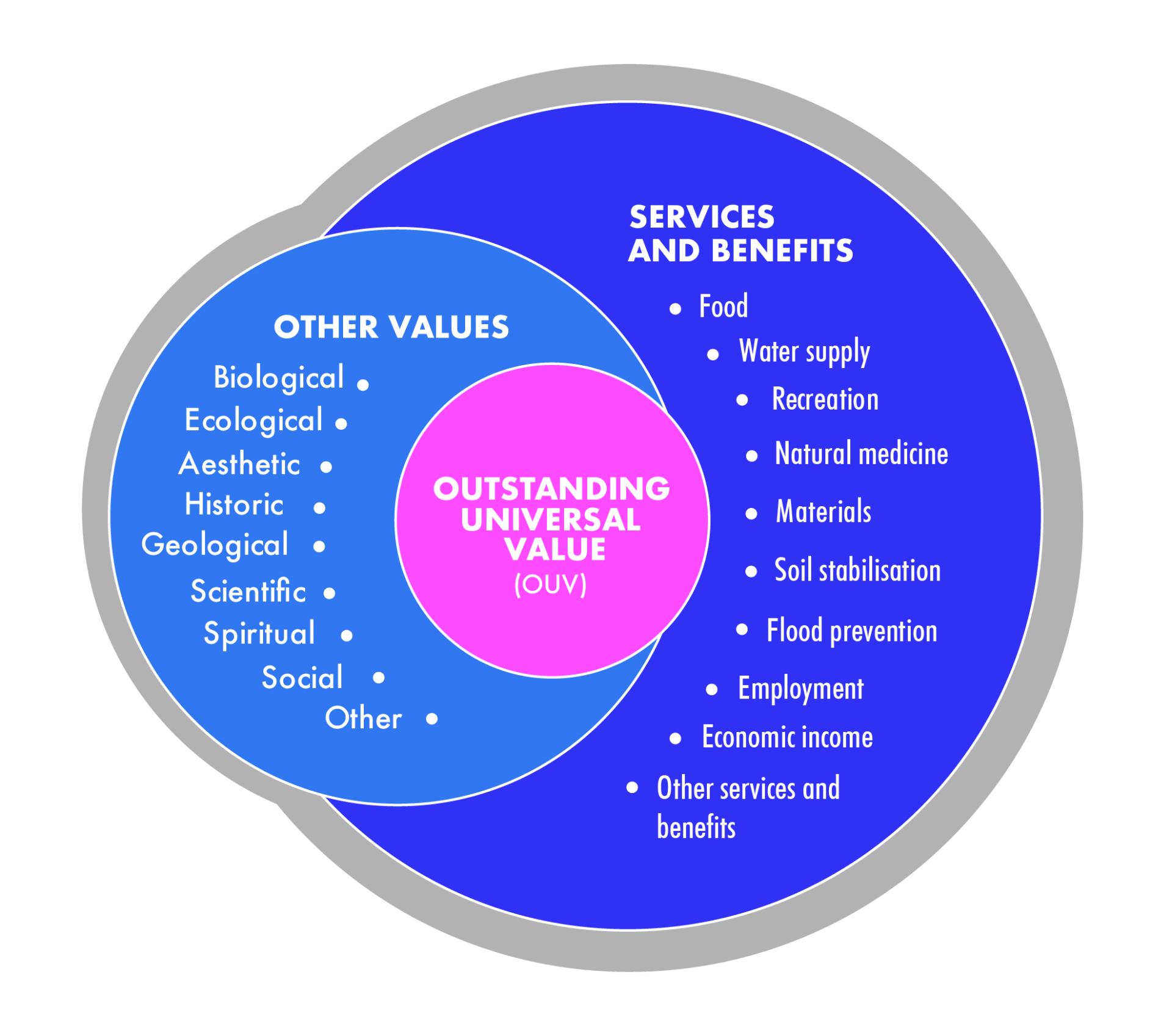
Figure 3.8 Heritage values The qualities for which a heritage place is considered important to be protected for present and future generations. Values In the context of heritage conservation, values are the qualities for which a heritage place is considered important to be protected for present and future generations. Values are determined by a range of social and cultural factors. What is valued by one section of society may not be valued by another, or may be valued for different reasons, or one generation may value it but it may not be valued by the next generation. Heritage places normally have a range of values: aesthetic, architectural, biological, ecological, historic, geological, social, spiritual, etc. These values are embodied in and conveyed by the attributes of the heritage place. are determined by a range of social and cultural factors. What is valued by one section of society may not be valued by another, or may be valued for different reasons, or one generation may value it but it may not be valued by the next. Heritage places may have a range of values: aesthetic, architectural, biological, ecological, historic, geological, social, spiritual, etc. These values are embodied in and conveyed by the attributes of the heritage place. and benefits should be understood as complementary and the management system for the heritage place should be designed to ensure both, in ways that are mutually supportive and without compromising OUV.

3.5.2
Who benefits from the heritage place?

When trying to understand the services and benefits that come from a heritage place, it is also critical to identify who benefits (or should benefit), who bears the costs and by how much. This is important in terms of respecting rights-holders and empowering them to ensure equitable governance of the heritage place. Highlighting benefits generated by heritage can also increase support for its protection. In this context, it is important to assess whether the associated communities and those contributing to the protection of the heritage place are the ones who draw the most benefits or whether these benefits are largely being enjoyed by other actors.

While there are various methods to identify the range of services and benefits deriving from heritage places, understanding the beneficiaries and who bears the costs is often more complex. One of the main difficulties is that the flow of benefits often extends beyond the heritage place. For instance, the provision of water derived from a protected forest can be used by communities far downstream. Likewise, the revenues from guided tours in an urban area may go to a tour operator located in another region or even another country. The provision of employment through management and tourism can be a source of improved economic revenue for local communities. The benefits considered for future generations or to other animal or plant species must also be considered.

Insights regarding beneficiaries are place-dependent, requiring additional data collection and consultation. Identifying and respectfully engaging rights-holders and stakeholders from the beginning in services and benefits assessment can help to create a detailed picture of the dynamics of costs and benefits at different levels. Sometimes, there are conflicting needs: one group’s benefit might come at another group’s cost. For example, recreational and visitor opportunities can come at the expense of reduced quality of life for residents. Or it may be necessary to reduce the provision of certain benefits in the short term in order to enhance them in the future, as in the case of the need to manage fish stocks notwithstanding the short-term impact on local fishing communities. In such cases, identifying and collaborating with affected groups and understanding the complex interactions between costs and benefits is the first step to resolving potential conflicts and achieving mutually advantageous outcomes.
As noted above, understanding who bears the costs of implementing certain conservation measures
is as important as who benefits from the protection of the heritage place, particularly when it may
affect people’s subsistence needs, beliefs and quality of life. In such cases, setting up compensation
mechanisms may be necessary.
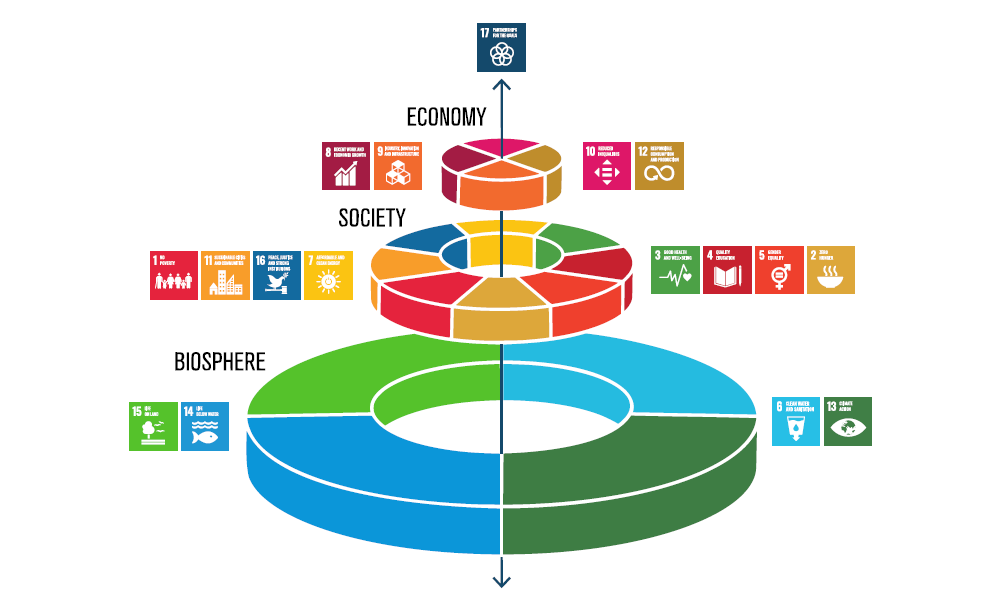
Figure 3.9 Here the Sustainable Development Goals have been positioned to highlight the ways in which economic and social targets (which include cultural heritage) are embedded within their environmental context (which includes natural heritage and cultural uses). Success is dependent on progress in all spheres and cannot be built on individual goals without consideration of their impacts on other targets, such as heritage. Source: Stockholm Resilience The capacity of social, economic and environmental systems associated with a heritage place to resist, absorb, accommodate, adapt to, transform and recover from the effects of a hazard in a timely and efficient manner, including through the preservation and restoration of its essential basic structures and functions through risk management. Centre.

Effectively engaging and collaborating with rights-holders and stakeholders, to understand their priorities, needs and their degree of dependence on the heritage place, is essential for making informed and balanced management decisions and to help avoid conflicts.

Economic benefits are often sought when nominating properties to the World Heritage All inherited assets that people value for reasons beyond mere utility. Heritage is a broad concept and includes shared legacies from the natural environment, the creations of humans and the creations and interactions of humans and nature. It encompasses built, terrestrial, freshwater and marine environments, landscapes and seascapes, biodiversity, geodiversity, collections, cultural practices, knowledge, living experiences, etc. List. Income directly and indirectly generated by uses of the heritage place can provide much-needed resources for conservation and improved living standards for local people (including through employment).
Studying the flows of economic benefits can be useful to fully understand these interrelationships. While economic considerations are likely to dominate appraisals of the services and benefits, a detailed understanding of how heritage places contribute to society at other levels is essential to gather support for conservation. For World Heritage All inherited assets that people value for reasons beyond mere utility. Heritage is a broad concept and includes shared legacies from the natural environment, the creations of humans and the creations and interactions of humans and nature. It encompasses built, terrestrial, freshwater and marine environments, landscapes and seascapes, biodiversity, geodiversity, collections, cultural practices, knowledge, living experiences, etc. properties, it is critical to balance, and if necessary reconcile, the expectations of local communities to access and share benefits with the responsibilities assumed by States Parties The countries that have ratified the World Heritage Convention The Convention Concerning the Protection of the World Cultural and Natural Heritage is an international treaty adopted by the UN in 1972 that defines the kind of natural or cultural sites which can be considered for inscription on the World Heritage List for their Outstanding Universal Value for all humankind. Commonly known as the World Heritage Convention, it establishes how the international community as a whole is responsible for
the protection of such heritage and sets out the duties of States Parties in identifying potential sites that may be eligible for inscription onto the World Heritage List and their role in protecting and preserving them. By signing the Convention, each country pledges to conserve not only the sites situated on its territory that have been recognized as being of Outstanding Universal Value, but also to protect its national heritage and to be involved in international efforts to protect, conserve and promote the heritage of humankind.
. By ratifying the Convention, States Parties commit themselves to undertake actions directed to:
identifying, knowing, protecting and promoting the cultural and natural heritage located on their territories;adopting a general policy aiming to give their cultural and natural heritage a function in the life of the community;integrating the protection of that heritage into comprehensive planning programmes;setting up services for the protection, conservation and presentation of the cultural and natural heritage with an appropriate staff and possessing the means to carry out their functions;developing scientific and technical studies and research to counteract the dangers that threaten their cultural or natural heritage;taking the appropriate legal, scientific, technical, administrative and financial measures necessary for the identification, protection, conservation, presentation and rehabilitation of their heritage;
• fostering the establishment or development of national or regional centres for
training in the protection, conservation and presentation of their cultural and
natural heritage;encouraging scientific research in this field.As members of the international community and while respecting the sovereignty of each State, States Parties to the Convention also recognize their duty to collectively contribute to the protection of the properties inscribed on the World Heritage List. Therefore, upon request by other States Parties to the World Heritage Convention The Convention Concerning the Protection of the World Cultural and Natural Heritage is an international treaty adopted by the UN in 1972 that defines the kind of natural or cultural sites which can be considered for inscription on the World Heritage List for their Outstanding Universal Value for all humankind. Commonly known as the World Heritage Convention, it establishes how the international community as a whole is responsible for
the protection of such heritage and sets out the duties of States Parties in identifying potential sites that may be eligible for inscription onto the World Heritage List and their role in protecting and preserving them. By signing the Convention, each country pledges to conserve not only the sites situated on its territory that have been recognized as being of Outstanding Universal Value, but also to protect its national heritage and to be involved in international efforts to protect, conserve and promote the heritage of humankind.
, they may provide their help in the identification, protection, conservation and presentation of the cultural and natural heritage located on the territory of those countries. Each State Party to the World Heritage Convention The Convention Concerning the Protection of the World Cultural and Natural Heritage is an international treaty adopted by the UN in 1972 that defines the kind of natural or cultural sites which can be considered for inscription on the World Heritage List for their Outstanding Universal Value for all humankind. Commonly known as the World Heritage Convention, it establishes how the international community as a whole is responsible for
the protection of such heritage and sets out the duties of States Parties in identifying potential sites that may be eligible for inscription onto the World Heritage List and their role in protecting and preserving them. By signing the Convention, each country pledges to conserve not only the sites situated on its territory that have been recognized as being of Outstanding Universal Value, but also to protect its national heritage and to be involved in international efforts to protect, conserve and promote the heritage of humankind.
undertakes not to take any deliberate measures that might damage, directly or indirectly, the cultural and natural heritage situated on the territory of other States Parties to the Convention.
States Parties identify and nominate sites on their national territory to be considered for inscription on the World Heritage List. Once inscribed, States Parties assume the primary responsibility for the protection of those properties and to do all they can to achieve this purpose. They are also requested to report periodically on the state of conservation of those properties as well as on the provisions they have adopted to implement the Convention.
to protect the heritage for the whole of humanity, including future generations.

3.5.3
How does World Heritage contribute to global conservation and human development agendas?

Recognition of urgent issues that are affecting the entire world, from poverty and increasing social inequalities to the climate and biodiversity loss emergencies, has led to a series of national and global responses related to conservation and sustainable development. The concept of sustainable development was described by the Brundtland Commission as development that meets the needs of the present without compromising the ability of future generations to meet their own needs. The United Nations is currently leading global efforts through its 2030 Agenda for Sustainable Development with its seventeen Sustainable Development Goals, and the World Heritage Committee The main decision-making body of the World Heritage Convention The Convention Concerning the Protection of the World Cultural and Natural Heritage is an international treaty adopted by the UN in 1972 that defines the kind of natural or cultural sites which can be considered for inscription on the World Heritage List for their Outstanding Universal Value for all humankind. Commonly known as the World Heritage Convention, it establishes how the international community as a whole is responsible for
the protection of such heritage and sets out the duties of States Parties in identifying potential sites that may be eligible for inscription onto the World Heritage List and their role in protecting and preserving them. By signing the Convention, each country pledges to conserve not only the sites situated on its territory that have been recognized as being of Outstanding Universal Value, but also to protect its national heritage and to be involved in international efforts to protect, conserve and promote the heritage of humankind.
, it consists of representatives from 21 of the States Parties to the Convention elected for terms up to six years, but voluntarily reduced to 4 years to ensure equitable representation.The Committee meets at least once a year. It is one of the key implementing actors of the World Heritage Convention The Convention Concerning the Protection of the World Cultural and Natural Heritage is an international treaty adopted by the UN in 1972 that defines the kind of natural or cultural sites which can be considered for inscription on the World Heritage List for their Outstanding Universal Value for all humankind. Commonly known as the World Heritage Convention, it establishes how the international community as a whole is responsible for
the protection of such heritage and sets out the duties of States Parties in identifying potential sites that may be eligible for inscription onto the World Heritage List and their role in protecting and preserving them. By signing the Convention, each country pledges to conserve not only the sites situated on its territory that have been recognized as being of Outstanding Universal Value, but also to protect its national heritage and to be involved in international efforts to protect, conserve and promote the heritage of humankind.
, allocates financial assistance from the World Heritage Fund A trust fund established according to article 15 of the World Heritage Convention in conformity with the provisions of the Financial Regulations of UNESCO to assist in the protection of properties forming part of the World Cultural and Natural Heritage of Outstanding Universal Value.The Fund for the Protection of the World Natural and Cultural Heritage of Outstanding Universal Value, commonly known as World Heritage Fund, consists of compulsory and voluntary contributions made by States Parties to the Convention, and any other resources authorized by the Fund’s regulations. These include resources received from UNESCO, UN organisations, public or private bodies or individuals, funds raised for the benefit of the Fund, any other source acceptable to the World Heritage Committee. The Fund may be used for purposes defined by the World Heritage Committee and may include studies, provision of expertise and skilled labour, training activities, low-interest or interest- free loans or, in exceptional cases and for special reasons of non- repayable subsidies for the protection, conservation, presentation and rehabilitation of the World Natural and Cultural Heritage. and has the final say on whether a site shall be inscribed on the World Heritage List. It examines reports on the state of conservation of inscribed sites and decides on the inscription or removal of properties on the List of World Heritage in Danger.The main functions of the Convention, in cooperation with States Parties, are to:decide, on the basis of Tentative Lists and nominations submitted by States Parties, which cultural and natural properties of Outstanding Universal Value are to be inscribed on the World Heritage List and therefore protected under the Convention;examine the state of conservation of properties inscribed on the World Heritage List through processes of Reactive Monitoring and Periodic Reporting;decide which properties inscribed on the World Heritage List are to be inscribed
on, or removed from the List of World Heritage in Danger;decide whether a property should be deleted from the World Heritage List;define the procedure by which requests for International Assistance are to be
considered and carry out studies and consultations as necessary before coming to a decision;determine how the resources of the World Heritage Fund A trust fund established according to article 15 of the World Heritage Convention in conformity with the provisions of the Financial Regulations of UNESCO to assist in the protection of properties forming part of the World Cultural and Natural Heritage of Outstanding Universal Value.The Fund for the Protection of the World Natural and Cultural Heritage of Outstanding Universal Value, commonly known as World Heritage Fund, consists of compulsory and voluntary contributions made by States Parties to the Convention, and any other resources authorized by the Fund’s regulations. These include resources received from UNESCO, UN organisations, public or private bodies or individuals, funds raised for the benefit of the Fund, any other source acceptable to the World Heritage Committee. The Fund may be used for purposes defined by the World Heritage Committee and may include studies, provision of expertise and skilled labour, training activities, low-interest or interest- free loans or, in exceptional cases and for special reasons of non- repayable subsidies for the protection, conservation, presentation and rehabilitation of the World Natural and Cultural Heritage. can be used most advantageously to assist States Parties in the protection of their properties of Outstanding Universal Value;seek ways to increase the World Heritage Fund A trust fund established according to article 15 of the World Heritage Convention in conformity with the provisions of the Financial Regulations of UNESCO to assist in the protection of properties forming part of the World Cultural and Natural Heritage of Outstanding Universal Value.The Fund for the Protection of the World Natural and Cultural Heritage of Outstanding Universal Value, commonly known as World Heritage Fund, consists of compulsory and voluntary contributions made by States Parties to the Convention, and any other resources authorized by the Fund’s regulations. These include resources received from UNESCO, UN organisations, public or private bodies or individuals, funds raised for the benefit of the Fund, any other source acceptable to the World Heritage Committee. The Fund may be used for purposes defined by the World Heritage Committee and may include studies, provision of expertise and skilled labour, training activities, low-interest or interest- free loans or, in exceptional cases and for special reasons of non- repayable subsidies for the protection, conservation, presentation and rehabilitation of the World Natural and Cultural Heritage. ;submit a report on its activities every two years to the General Assembly of States
Parties and to the UNESCO General Conference;review and evaluate periodically the implementation of the Convention;revise and adopt the Operational Guidelines.
is committed to maximizing the contribution that conservation of World Heritage properties can make.

The World Heritage Sustainable Development Policy Principles of action adopted or proposed by organizations, businesses, NGOs, civil society organizations or individuals. adopted in 2015 makes clear that the conservation of World Heritage properties contributes to the human well-being of local and global communities in the following four dimensions:

  • Environmental sustainability, by recognizing how heritage places help protect biological and cultural diversity and provide essential ecosystem services and benefits, as well as strengthening resilience to natural hazards and climate change.
  • Inclusive social development, by promoting human rights, achieving gender equality and ensuring the involvement of Indigenous Peoples and local communities in the management of heritage places, as well as enhancing their quality of life.
  • Inclusive economic development, by ensuring employment, income and livelihoods, promoting economic investment, quality tourism and strengthening capacity-building, innovation and local entrepreneurship.
  • Fostering peace and security, by promoting understanding, dialogue and conflict resolution, ensuring conflict prevention, the protection of heritage during times of conflict and post-conflict recovery.

The policy shows that wider societal changes, objectives and priorities must be applied to heritage management. Management The combination of processes, activities and actions taken in relation to decision-making, planning, allocating resources, implementing and monitoring to protect a heritage place for present and future generations. of heritage places must draw on knowledge of the social, economic, cultural and environmental context of each place, recognizing that issues and goals at larger regional and national scales are often the underlying causes behind many of the factors affecting World Heritage properties. More often than not, factors that undermine the conservation of heritage are driven by policies promoting development that is unsustainable and fails to embrace an approach that allows heritage conservation and development to coexist.

World Heritage also has a uniquely important contribution to make to other global agendas. Studies have shown that heritage can, and should, play its part in responding to the climate crisis in a multitude of ways. For instance, natural World Heritage properties make a disproportionately large contribution to carbon storage and sequestration. World Heritage properties also conserve the world’s most significant glaciers, which are particularly threatened by climate change. Historic buildings are important sources of embodied carbon (all the carbon emissions from construction materials, the building process and use of internal fixtures/fittings as well as eventual demolition), thus there is vast potential for operational carbon savings through retrofitting and adaptation.

The Policy Document on Climate Action for World Heritage (2023) provides high-level guidance on enhancing the protection and conservation of World Heritage through the comprehensive adoption of climate action measures. It provides an outcome-oriented policy framework to develop goals and targets at national and heritage site levels, which can be reflected in updates to the various management processes and plans. The framework adopts a long-term vision, with four World Heritage Climate Action A policy, plan, programme or project. goals, that requests States Parties The countries that have ratified the World Heritage Convention The Convention Concerning the Protection of the World Cultural and Natural Heritage is an international treaty adopted by the UN in 1972 that defines the kind of natural or cultural sites which can be considered for inscription on the World Heritage List for their Outstanding Universal Value for all humankind. Commonly known as the World Heritage Convention, it establishes how the international community as a whole is responsible for
the protection of such heritage and sets out the duties of States Parties in identifying potential sites that may be eligible for inscription onto the World Heritage List and their role in protecting and preserving them. By signing the Convention, each country pledges to conserve not only the sites situated on its territory that have been recognized as being of Outstanding Universal Value, but also to protect its national heritage and to be involved in international efforts to protect, conserve and promote the heritage of humankind.
. By ratifying the Convention, States Parties commit themselves to undertake actions directed to:
identifying, knowing, protecting and promoting the cultural and natural heritage located on their territories;adopting a general policy aiming to give their cultural and natural heritage a function in the life of the community;integrating the protection of that heritage into comprehensive planning programmes;setting up services for the protection, conservation and presentation of the cultural and natural heritage with an appropriate staff and possessing the means to carry out their functions;developing scientific and technical studies and research to counteract the dangers that threaten their cultural or natural heritage;taking the appropriate legal, scientific, technical, administrative and financial measures necessary for the identification, protection, conservation, presentation and rehabilitation of their heritage;
• fostering the establishment or development of national or regional centres for
training in the protection, conservation and presentation of their cultural and
natural heritage;encouraging scientific research in this field.As members of the international community and while respecting the sovereignty of each State, States Parties to the Convention also recognize their duty to collectively contribute to the protection of the properties inscribed on the World Heritage List. Therefore, upon request by other States Parties to the World Heritage Convention The Convention Concerning the Protection of the World Cultural and Natural Heritage is an international treaty adopted by the UN in 1972 that defines the kind of natural or cultural sites which can be considered for inscription on the World Heritage List for their Outstanding Universal Value for all humankind. Commonly known as the World Heritage Convention, it establishes how the international community as a whole is responsible for
the protection of such heritage and sets out the duties of States Parties in identifying potential sites that may be eligible for inscription onto the World Heritage List and their role in protecting and preserving them. By signing the Convention, each country pledges to conserve not only the sites situated on its territory that have been recognized as being of Outstanding Universal Value, but also to protect its national heritage and to be involved in international efforts to protect, conserve and promote the heritage of humankind.
, they may provide their help in the identification, protection, conservation and presentation of the cultural and natural heritage located on the territory of those countries. Each State Party to the World Heritage Convention The Convention Concerning the Protection of the World Cultural and Natural Heritage is an international treaty adopted by the UN in 1972 that defines the kind of natural or cultural sites which can be considered for inscription on the World Heritage List for their Outstanding Universal Value for all humankind. Commonly known as the World Heritage Convention, it establishes how the international community as a whole is responsible for
the protection of such heritage and sets out the duties of States Parties in identifying potential sites that may be eligible for inscription onto the World Heritage List and their role in protecting and preserving them. By signing the Convention, each country pledges to conserve not only the sites situated on its territory that have been recognized as being of Outstanding Universal Value, but also to protect its national heritage and to be involved in international efforts to protect, conserve and promote the heritage of humankind.
undertakes not to take any deliberate measures that might damage, directly or indirectly, the cultural and natural heritage situated on the territory of other States Parties to the Convention.
States Parties identify and nominate sites on their national territory to be considered for inscription on the World Heritage List. Once inscribed, States Parties assume the primary responsibility for the protection of those properties and to do all they can to achieve this purpose. They are also requested to report periodically on the state of conservation of those properties as well as on the provisions they have adopted to implement the Convention.
to take a range of actions in areas such as assessing climate change risks, climate change adaptation, climate change mitigation, knowledge-sharing, capacity-building and awareness, and advocating for transformative change.

Lastly, the importance of heritage in safeguarding global biodiversity must be stressed. The role of the World Heritage Convention The Convention Concerning the Protection of the World Cultural and Natural Heritage is an international treaty adopted by the UN in 1972 that defines the kind of natural or cultural sites which can be considered for inscription on the World Heritage List for their Outstanding Universal Value for all humankind. Commonly known as the World Heritage Convention, it establishes how the international community as a whole is responsible for
the protection of such heritage and sets out the duties of States Parties in identifying potential sites that may be eligible for inscription onto the World Heritage List and their role in protecting and preserving them. By signing the Convention, each country pledges to conserve not only the sites situated on its territory that have been recognized as being of Outstanding Universal Value, but also to protect its national heritage and to be involved in international efforts to protect, conserve and promote the heritage of humankind.
has been highlighted within the 2022 Kunming–Montreal Global Biodiversity Framework. This is the globally agreed strategy to address the alarming loss of biodiversity by 2030 and it clearly positions the crucial role of heritage, heritage places and World Heritage (as one of the eight biodiversity-related Conventions) in addressing this global challenge. It is worth highlighting that the newly adopted Global Biodiversity The variability among living organisms from all sources, including, among other things, terrestrial, marine and other aquatic ecosystems and the ecological complexes of which they are a part, and diversity within species, between species and of ecosystems. Framework mentions ecosystem integrity and so, given that integrity is a key pillar of OUV, the World Heritage Convention The Convention Concerning the Protection of the World Cultural and Natural Heritage is an international treaty adopted by the UN in 1972 that defines the kind of natural or cultural sites which can be considered for inscription on the World Heritage List for their Outstanding Universal Value for all humankind. Commonly known as the World Heritage Convention, it establishes how the international community as a whole is responsible for
the protection of such heritage and sets out the duties of States Parties in identifying potential sites that may be eligible for inscription onto the World Heritage List and their role in protecting and preserving them. By signing the Convention, each country pledges to conserve not only the sites situated on its territory that have been recognized as being of Outstanding Universal Value, but also to protect its national heritage and to be involved in international efforts to protect, conserve and promote the heritage of humankind.
is well situated to respond to this key global mandate. Many World Heritage properties cover huge areas of land, freshwater and sea, which can showcase the fact that well-managed conserved areas at scale can contribute significantly to global efforts to combat climate change.

REFLECTION QUESTIONS
  • Do management objectives address how the property can contribute to other societal goals, such as sustainable development, community wellbeing and the generation of services and benefits?
  • Have the main benefits generated from the conservation of World Heritage property A cultural, natural or mixed heritage place inscribed on the World Heritage List and therefore considered to be of OUV for humanity. The responsibility for nominating a property to the World Heritage List falls upon the State(s) Party(ies) where it is located. The World Heritage Committee decides whether a property should be inscribed on the World Heritage List, taking into account the technical recommendations of the Advisory Bodies following rigorous evaluation processes.
    When used as a general term, World Heritage refers to all the natural, cultural and mixed properties inscribed on the World Heritage List.
    been identified?
  • Who currently benefits from these?
  • Who should be benefiting?
  • Who bears the main costs of conserving the property and how is that balanced with who benefits from it?
  • How can development be truly sustainable and reconciled with heritage conservation to ensure they both coexist, at the level of the property?
  • What measures are in place to recognize the contributions the heritage place makes to the local economy?
ADDITIONAL RESOURCES
  • UNESCO (2015). Policy Document for the Integration of a Sustainable Development Perspective into the Processes of the World Heritage Convention.
  • UNESCO (2023). Policy Document on Climate Action for World Heritage.
  • ICOMOS The International Council on Monuments and Sites (ICOMOS) is an international nongovernmental organization bringing together cultural heritage professionals from across the world. Its headquarters are located in Charenton le Pont, near Paris, France.ICOMOS was founded in 1965 after the adoption of the Venice Charter, in order to promote the doctrine and the techniques of conservation. It advises the World Heritage Committee The main decision-making body of the World Heritage Convention The Convention Concerning the Protection of the World Cultural and Natural Heritage is an international treaty adopted by the UN in 1972 that defines the kind of natural or cultural sites which can be considered for inscription on the World Heritage List for their Outstanding Universal Value for all humankind. Commonly known as the World Heritage Convention, it establishes how the international community as a whole is responsible for
    the protection of such heritage and sets out the duties of States Parties in identifying potential sites that may be eligible for inscription onto the World Heritage List and their role in protecting and preserving them. By signing the Convention, each country pledges to conserve not only the sites situated on its territory that have been recognized as being of Outstanding Universal Value, but also to protect its national heritage and to be involved in international efforts to protect, conserve and promote the heritage of humankind.
    , it consists of representatives from 21 of the States Parties to the Convention elected for terms up to six years, but voluntarily reduced to 4 years to ensure equitable representation.The Committee meets at least once a year. It is one of the key implementing actors of the World Heritage Convention The Convention Concerning the Protection of the World Cultural and Natural Heritage is an international treaty adopted by the UN in 1972 that defines the kind of natural or cultural sites which can be considered for inscription on the World Heritage List for their Outstanding Universal Value for all humankind. Commonly known as the World Heritage Convention, it establishes how the international community as a whole is responsible for
    the protection of such heritage and sets out the duties of States Parties in identifying potential sites that may be eligible for inscription onto the World Heritage List and their role in protecting and preserving them. By signing the Convention, each country pledges to conserve not only the sites situated on its territory that have been recognized as being of Outstanding Universal Value, but also to protect its national heritage and to be involved in international efforts to protect, conserve and promote the heritage of humankind.
    , allocates financial assistance from the World Heritage Fund A trust fund established according to article 15 of the World Heritage Convention in conformity with the provisions of the Financial Regulations of UNESCO to assist in the protection of properties forming part of the World Cultural and Natural Heritage of Outstanding Universal Value.The Fund for the Protection of the World Natural and Cultural Heritage of Outstanding Universal Value, commonly known as World Heritage Fund, consists of compulsory and voluntary contributions made by States Parties to the Convention, and any other resources authorized by the Fund’s regulations. These include resources received from UNESCO, UN organisations, public or private bodies or individuals, funds raised for the benefit of the Fund, any other source acceptable to the World Heritage Committee. The Fund may be used for purposes defined by the World Heritage Committee and may include studies, provision of expertise and skilled labour, training activities, low-interest or interest- free loans or, in exceptional cases and for special reasons of non- repayable subsidies for the protection, conservation, presentation and rehabilitation of the World Natural and Cultural Heritage. and has the final say on whether a site shall be inscribed on the World Heritage List. It examines reports on the state of conservation of inscribed sites and decides on the inscription or removal of properties on the List of World Heritage in Danger.The main functions of the Convention, in cooperation with States Parties, are to:decide, on the basis of Tentative Lists and nominations submitted by States Parties, which cultural and natural properties of Outstanding Universal Value are to be inscribed on the World Heritage List and therefore protected under the Convention;examine the state of conservation of properties inscribed on the World Heritage List through processes of Reactive Monitoring and Periodic Reporting;decide which properties inscribed on the World Heritage List are to be inscribed
    on, or removed from the List of World Heritage in Danger;decide whether a property should be deleted from the World Heritage List;define the procedure by which requests for International Assistance are to be
    considered and carry out studies and consultations as necessary before coming to a decision;determine how the resources of the World Heritage Fund A trust fund established according to article 15 of the World Heritage Convention in conformity with the provisions of the Financial Regulations of UNESCO to assist in the protection of properties forming part of the World Cultural and Natural Heritage of Outstanding Universal Value.The Fund for the Protection of the World Natural and Cultural Heritage of Outstanding Universal Value, commonly known as World Heritage Fund, consists of compulsory and voluntary contributions made by States Parties to the Convention, and any other resources authorized by the Fund’s regulations. These include resources received from UNESCO, UN organisations, public or private bodies or individuals, funds raised for the benefit of the Fund, any other source acceptable to the World Heritage Committee. The Fund may be used for purposes defined by the World Heritage Committee and may include studies, provision of expertise and skilled labour, training activities, low-interest or interest- free loans or, in exceptional cases and for special reasons of non- repayable subsidies for the protection, conservation, presentation and rehabilitation of the World Natural and Cultural Heritage. can be used most advantageously to assist States Parties in the protection of their properties of Outstanding Universal Value;seek ways to increase the World Heritage Fund A trust fund established according to article 15 of the World Heritage Convention in conformity with the provisions of the Financial Regulations of UNESCO to assist in the protection of properties forming part of the World Cultural and Natural Heritage of Outstanding Universal Value.The Fund for the Protection of the World Natural and Cultural Heritage of Outstanding Universal Value, commonly known as World Heritage Fund, consists of compulsory and voluntary contributions made by States Parties to the Convention, and any other resources authorized by the Fund’s regulations. These include resources received from UNESCO, UN organisations, public or private bodies or individuals, funds raised for the benefit of the Fund, any other source acceptable to the World Heritage Committee. The Fund may be used for purposes defined by the World Heritage Committee and may include studies, provision of expertise and skilled labour, training activities, low-interest or interest- free loans or, in exceptional cases and for special reasons of non- repayable subsidies for the protection, conservation, presentation and rehabilitation of the World Natural and Cultural Heritage. ;submit a report on its activities every two years to the General Assembly of States
    Parties and to the UNESCO General Conference;review and evaluate periodically the implementation of the Convention;revise and adopt the Operational Guidelines.
    by carrying out technical evaluations of properties with cultural values proposed for inscription on the World Heritage List, as well as with comparative studies, technical assistance and reporting on the state of conservation of inscribed properties. In order to tackle the numerous facets of immovable cultural heritage and to develop the necessary scientific knowledge and methodological approaches for its protection, conservation and interpretation, ICOMOS has established scientific international committees on various cultural heritage themes and issues. The international scientific committees are ICOMOS technical bodies. As such, they undertake research, develop conservation theory, guidelines and charters, foster training for better heritage conservation, promote international exchange of scientific information and carry out common projects.
    SDG Working Group (2021). Heritage and the Sustainable Development Goals: policy guidance for heritage and development actors, Paris (France), ICOMOS The International Council on Monuments and Sites (ICOMOS) is an international nongovernmental organization bringing together cultural heritage professionals from across the world. Its headquarters are located in Charenton le Pont, near Paris, France.ICOMOS was founded in 1965 after the adoption of the Venice Charter, in order to promote the doctrine and the techniques of conservation. It advises the World Heritage Committee The main decision-making body of the World Heritage Convention The Convention Concerning the Protection of the World Cultural and Natural Heritage is an international treaty adopted by the UN in 1972 that defines the kind of natural or cultural sites which can be considered for inscription on the World Heritage List for their Outstanding Universal Value for all humankind. Commonly known as the World Heritage Convention, it establishes how the international community as a whole is responsible for
    the protection of such heritage and sets out the duties of States Parties in identifying potential sites that may be eligible for inscription onto the World Heritage List and their role in protecting and preserving them. By signing the Convention, each country pledges to conserve not only the sites situated on its territory that have been recognized as being of Outstanding Universal Value, but also to protect its national heritage and to be involved in international efforts to protect, conserve and promote the heritage of humankind.
    , it consists of representatives from 21 of the States Parties to the Convention elected for terms up to six years, but voluntarily reduced to 4 years to ensure equitable representation.The Committee meets at least once a year. It is one of the key implementing actors of the World Heritage Convention The Convention Concerning the Protection of the World Cultural and Natural Heritage is an international treaty adopted by the UN in 1972 that defines the kind of natural or cultural sites which can be considered for inscription on the World Heritage List for their Outstanding Universal Value for all humankind. Commonly known as the World Heritage Convention, it establishes how the international community as a whole is responsible for
    the protection of such heritage and sets out the duties of States Parties in identifying potential sites that may be eligible for inscription onto the World Heritage List and their role in protecting and preserving them. By signing the Convention, each country pledges to conserve not only the sites situated on its territory that have been recognized as being of Outstanding Universal Value, but also to protect its national heritage and to be involved in international efforts to protect, conserve and promote the heritage of humankind.
    , allocates financial assistance from the World Heritage Fund A trust fund established according to article 15 of the World Heritage Convention in conformity with the provisions of the Financial Regulations of UNESCO to assist in the protection of properties forming part of the World Cultural and Natural Heritage of Outstanding Universal Value.The Fund for the Protection of the World Natural and Cultural Heritage of Outstanding Universal Value, commonly known as World Heritage Fund, consists of compulsory and voluntary contributions made by States Parties to the Convention, and any other resources authorized by the Fund’s regulations. These include resources received from UNESCO, UN organisations, public or private bodies or individuals, funds raised for the benefit of the Fund, any other source acceptable to the World Heritage Committee. The Fund may be used for purposes defined by the World Heritage Committee and may include studies, provision of expertise and skilled labour, training activities, low-interest or interest- free loans or, in exceptional cases and for special reasons of non- repayable subsidies for the protection, conservation, presentation and rehabilitation of the World Natural and Cultural Heritage. and has the final say on whether a site shall be inscribed on the World Heritage List. It examines reports on the state of conservation of inscribed sites and decides on the inscription or removal of properties on the List of World Heritage in Danger.The main functions of the Convention, in cooperation with States Parties, are to:decide, on the basis of Tentative Lists and nominations submitted by States Parties, which cultural and natural properties of Outstanding Universal Value are to be inscribed on the World Heritage List and therefore protected under the Convention;examine the state of conservation of properties inscribed on the World Heritage List through processes of Reactive Monitoring and Periodic Reporting;decide which properties inscribed on the World Heritage List are to be inscribed
    on, or removed from the List of World Heritage in Danger;decide whether a property should be deleted from the World Heritage List;define the procedure by which requests for International Assistance are to be
    considered and carry out studies and consultations as necessary before coming to a decision;determine how the resources of the World Heritage Fund A trust fund established according to article 15 of the World Heritage Convention in conformity with the provisions of the Financial Regulations of UNESCO to assist in the protection of properties forming part of the World Cultural and Natural Heritage of Outstanding Universal Value.The Fund for the Protection of the World Natural and Cultural Heritage of Outstanding Universal Value, commonly known as World Heritage Fund, consists of compulsory and voluntary contributions made by States Parties to the Convention, and any other resources authorized by the Fund’s regulations. These include resources received from UNESCO, UN organisations, public or private bodies or individuals, funds raised for the benefit of the Fund, any other source acceptable to the World Heritage Committee. The Fund may be used for purposes defined by the World Heritage Committee and may include studies, provision of expertise and skilled labour, training activities, low-interest or interest- free loans or, in exceptional cases and for special reasons of non- repayable subsidies for the protection, conservation, presentation and rehabilitation of the World Natural and Cultural Heritage. can be used most advantageously to assist States Parties in the protection of their properties of Outstanding Universal Value;seek ways to increase the World Heritage Fund A trust fund established according to article 15 of the World Heritage Convention in conformity with the provisions of the Financial Regulations of UNESCO to assist in the protection of properties forming part of the World Cultural and Natural Heritage of Outstanding Universal Value.The Fund for the Protection of the World Natural and Cultural Heritage of Outstanding Universal Value, commonly known as World Heritage Fund, consists of compulsory and voluntary contributions made by States Parties to the Convention, and any other resources authorized by the Fund’s regulations. These include resources received from UNESCO, UN organisations, public or private bodies or individuals, funds raised for the benefit of the Fund, any other source acceptable to the World Heritage Committee. The Fund may be used for purposes defined by the World Heritage Committee and may include studies, provision of expertise and skilled labour, training activities, low-interest or interest- free loans or, in exceptional cases and for special reasons of non- repayable subsidies for the protection, conservation, presentation and rehabilitation of the World Natural and Cultural Heritage. ;submit a report on its activities every two years to the General Assembly of States
    Parties and to the UNESCO General Conference;review and evaluate periodically the implementation of the Convention;revise and adopt the Operational Guidelines.
    by carrying out technical evaluations of properties with cultural values proposed for inscription on the World Heritage List, as well as with comparative studies, technical assistance and reporting on the state of conservation of inscribed properties. In order to tackle the numerous facets of immovable cultural heritage and to develop the necessary scientific knowledge and methodological approaches for its protection, conservation and interpretation, ICOMOS has established scientific international committees on various cultural heritage themes and issues. The international scientific committees are ICOMOS technical bodies. As such, they undertake research, develop conservation theory, guidelines and charters, foster training for better heritage conservation, promote international exchange of scientific information and carry out common projects.
    .
  • IUCN The International Union for Conservation of Nature (IUCN) is an international membership association composed of both government and civil society organizations. It harnesses the experience, resources and reach of its member organizations and the input of its experts to promote nature conservation and accelerate the transition to sustainable development. The headquarters of the IUCN Secretariat are located in Gland, Switzerland.Created in 1948, IUCN has evolved into the world’s largest environmental network: IUCN experts are organized into six commissions dedicated to species survival, environmental law, protected areas, social and economic policy, ecosystem management and education and communication. , BfN, UNEP, WCMC (2014). The benefits of natural World Heritage : identifying and assessing ecosystem services and benefits provided by the world’s most iconic natural places, Gland (Switzerland), IUCN The International Union for Conservation of Nature (IUCN) is an international membership association composed of both government and civil society organizations. It harnesses the experience, resources and reach of its member organizations and the input of its experts to promote nature conservation and accelerate the transition to sustainable development. The headquarters of the IUCN Secretariat are located in Gland, Switzerland.Created in 1948, IUCN has evolved into the world’s largest environmental network: IUCN experts are organized into six commissions dedicated to species survival, environmental law, protected areas, social and economic policy, ecosystem management and education and communication. .
  • PANORAMA Solutions for a Healthy Planet, Nature-Culture Solutions.
  • UNESCO World Heritage Canopy.