

3.4

Boundaries, buffer zones and the wider setting

KEY POINTS
  • Boundaries of World Heritage properties should be delineated to include all attributes that convey their OUV for their effective protection and management.
  • The size and delineation of the property’s boundary are determinant to ensuring its integrity.
  • Areas within the boundaries need to be equipped with legal protection measures that ensure the protection of the attributes.
  • Buffer zones are areas that provide an added layer of protection for the World Heritage property A cultural, natural or mixed heritage place inscribed on the World Heritage List and therefore considered to be of OUV for humanity. The responsibility for nominating a property to the World Heritage List falls upon the State(s) Party(ies) where it is located. The World Heritage Committee decides whether a property should be inscribed on the World Heritage List, taking into account the technical recommendations of the Advisory Bodies following rigorous evaluation processes.
    When used as a general term, World Heritage refers to all the natural, cultural and mixed properties inscribed on the World Heritage List.
    through complementary legal and/or customary restrictions placed on its use and development to prevent and minimize the impacts of factors originating from outside the heritage place.
  • The wider setting may relate to the property’s topography, natural and cultural environment, and elements such as infrastructure, land-use patterns, spatial organization and visual relationships. It may also include related social and cultural practices, economic processes and other intangible dimensions of heritage, such as perceptions and associations.
  • The concept of the wider setting empowers managers to consider factors affecting World Heritage properties regardless of their origin, and to work collaboratively with other actors on an integrated approach to planning and management to ensure that potential negative impacts are avoided, while enabling those that are positive.
3.4.1
How to delineate the boundaries of a heritage place?

The delineation of the boundary of a heritage place is an essential requirement for effective protection and management. It is important for the boundary to be drawn on a logical basis that is easy to understand on the ground, helping to identify the heritage place as a distinct entity. This section outlines the issues that should be taken into consideration when decisions are being made about the boundary of a World Heritage property A cultural, natural or mixed heritage place inscribed on the World Heritage List and therefore considered to be of OUV for humanity. The responsibility for nominating a property to the World Heritage List falls upon the State(s) Party(ies) where it is located. The World Heritage Committee decides whether a property should be inscribed on the World Heritage List, taking into account the technical recommendations of the Advisory Bodies following rigorous evaluation processes.
When used as a general term, World Heritage refers to all the natural, cultural and mixed properties inscribed on the World Heritage List.
. Often the boundary was delineated a long time ago and problems arise that can be resolved by revising it. For World Heritage, boundaries should be delineated to ensure that all attributes that convey their Outstanding Universal Value (OUV) are included within the property. Boundaries should be defined through participatory processes, with the full and effective participation of different rights-holders, thus ensuring respect for their rights, strengthening community support and preventing potential disputes about how the property is to be protected. Free, prior and informed consent of Indigenous Peoples must be obtained when the delineation of the boundary of property affects their territories.

In cases where a review shows that the boundary is no longer effective, and a boundary modification is needed to strengthen its integrity, the concerned State Party must make such a request through the official processes defined in the Operational Guidelines. A relatively simple process is established for a minor boundary modification, while a significant boundary modification must follow the procedure for a new nomination to ensure that new boundaries fully respond to and protect the OUV (see Operational Guidelines, paragraph 165).
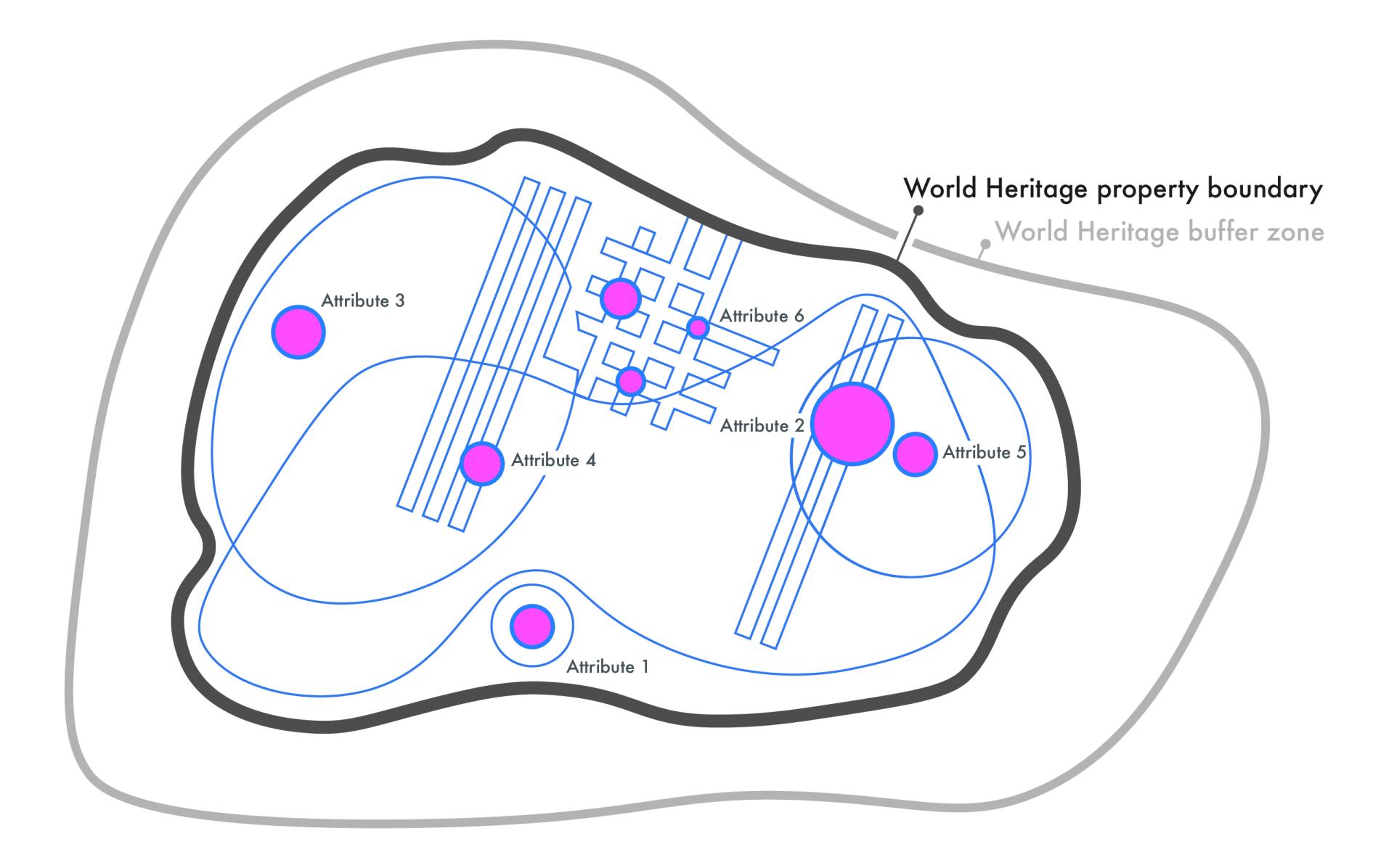
Figure 3.6 All the attributes conveying OUV should be included within the boundary of the property to guarantee its wholeness is encompassed, and the boundary must be equipped with legal and regulatory measures to ensure its protection.

In general, similar requirements apply when officially designating a heritage place for World Heritage or at a local, regional, national or other international level. However, three aspects need to be specifically considered when delineating the boundary of a World Heritage property A cultural, natural or mixed heritage place inscribed on the World Heritage List and therefore considered to be of OUV for humanity. The responsibility for nominating a property to the World Heritage List falls upon the State(s) Party(ies) where it is located. The World Heritage Committee decides whether a property should be inscribed on the World Heritage List, taking into account the technical recommendations of the Advisory Bodies following rigorous evaluation processes.
When used as a general term, World Heritage refers to all the natural, cultural and mixed properties inscribed on the World Heritage List.
:

  • All the attributes conveying OUV should be included within the boundary of the property;
  • The integrity of the property has to be considered in terms of its wholeness and this should include an analysis of threats;
  • The area within the boundary needs to be subject to legal and regulatory measures that ensure the long-term protection of the property.

Having a clear understanding of the values and attributes of a heritage place is a necessary starting point for establishing adequate boundaries. This will ensure that all the important attributes are included within the area that will be officially designated as heritage. Mapping the attributes of the property can help define its boundaries or assess if existing ones are adequate. Identifying and mapping physical elements and features offers a good start, after which considerations of where other types of attributes occur should be added. For processes and intangible attributes (such as practices or visual or functional relationships) it is necessary to understand where they take place and their spatial requirements. For example, it is important to include the water surface and underground catchment area for a cave or karst property or include a pilgrimage route with ritual stopping points within a sacred landscape.

When the setting is an integral part of the OUV of the World Heritage property A cultural, natural or mixed heritage place inscribed on the World Heritage List and therefore considered to be of OUV for humanity. The responsibility for nominating a property to the World Heritage List falls upon the State(s) Party(ies) where it is located. The World Heritage Committee decides whether a property should be inscribed on the World Heritage List, taking into account the technical recommendations of the Advisory Bodies following rigorous evaluation processes.
When used as a general term, World Heritage refers to all the natural, cultural and mixed properties inscribed on the World Heritage List.
, ideally it should also be included within its boundary. For example, the boundary of a military fort, where the strategic location is part of its heritage values, should include the surrounding mountain range. In some cases, it is also advisable to include areas where additional attributes that could reinforce the integrity of the place may be discovered through future research. For example, an archaeological site should include unexcavated areas when it is likely that further archaeological features could be discovered there. Some heritage places are dependent on specific visual relationships with their setting; in cases where it is impossible to include an entire viewshed within the property, because of its large scale, a well-designed buffer zone may provide additional protection. In the case of cities and settlements, taking the historic urban landscape approach, which recommends considering all the different layers of the city, with both tangible and intangible processes can be useful.

Boundaries need to include whole attributes. A boundary that cuts across a lake or through an individual building or city block can pose many problems for managers who then need to manage that attribute. The size and delineation of the property’s boundary is also important to ensure the integrity of the heritage place. This is particularly the case with natural properties, where the viability of certain species may require large ecosystems and where properties need to minimize the effects of fragmented or linear boundaries. Size can also be important for cultural properties to ensure the inclusion of dynamic functions and relationships between attributes, for example, in the case of a traditional irrigation system within a cultural landscape or a large-scale industrial complex. When a single large boundary is not appropriate because the attributes are geographically disconnected and distant from one another, then the property will be listed as a serial property on the World Heritage List.

Areas that do not include attributes that convey the OUV of the property, nor are essential to its integrity, should generally be excluded. Ill-defined boundaries can make a World Heritage property A cultural, natural or mixed heritage place inscribed on the World Heritage List and therefore considered to be of OUV for humanity. The responsibility for nominating a property to the World Heritage List falls upon the State(s) Party(ies) where it is located. The World Heritage Committee decides whether a property should be inscribed on the World Heritage List, taking into account the technical recommendations of the Advisory Bodies following rigorous evaluation processes.
When used as a general term, World Heritage refers to all the natural, cultural and mixed properties inscribed on the World Heritage List.
more vulnerable by overstretching limited management capacity or by including factors that cause negative impacts within it, for instance, areas of incompatible development or inappropriate resource use. Including inappropriate areas within the World Heritage property A cultural, natural or mixed heritage place inscribed on the World Heritage List and therefore considered to be of OUV for humanity. The responsibility for nominating a property to the World Heritage List falls upon the State(s) Party(ies) where it is located. The World Heritage Committee decides whether a property should be inscribed on the World Heritage List, taking into account the technical recommendations of the Advisory Bodies following rigorous evaluation processes.
When used as a general term, World Heritage refers to all the natural, cultural and mixed properties inscribed on the World Heritage List.
may also hinder legitimate development and use.

Boundaries should also be defined from a protection perspective, in the sense of how the World Heritage property A cultural, natural or mixed heritage place inscribed on the World Heritage List and therefore considered to be of OUV for humanity. The responsibility for nominating a property to the World Heritage List falls upon the State(s) Party(ies) where it is located. The World Heritage Committee decides whether a property should be inscribed on the World Heritage List, taking into account the technical recommendations of the Advisory Bodies following rigorous evaluation processes.
When used as a general term, World Heritage refers to all the natural, cultural and mixed properties inscribed on the World Heritage List.
is to be protected and from what. In practice, the delineation of boundaries will also be influenced by other considerations, such as sovereignty, land tenure, existing rights or legal requirements. Boundaries must also be defined in relation to legislative, regulatory and administrative arrangements that can provide a protective status to the property and be designated accordingly. Sometimes legislation may influence the delineation of the boundary of the World Heritage property A cultural, natural or mixed heritage place inscribed on the World Heritage List and therefore considered to be of OUV for humanity. The responsibility for nominating a property to the World Heritage List falls upon the State(s) Party(ies) where it is located. The World Heritage Committee decides whether a property should be inscribed on the World Heritage List, taking into account the technical recommendations of the Advisory Bodies following rigorous evaluation processes.
When used as a general term, World Heritage refers to all the natural, cultural and mixed properties inscribed on the World Heritage List.
; for instance, when the boundary of a monument is already defined at the national level by a legally defined distance surrounding the site.

Intricate or convoluted boundaries can make it difficult for people to perceive them or easily identify them on the ground. The physical nature of the boundaries can be equally important: drawing lines on the basis of landforms, ridgelines or other natural or human-made features can ensure the inclusion of fully functioning ecological areas. Clear boundaries can also help people to recognize them, particularly in areas where factors such as illegal logging or urbanization are threatening to encroach on the heritage place. It is most effective to work with the topographical and ecological features and the existing material fabric of the property.

When there are multiple designations at the same place, there may be different sets of boundaries. At the international level, a World Heritage property A cultural, natural or mixed heritage place inscribed on the World Heritage List and therefore considered to be of OUV for humanity. The responsibility for nominating a property to the World Heritage List falls upon the State(s) Party(ies) where it is located. The World Heritage Committee decides whether a property should be inscribed on the World Heritage List, taking into account the technical recommendations of the Advisory Bodies following rigorous evaluation processes.
When used as a general term, World Heritage refers to all the natural, cultural and mixed properties inscribed on the World Heritage List.
inscribed for its geological values may also be designated as a global Geopark or Biosphere Reserve; a World Heritage cultural landscape may also be designated as a Globally Important Agricultural Heritage Site. The property may also have other designations at the national or local levels. In such cases, there may be overlapping boundaries with different regulations and legislations applied. These need to be carefully considered to ensure that they do not create conflict but instead offer compatible support to one another.

The representation of the boundaries of a World Heritage property A cultural, natural or mixed heritage place inscribed on the World Heritage List and therefore considered to be of OUV for humanity. The responsibility for nominating a property to the World Heritage List falls upon the State(s) Party(ies) where it is located. The World Heritage Committee decides whether a property should be inscribed on the World Heritage List, taking into account the technical recommendations of the Advisory Bodies following rigorous evaluation processes.
When used as a general term, World Heritage refers to all the natural, cultural and mixed properties inscribed on the World Heritage List.
, of its buffer zone and of other international or national protective designations, requires cartography at an adequate scale and level of detail. The maps should be generated in relation to the nature of the property, its size and attributes. For larger properties there might be the need for a set of maps at a larger scale, which describe in more detail the delineation of boundaries in relation to physiographic features, cadastral subdivisions and administrative limits. In this way, it is easier to understand the rationale for delineating boundaries of the property and its buffer zone, to define the objectives of the additional layer of protection provided by the buffer zone and related measures, and, finally, to communicate them to all relevant actors.

Finally, it is essential to recognize that management does not simply stop where the boundary of the property falls where the boundary of the property falls; rather, a series of additional, external ‹protective layers› are needed to ensure the interconnectedness of the property at a range of spatial scales. Such layers are essential in the case of World Heritage properties as they reinforce an integrated approach to planning and management that includes any buffer zone as well as the wider setting.

3.4.2
Buffer zones: what is their role in conservation?

In addition to drawing boundaries around the World Heritage property A cultural, natural or mixed heritage place inscribed on the World Heritage List and therefore considered to be of OUV for humanity. The responsibility for nominating a property to the World Heritage List falls upon the State(s) Party(ies) where it is located. The World Heritage Committee decides whether a property should be inscribed on the World Heritage List, taking into account the technical recommendations of the Advisory Bodies following rigorous evaluation processes.
When used as a general term, World Heritage refers to all the natural, cultural and mixed properties inscribed on the World Heritage List.
, many countries have mechanisms to protect a property’s surroundings or to designate wider areas as an added layer of protection to the property because those areas can have a profound influence over its management. In the case of World Heritage properties these are called buffer zones although similar mechanisms exist in the legislation of many countries under different designations and terminology. For World Heritage, the designation of a buffer zone is strongly encouraged and, if not included at the time of its nomination, there is a requirement to justify why a buffer zone is not needed. The purpose of a buffer zone is to give an additional layer of protection to the World Heritage property A cultural, natural or mixed heritage place inscribed on the World Heritage List and therefore considered to be of OUV for humanity. The responsibility for nominating a property to the World Heritage List falls upon the State(s) Party(ies) where it is located. The World Heritage Committee decides whether a property should be inscribed on the World Heritage List, taking into account the technical recommendations of the Advisory Bodies following rigorous evaluation processes.
When used as a general term, World Heritage refers to all the natural, cultural and mixed properties inscribed on the World Heritage List.
by defining an area around the property that has complementary legal and/or customary restrictions placed on its use and development. Therefore, a buffer zone helps to respond to factors originating beyond the property’s boundary and complements the protection and management mechanisms put in place for the area of the World Heritage property A cultural, natural or mixed heritage place inscribed on the World Heritage List and therefore considered to be of OUV for humanity. The responsibility for nominating a property to the World Heritage List falls upon the State(s) Party(ies) where it is located. The World Heritage Committee decides whether a property should be inscribed on the World Heritage List, taking into account the technical recommendations of the Advisory Bodies following rigorous evaluation processes.
When used as a general term, World Heritage refers to all the natural, cultural and mixed properties inscribed on the World Heritage List.
. It is essential to clarify who has a mandate to manage the heritage place as well as the buffer zone, who has jurisdiction over certain areas and what governance arrangements are needed.

The delineation of a buffer zone on its own is insufficient to provide added protection; what really matters is how the buffer zone helps to protect the World Heritage property A cultural, natural or mixed heritage place inscribed on the World Heritage List and therefore considered to be of OUV for humanity. The responsibility for nominating a property to the World Heritage List falls upon the State(s) Party(ies) where it is located. The World Heritage Committee decides whether a property should be inscribed on the World Heritage List, taking into account the technical recommendations of the Advisory Bodies following rigorous evaluation processes.
When used as a general term, World Heritage refers to all the natural, cultural and mixed properties inscribed on the World Heritage List.
in practice. If buffer zones are spatially defined on a map but not accompanied by complementary regulations – or those regulations are not applied – they fail their purpose. Sometimes, defining the buffer zone so that it coincides with other existing designations, for example for a conservation area, means it can take advantage of the protective measures already in place for those areas, it can draw on using spatial planning mechanisms such as zoning or land-use plans. This is a very pragmatic approach that automatically ensures that the buffer zone can be clearly managed. However, caution should be taken to ensure that the difference between the World Heritage property A cultural, natural or mixed heritage place inscribed on the World Heritage List and therefore considered to be of OUV for humanity. The responsibility for nominating a property to the World Heritage List falls upon the State(s) Party(ies) where it is located. The World Heritage Committee decides whether a property should be inscribed on the World Heritage List, taking into account the technical recommendations of the Advisory Bodies following rigorous evaluation processes.
When used as a general term, World Heritage refers to all the natural, cultural and mixed properties inscribed on the World Heritage List.
and buffer zone is clear, both on paper and on the ground, and that the regulations used to control the use and development in the buffer zone are sufficient to ensure that it acts as an added layer of protection to the property. It is important for the purposes of the buffer zone to be clearly identified and mirrored in the regulations used for protection.
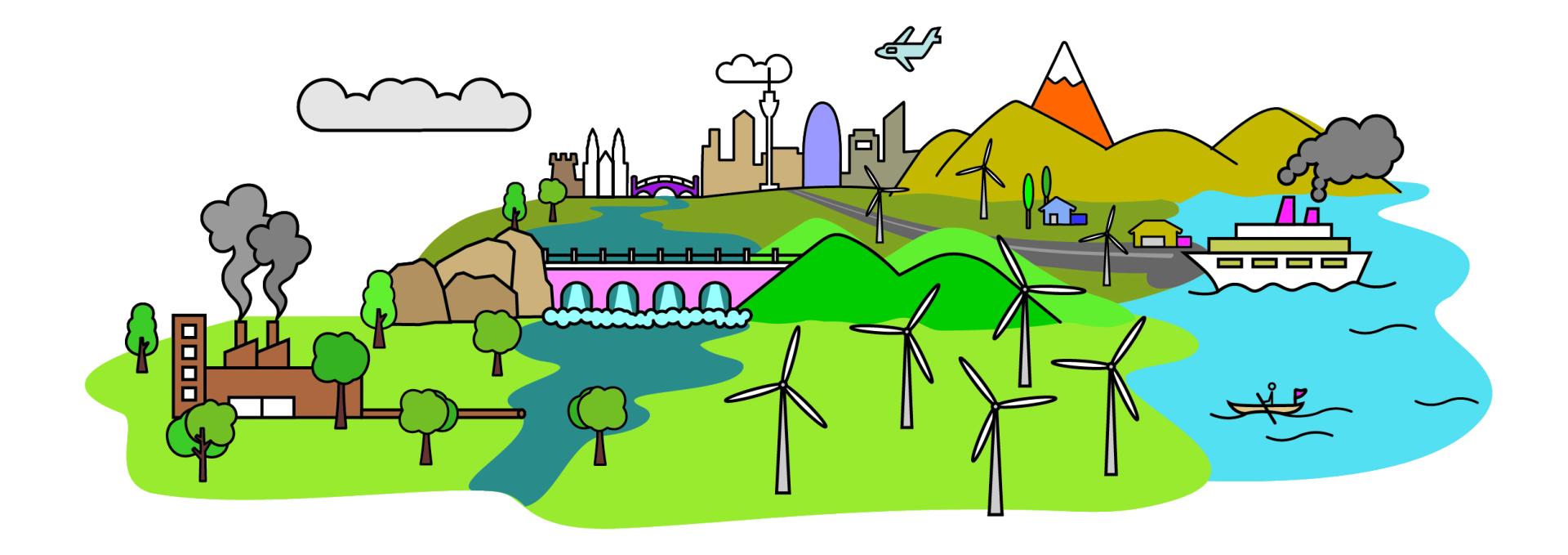
Figure 3.7 The construction of wind turbines or industrial facilities located outside the property may still result in indirect impacts, such as the obstruction of an important viewshed or increasing air and water pollution in the ecosystem.

In some countries, the delineation of the buffer zone may be determined by a legally prescribed distance from the heritage place, for example an area extending out 200 m from a designated monument. Such a rigid approach to defining buffer zones may not be sufficient to respond to factors that could affect the property. It is advisable to evaluate the adequateness of the buffer zone and change its boundaries if necessary. Such processes require the State Party to submit a request for a minor modification to the boundaries of the buffer zone (see Operational Guidelines, paragraphs 163–64). It is worth noting that any change to a buffer zone, no matter how extensive, is considered a minor boundary modification so involves a simplified process. This offers the scope to strengthen protection and management mechanisms post-inscription.

Buffer zones should be seen as more than just mechanisms to isolate the property from external factors, otherwise there is a risk of obstructing positive interactions that benefit the heritage. Good management of buffer zones can also provide a place for complementary activities, such as the local community carrying out traditional agriculture or visitors enjoying heritage interpretation. For instance, well-managed buffer zones can provide sustainable resource use that benefits local communities, especially when this might not be desirable within the World Heritage property A cultural, natural or mixed heritage place inscribed on the World Heritage List and therefore considered to be of OUV for humanity. The responsibility for nominating a property to the World Heritage List falls upon the State(s) Party(ies) where it is located. The World Heritage Committee decides whether a property should be inscribed on the World Heritage List, taking into account the technical recommendations of the Advisory Bodies following rigorous evaluation processes.
When used as a general term, World Heritage refers to all the natural, cultural and mixed properties inscribed on the World Heritage List.
itself. They can also have an important connectivity function helping to link ecosystems and habitats across whole landscapes, which can facilitate natural processes for wildlife with large range needs. In this regard, buffer zones can be a powerful mechanism as part of climate change mitigation and adaptation strategies responding to biome shifts of fauna, flora and habitats. Equally, this connectivity function can be critical for serial World Heritage properties, both natural and cultural.

Buffer zones cannot protect a property from all threats, since sometimes these originate far away from the World Heritage property A cultural, natural or mixed heritage place inscribed on the World Heritage List and therefore considered to be of OUV for humanity. The responsibility for nominating a property to the World Heritage List falls upon the State(s) Party(ies) where it is located. The World Heritage Committee decides whether a property should be inscribed on the World Heritage List, taking into account the technical recommendations of the Advisory Bodies following rigorous evaluation processes.
When used as a general term, World Heritage refers to all the natural, cultural and mixed properties inscribed on the World Heritage List.
and new factors can emerge long after the delineation of boundaries and buffer zones. In general, management of buffer zones is challenging as the institutional mandate often falls to different institutions than those responsible for the management of the World Heritage property A cultural, natural or mixed heritage place inscribed on the World Heritage List and therefore considered to be of OUV for humanity. The responsibility for nominating a property to the World Heritage List falls upon the State(s) Party(ies) where it is located. The World Heritage Committee decides whether a property should be inscribed on the World Heritage List, taking into account the technical recommendations of the Advisory Bodies following rigorous evaluation processes.
When used as a general term, World Heritage refers to all the natural, cultural and mixed properties inscribed on the World Heritage List.
and different actors and different actors, who can have overlapping or conflicting responsibilities, may be involved. Therefore, effective governance arrangements and coordination must be ensured between those managing and involved with the World Heritage property A cultural, natural or mixed heritage place inscribed on the World Heritage List and therefore considered to be of OUV for humanity. The responsibility for nominating a property to the World Heritage List falls upon the State(s) Party(ies) where it is located. The World Heritage Committee decides whether a property should be inscribed on the World Heritage List, taking into account the technical recommendations of the Advisory Bodies following rigorous evaluation processes.
When used as a general term, World Heritage refers to all the natural, cultural and mixed properties inscribed on the World Heritage List.
, the buffer zone and its wider setting.

3.4.3
What role does the wider setting play in heritage management?

The Operational Guidelines promote an integrated approach to planning and management that goes beyond the property to include any buffer zone(s) as well as the wider setting; to guide the evolution of properties over time and to ensure maintenance of all aspects of their OUV. Unlike a buffer zone, the wider setting is not a formally defined spatial entity, nor does it have a precise definition. However, it can be useful to think of the wider setting as comprising those aspects that may relate to the property’s topography, natural and cultural environment, and other elements such as infrastructure, land-use patterns, spatial organization and visual relationships. It may also include related social and cultural practices, economic processes and other intangible dimensions of heritage, such as perceptions and associations.

In fact, the area of the wider setting that needs consideration might change according to the task in hand. For example, how the wider setting is defined will be different when carrying out daily management tasks, completing an impact assessment for a specific development project or designing a DRM plan. A temporal dimension may also apply to the wider setting. For example, ensuring seasonal migrations of birdlife may require protective measures in areas well outside the heritage place itself and its buffer zone.

This approach to management and the concept of the wider setting are crucial when assessing the positive and negative impacts of factors that originate beyond the property and its buffer zone. Regardless of their distance from the heritage place, a range of factors in the wider setting can impact the OUV of a World Heritage property A cultural, natural or mixed heritage place inscribed on the World Heritage List and therefore considered to be of OUV for humanity. The responsibility for nominating a property to the World Heritage List falls upon the State(s) Party(ies) where it is located. The World Heritage Committee decides whether a property should be inscribed on the World Heritage List, taking into account the technical recommendations of the Advisory Bodies following rigorous evaluation processes.
When used as a general term, World Heritage refers to all the natural, cultural and mixed properties inscribed on the World Heritage List.
. This may be the construction of high-rise buildings or wind turbines, which will disturb the spirit and feeling in a sacred site, or the construction of tourism facilities and transportation infrastructure that might bring increased tourist pressure to a historic town or protected area.

This concept of the wider setting and the integrated management approach behind it, empowers managers to consider factors affecting World Heritage properties, regardless of their origin, and to work collaboratively with other actors to ensure that potential negative impacts are avoided, while enabling those which are positive.

REFLECTION QUESTIONS
  • Were the boundaries of the property defined in relation to the identification and mapping of the attributes that convey its OUV?
  • Are the boundaries and size of the property adequate to protect those attributes? Do the boundaries and size of the property ensure functional, spatial and/or visual connectivity between the attributes?
  • Are the boundaries and size of the property adequate to protect other important values of the property? Is the boundary of the World Heritage property A cultural, natural or mixed heritage place inscribed on the World Heritage List and therefore considered to be of OUV for humanity. The responsibility for nominating a property to the World Heritage List falls upon the State(s) Party(ies) where it is located. The World Heritage Committee decides whether a property should be inscribed on the World Heritage List, taking into account the technical recommendations of the Advisory Bodies following rigorous evaluation processes.
    When used as a general term, World Heritage refers to all the natural, cultural and mixed properties inscribed on the World Heritage List.
    logically drawn and easily identifiable on the ground by all actors?
  • Is a map clearly identifying the property boundaries and buffer zone readily available?
  • Does the boundary and/or buffer zone contain appropriate legal or regulatory protection measures that apply to the attributes of the World Heritage property A cultural, natural or mixed heritage place inscribed on the World Heritage List and therefore considered to be of OUV for humanity. The responsibility for nominating a property to the World Heritage List falls upon the State(s) Party(ies) where it is located. The World Heritage Committee decides whether a property should be inscribed on the World Heritage List, taking into account the technical recommendations of the Advisory Bodies following rigorous evaluation processes.
    When used as a general term, World Heritage refers to all the natural, cultural and mixed properties inscribed on the World Heritage List.
    ?
  • If there are other designations (at the international, national or local levels), are there issues deriving from different boundaries associated with those other designations?
  • Is the buffer zone(s) large enough to address threats originating from external interactions that may negatively affect the property?
  • Have large-scale spatial and functional dynamics that are important to maintain the values and integrity of the property been identified?
  • Are the boundaries of the World Heritage property A cultural, natural or mixed heritage place inscribed on the World Heritage List and therefore considered to be of OUV for humanity. The responsibility for nominating a property to the World Heritage List falls upon the State(s) Party(ies) where it is located. The World Heritage Committee decides whether a property should be inscribed on the World Heritage List, taking into account the technical recommendations of the Advisory Bodies following rigorous evaluation processes.
    When used as a general term, World Heritage refers to all the natural, cultural and mixed properties inscribed on the World Heritage List.
    shared and updated in relevant geographic information systems, including the UNESCO Sites Navigator?
ADDITIONAL RESOURCES
  • UNESCO (2009). World Heritage and Buffer Zones; Patrimoine mondial et zones tampons International Expert Meeting on World Heritage and Buffer Zones Davos, Switzerland 11 –14 March 2008. World Heritage Papers 25, Paris, UNESCO.
  • IUCN The International Union for Conservation of Nature (IUCN) is an international membership association composed of both government and civil society organizations. It harnesses the experience, resources and reach of its member organizations and the input of its experts to promote nature conservation and accelerate the transition to sustainable development. The headquarters of the IUCN Secretariat are located in Gland, Switzerland.Created in 1948, IUCN has evolved into the world’s largest environmental network: IUCN experts are organized into six commissions dedicated to species survival, environmental law, protected areas, social and economic policy, ecosystem management and education and communication. (2016). Managing MIDAS: harmonising the management of Multi-Internationally Designated Areas. Gland (Switzerland), IUCN The International Union for Conservation of Nature (IUCN) is an international membership association composed of both government and civil society organizations. It harnesses the experience, resources and reach of its member organizations and the input of its experts to promote nature conservation and accelerate the transition to sustainable development. The headquarters of the IUCN Secretariat are located in Gland, Switzerland.Created in 1948, IUCN has evolved into the world’s largest environmental network: IUCN experts are organized into six commissions dedicated to species survival, environmental law, protected areas, social and economic policy, ecosystem management and education and communication. (Swizerland).
  • IUCN The International Union for Conservation of Nature (IUCN) is an international membership association composed of both government and civil society organizations. It harnesses the experience, resources and reach of its member organizations and the input of its experts to promote nature conservation and accelerate the transition to sustainable development. The headquarters of the IUCN Secretariat are located in Gland, Switzerland.Created in 1948, IUCN has evolved into the world’s largest environmental network: IUCN experts are organized into six commissions dedicated to species survival, environmental law, protected areas, social and economic policy, ecosystem management and education and communication. (2016). ICCAs and Overlapping Protected Areas: Fostering Conservation Synergies and Social Reconciliation. Tehran, CENEST/ICCA Consortium.
  • UNESCO (2025). Operational Guidelines for the implementation of the World Heritage Convention, paragraphs 87-107.
  • UNESCO, ICCROM The International Centre for the Study of the Preservation and Restoration of Cultural Property (ICCROM) is an intergovernmental organization created to promote the conservation of all forms of cultural heritage worldwide. Its headquarters are located in Rome, Italy.Its mission is to provide Member States with the best tools, knowledge, skills and enabling environment to preserve their cultural heritage in all of its forms, for the benefit of all people. It achieves this by working with institutions and professionals on the ground, nationally and internationally along three lines of action:studying and promoting cultural heritage conservation;mobilizing and coordinating expertise to address critical issues of conservation;providing the training and research tools for implementation to strengthen the
    professional community.
    , ICOMOS The International Council on Monuments and Sites (ICOMOS) is an international nongovernmental organization bringing together cultural heritage professionals from across the world. Its headquarters are located in Charenton le Pont, near Paris, France.ICOMOS was founded in 1965 after the adoption of the Venice Charter, in order to promote the doctrine and the techniques of conservation. It advises the World Heritage Committee The main decision-making body of the World Heritage Convention The Convention Concerning the Protection of the World Cultural and Natural Heritage is an international treaty adopted by the UN in 1972 that defines the kind of natural or cultural sites which can be considered for inscription on the World Heritage List for their Outstanding Universal Value for all humankind. Commonly known as the World Heritage Convention, it establishes how the international community as a whole is responsible for
    the protection of such heritage and sets out the duties of States Parties in identifying potential sites that may be eligible for inscription onto the World Heritage List and their role in protecting and preserving them. By signing the Convention, each country pledges to conserve not only the sites situated on its territory that have been recognized as being of Outstanding Universal Value, but also to protect its national heritage and to be involved in international efforts to protect, conserve and promote the heritage of humankind.
    , it consists of representatives from 21 of the States Parties to the Convention elected for terms up to six years, but voluntarily reduced to 4 years to ensure equitable representation.The Committee meets at least once a year. It is one of the key implementing actors of the World Heritage Convention The Convention Concerning the Protection of the World Cultural and Natural Heritage is an international treaty adopted by the UN in 1972 that defines the kind of natural or cultural sites which can be considered for inscription on the World Heritage List for their Outstanding Universal Value for all humankind. Commonly known as the World Heritage Convention, it establishes how the international community as a whole is responsible for
    the protection of such heritage and sets out the duties of States Parties in identifying potential sites that may be eligible for inscription onto the World Heritage List and their role in protecting and preserving them. By signing the Convention, each country pledges to conserve not only the sites situated on its territory that have been recognized as being of Outstanding Universal Value, but also to protect its national heritage and to be involved in international efforts to protect, conserve and promote the heritage of humankind.
    , allocates financial assistance from the World Heritage Fund A trust fund established according to article 15 of the World Heritage Convention in conformity with the provisions of the Financial Regulations of UNESCO to assist in the protection of properties forming part of the World Cultural and Natural Heritage of Outstanding Universal Value.The Fund for the Protection of the World Natural and Cultural Heritage of Outstanding Universal Value, commonly known as World Heritage Fund, consists of compulsory and voluntary contributions made by States Parties to the Convention, and any other resources authorized by the Fund’s regulations. These include resources received from UNESCO, UN organisations, public or private bodies or individuals, funds raised for the benefit of the Fund, any other source acceptable to the World Heritage Committee. The Fund may be used for purposes defined by the World Heritage Committee and may include studies, provision of expertise and skilled labour, training activities, low-interest or interest- free loans or, in exceptional cases and for special reasons of non- repayable subsidies for the protection, conservation, presentation and rehabilitation of the World Natural and Cultural Heritage. and has the final say on whether a site shall be inscribed on the World Heritage List. It examines reports on the state of conservation of inscribed sites and decides on the inscription or removal of properties on the List of World Heritage in Danger.The main functions of the Convention, in cooperation with States Parties, are to:decide, on the basis of Tentative Lists and nominations submitted by States Parties, which cultural and natural properties of Outstanding Universal Value are to be inscribed on the World Heritage List and therefore protected under the Convention;examine the state of conservation of properties inscribed on the World Heritage List through processes of Reactive Monitoring and Periodic Reporting;decide which properties inscribed on the World Heritage List are to be inscribed
    on, or removed from the List of World Heritage in Danger;decide whether a property should be deleted from the World Heritage List;define the procedure by which requests for International Assistance are to be
    considered and carry out studies and consultations as necessary before coming to a decision;determine how the resources of the World Heritage Fund A trust fund established according to article 15 of the World Heritage Convention in conformity with the provisions of the Financial Regulations of UNESCO to assist in the protection of properties forming part of the World Cultural and Natural Heritage of Outstanding Universal Value.The Fund for the Protection of the World Natural and Cultural Heritage of Outstanding Universal Value, commonly known as World Heritage Fund, consists of compulsory and voluntary contributions made by States Parties to the Convention, and any other resources authorized by the Fund’s regulations. These include resources received from UNESCO, UN organisations, public or private bodies or individuals, funds raised for the benefit of the Fund, any other source acceptable to the World Heritage Committee. The Fund may be used for purposes defined by the World Heritage Committee and may include studies, provision of expertise and skilled labour, training activities, low-interest or interest- free loans or, in exceptional cases and for special reasons of non- repayable subsidies for the protection, conservation, presentation and rehabilitation of the World Natural and Cultural Heritage. can be used most advantageously to assist States Parties in the protection of their properties of Outstanding Universal Value;seek ways to increase the World Heritage Fund A trust fund established according to article 15 of the World Heritage Convention in conformity with the provisions of the Financial Regulations of UNESCO to assist in the protection of properties forming part of the World Cultural and Natural Heritage of Outstanding Universal Value.The Fund for the Protection of the World Natural and Cultural Heritage of Outstanding Universal Value, commonly known as World Heritage Fund, consists of compulsory and voluntary contributions made by States Parties to the Convention, and any other resources authorized by the Fund’s regulations. These include resources received from UNESCO, UN organisations, public or private bodies or individuals, funds raised for the benefit of the Fund, any other source acceptable to the World Heritage Committee. The Fund may be used for purposes defined by the World Heritage Committee and may include studies, provision of expertise and skilled labour, training activities, low-interest or interest- free loans or, in exceptional cases and for special reasons of non- repayable subsidies for the protection, conservation, presentation and rehabilitation of the World Natural and Cultural Heritage. ;submit a report on its activities every two years to the General Assembly of States
    Parties and to the UNESCO General Conference;review and evaluate periodically the implementation of the Convention;revise and adopt the Operational Guidelines.
    by carrying out technical evaluations of properties with cultural values proposed for inscription on the World Heritage List, as well as with comparative studies, technical assistance and reporting on the state of conservation of inscribed properties. In order to tackle the numerous facets of immovable cultural heritage and to develop the necessary scientific knowledge and methodological approaches for its protection, conservation and interpretation, ICOMOS has established scientific international committees on various cultural heritage themes and issues. The international scientific committees are ICOMOS technical bodies. As such, they undertake research, develop conservation theory, guidelines and charters, foster training for better heritage conservation, promote international exchange of scientific information and carry out common projects.
    , IUCN The International Union for Conservation of Nature (IUCN) is an international membership association composed of both government and civil society organizations. It harnesses the experience, resources and reach of its member organizations and the input of its experts to promote nature conservation and accelerate the transition to sustainable development. The headquarters of the IUCN Secretariat are located in Gland, Switzerland.Created in 1948, IUCN has evolved into the world’s largest environmental network: IUCN experts are organized into six commissions dedicated to species survival, environmental law, protected areas, social and economic policy, ecosystem management and education and communication. (2023). Tool 3. Boundaries, Buffer Zones and the Wider Setting, in Enhancing Our Heritage Toolkit 2.0, pp. 40-45, Paris, UNESCO.
  • UNESCO Sites Navigator.
  • UNESCO Urban Heritage Atlas.