
KEY POINTS
  • The management plan is the product of the planning process and sets out what is to be achieved over a given period of time; it is an instrument to guide managers in implementing actions in a planned and orderly way and in making the best use of the resources available in doing so.
  • Development of a management plan can be broadly defined as the process used to establish how to get from the present situation to a desired state in the future.
  • The preparation of a management plan for a heritage place should be formally initiated and launched by an institution with the mandate to manage the World Heritage property A cultural, natural or mixed heritage place inscribed on the World Heritage List and therefore considered to be of OUV for humanity. The responsibility for nominating a property to the World Heritage List falls upon the State(s) Party(ies) where it is located. The World Heritage Committee decides whether a property should be inscribed on the World Heritage List, taking into account the technical recommendations of the Advisory Bodies following rigorous evaluation processes.
    When used as a general term, World Heritage refers to all the natural, cultural and mixed properties inscribed on the World Heritage List.
    , and a person or team should be identified and assigned responsibility for drafting the management plan.
  • Collaboration between all managers and the participation of rights-holders and relevant stakeholders should start as early as possible in the planning process and continue throughout all stages of development.
  • The starting point for any management plan must be a thorough understanding of the heritage place, as well as of the management system in place.
  • Management objectives The primary aims that will guide the management of a heritage place and ensure that its values are maintained over the long-term. Management objectives first need to be defined in relation to the values of the heritage place before addressing other objectives (such as visitation or sustainable development) that are also important but not essential to maintain its significance. These objectives will form a basis for the development of management strategies, plans, policies and actions.Management objectives should not be confused with outcomes, although the two concepts are interdependent. While management objectives can be seen more as guiding principles which are not time bound and indicate the broad goals to which management aspires, outcomes need to be defined in relation to what is to be achieved within a defined time-frame. are very important as guiding principles for the whole management system over a long time-frame, therefore it is useful to complement them with desired outcomes, determining exactly what is to be achieved within the duration of the management plan being developed.
  • A management plan should include a practical programme of actions that will ensure the desired outcomes will be achieved. It should detail what actions are to be implemented, who will be responsible for their implementation, when they are to be implemented, what human capacity and financial resources are needed and who will provide those resources.
  • The management plan constitutes a commitment from managers in terms of how the heritage place is to be managed today and in the coming years, and should therefore be readily available and transparent, to ensure all actors are aware of the plan’s desired outcomes.
  • Many heritage places use subsidiary plans that need to be carefully integrated and harmonized within the management plan, and their implementation needs to be equally ensured.

Developing a management plan can be broadly defined as the process used to establish how to get from the present situation to a desired state in the future. Managers The institution(s) or other type(s) of entity(ies) and group(s), as well as the individuals working within them, with legal or customary authority or recognized responsibilities for managing the heritage as a whole or in part. Rights-holders Actors socially endowed with legal or customary rights with respect to heritage resources. In the case of Indigenous Peoples, they have the right to free, prior and informed consent before approval of designating a place affecting their lands or territories and other resources as heritage, and need to participate in its governance and management. with recognized responsibilities for managing the property or heritage place or heritage resources within the place may be considered as managers. will need to ensure that management planning supports management objectives and that these are realistic in relation to the resources available.

5.3.1
Heritage management plans

The management plan is the product of the planning process, which sets out what is to be achieved over a given period of time – it is an instrument to guide managers in implementing actions in a planned and orderly way and in making the best use of the resources available in doing so.

The quality of the process is as important as the content of the plan itself. This is because, if done in a participatory manner as is recommended, it offers opportunities for all actors to come together and coordinate and exchange diverse understandings and perspectives over the future of the heritage place and what should be done to protect it.

The status of the management plan will depend on the characteristics of the management system in place. In most cases, there will be a formal, legally binding management plan, approved by a relevant authority; in some, however, the plan may be less formal and exist as a guiding document or an agreement between relevant actors. It remains important that the management plan is readily available and transparent, to ensure all actors are aware of the plan’s aspirations.

The scope and contents of a management plan vary considerably, depending on the type of property. For example, a management plan for an archaeological site or a single building may focus largely on conservation and routine maintenance actions addressing the physical conditions of the place; whereas that for an urban settlement may have a more policy-oriented nature, establishing priorities on how to address certain challenges, particularly if the plan is to be implemented by different managers. Similarly, a nature reserve may need a very different plan from that for an inhabited protected landscape or a large marine ecosystem that includes a sustainable fishing zoning.

Management planning The process used to establish how to get from the present situation (here) to a desired state or point in the future (there). This requires a clear understanding of the present situation and deciding what is to be achieved, within a specific budget, what actions to take and what the time-frame will be. Planning for a World Heritage property A cultural, natural or mixed heritage place inscribed on the World Heritage List and therefore considered to be of OUV for humanity. The responsibility for nominating a property to the World Heritage List falls upon the State(s) Party(ies) where it is located. The World Heritage Committee decides whether a property should be inscribed on the World Heritage List, taking into account the technical recommendations of the Advisory Bodies following rigorous evaluation processes.
When used as a general term, World Heritage refers to all the natural, cultural and mixed properties inscribed on the World Heritage List.
or other heritage place can involve many different types of planning at various geographic scales and organizational levels.The management plan is the main product of the management planning process for a World Heritage property A cultural, natural or mixed heritage place inscribed on the World Heritage List and therefore considered to be of OUV for humanity. The responsibility for nominating a property to the World Heritage List falls upon the State(s) Party(ies) where it is located. The World Heritage Committee decides whether a property should be inscribed on the World Heritage List, taking into account the technical recommendations of the Advisory Bodies following rigorous evaluation processes.
When used as a general term, World Heritage refers to all the natural, cultural and mixed properties inscribed on the World Heritage List.
. As a process, management planning does not end with the production of the management plan but continues through its implementation, monitoring and evaluation. The management plan can be accompanied by a number of other plans or related documents that derive from or support it, such as conservation plans, disaster risk management plans, sustainable tourism or visitor management plans or strategies, interpretation plans, business plans, etc.
for serial properties should consider the needs of each component part as well as the property as a whole. The geographical and functional links between the component parts, as well as the legal framework, will dictate whether it is feasible to have one overarching management plan for the property as a whole or, alternatively, have an overarching management planning framework for the whole property and then different management plans for the individual component parts (or even for clusters of component parts). The latter approach can be particularly effective for a transnational serial property requiring intergovernmental agreements as the basis of coordination within the overall management system. In many cases, only plans at individual place level are likely to be legally binding, so the overarching management planning framework may fulfil more of a coordination function across multiple plans.
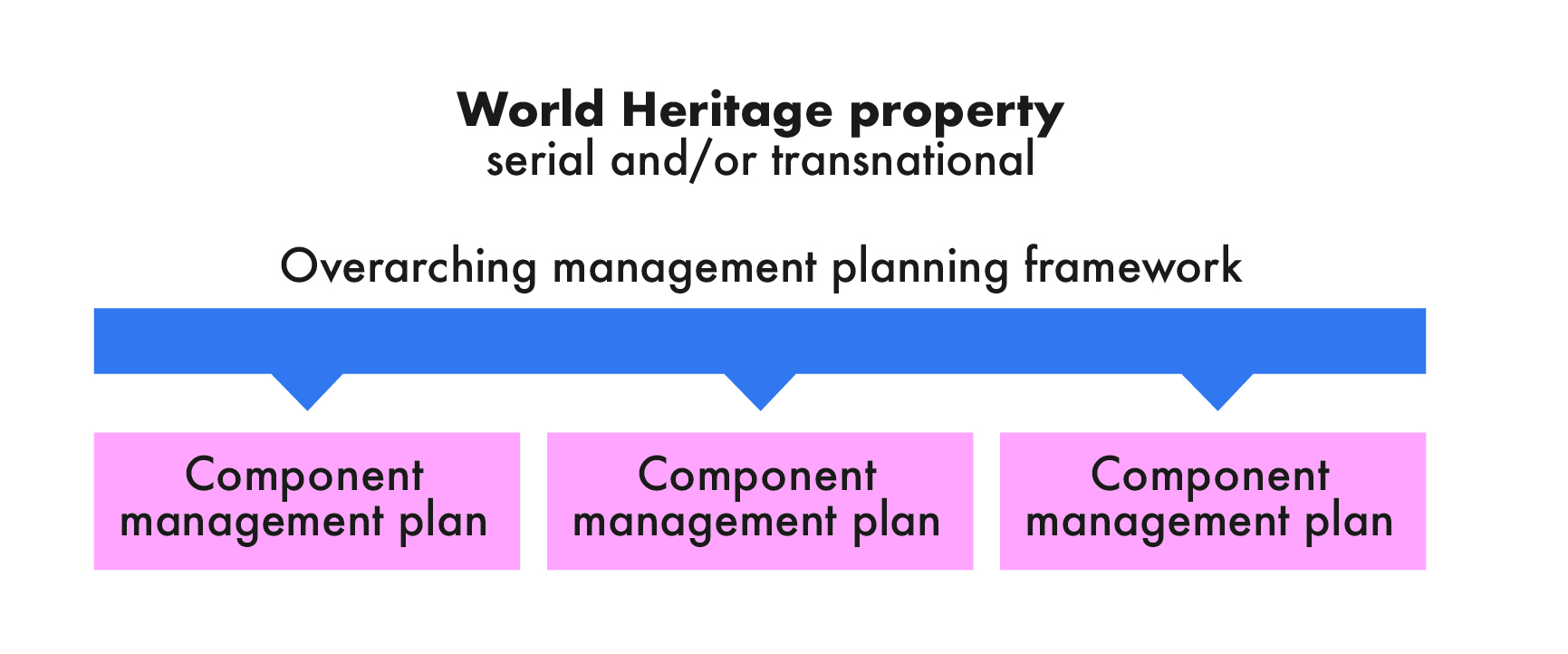
Figure 5.2. A transnational serial property would require intergovernmental agreements as the basis of coordination, with an overarching management planning framework for the whole property and different management plans for the individual component parts (or even for clusters of component parts).

Planning processes should strive to:

  • ensure that a participatory and human rights-based approach is taken to the planning process, with the effective involvement of all managers, rights-holders and relevant stakeholders that includes appropriate considerations for setting the mechanisms and allocating the resources and time needed for such an approach;
  • integrate the management of the property into the broader planning framework;
  • formulate the content of the plan with an adequate and up-to-date information base.

Based on these approaches, all management plans should include:
  • a comprehensive mapping of heritage values and attributes conveying those values;
  • a baseline of the conservation state of the heritage attributes that takes into account the state of conservation at the time of inscription and the current state;
  • a detailed understanding of the factors affecting the property and the management measures needed to respond to it;
  • alignment with clearly agreed management objectives for the management system as a whole,
    which include a set of desired management outcomes to be achieved over the duration of the plan, supported by a programme of actions detailing how to do it;
  • the addressing of ongoing or routine maintenance actions as well as one-off actions or single management interventions (examples might be building a visitor centre and enlarging a network of hiking trails or digitally recording built heritage interiors);
  • identification of the resources required to implement the programme of actions and ensure that they are realistic;
  • the setting of clear time-frames and accountabilities for the implementation of the programme of actions;
  • clear guidance to assist managers in dealing with opportunities and eventualities that arise during the implementation of the plan, particularly if circumstances change considerably;
  • the assigning of clear accountabilities for the programme of actions;
  • a basis for monitoring the implementation of the plan and progress towards achieving defined desired management outcomes and the adjustment of planned actions as required;
  • mechanisms for the periodic review and evaluation of the implementation and achieved outcomes to identify points of improvement for the future.

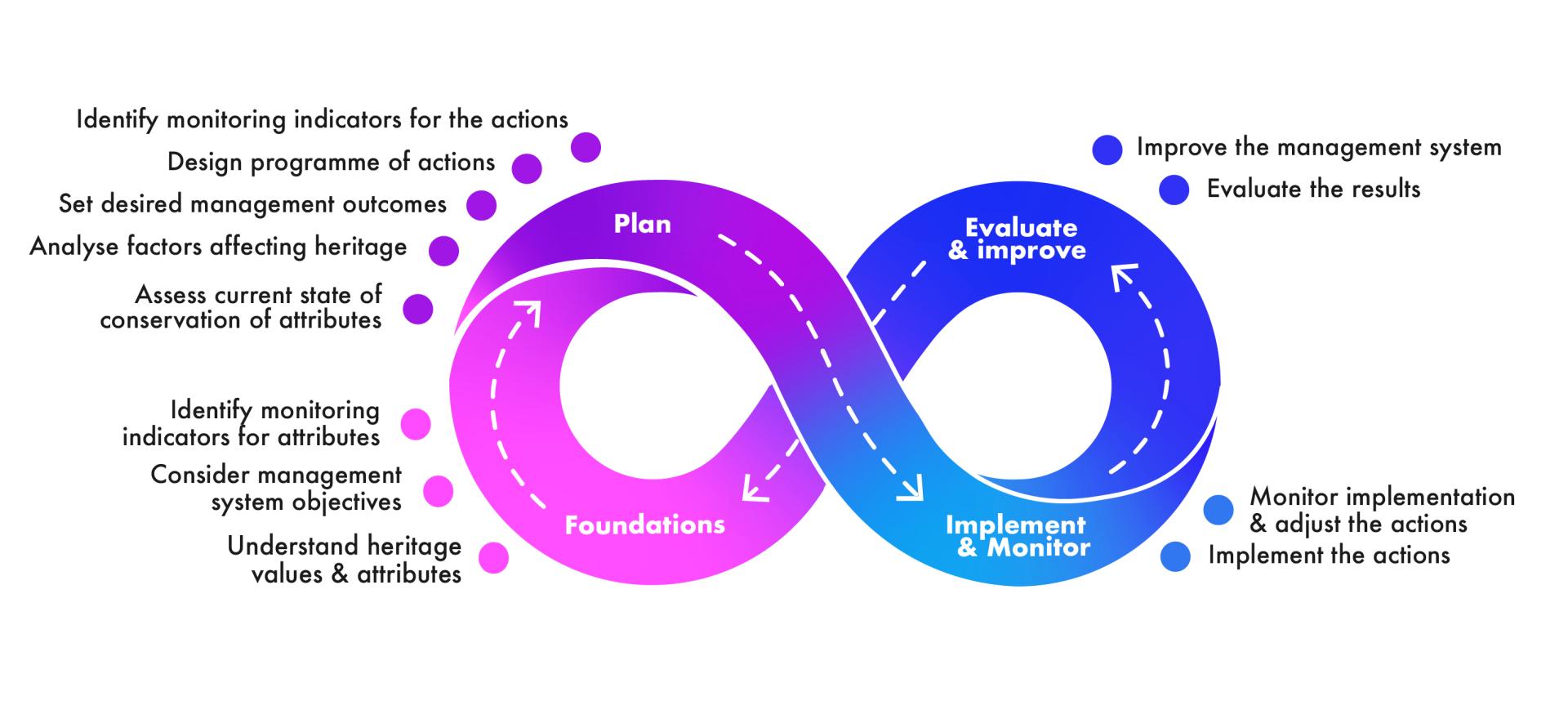
Figure 5.3 Diagram outlining an iterative management planning process.

The diagram Figure 5.3 shows that while the preparation of a heritage management plan is a critical step, it is only the beginning since the work continues with its implementation and monitoring and evaluation. These different processes combined – planning, implementation, monitoring and evaluation – constitute a management cycle, which is then repeated with the next management plan.

The following sections provide a general overview of the steps that can be followed when preparing a management plan. While the text refers to the preparation of the main management plan for a heritage place, the general approach can be used for preparing any plan, from broad long-term strategic plans (covering perhaps twenty to thirty years) through to subsidiary plans (i.e. risk management plan, visitor management plan or heritage interpretation plan).

5.3.2
Who develops the plan?

The preparation of a management plan for a heritage place should be authorized by a relevant institution and have the support of the key decision-makers, who will have to approve its adoption and enable its implementation, monitoring and evaluation. In some countries, the development of a management plan is required by law, particularly for World Heritage All inherited assets that people value for reasons beyond mere utility. Heritage is a broad concept and includes shared legacies from the natural environment, the creations of humans and the creations and interactions of humans and nature. It encompasses built, terrestrial, freshwater and marine environments, landscapes and seascapes, biodiversity, geodiversity, collections, cultural practices, knowledge, living experiences, etc. properties, and can be triggered at the national level. However, the process of initiating and drafting the plan should be done at the property or local level and led by the managers with primary responsibility for conserving and managing the heritage place.

Typically, a person or team will be identified and assigned the responsibility of drafting the management plan, within a specified timescale and budget. While priority should be placed on involving in-house managers, external consultants may also be included in this role. The designated person or team should be chosen for their abilities to coordinate with all other actors and facilitate the drafting process while taking into account the in-depth knowledge about the existing management system and the heritage place.

For an effective planning process engaging all actors, but particularly for properties that are governed by multiple managers extending beyond one administrative area or country, a steering group or committee consisting of key representatives of the institutions involved should be established to oversee the planning process. When a steering committee is established, clear reporting and decision-making mechanisms between the team responsible for developing the plan and the committee must also be established.

5.3.3
Ensuring participation in planning

Governance The interactions among structures, processes and traditions that determine how power and responsibilities are exercised, how decisions are taken and how different actors have their say in relation to the identification, protection and management of the World Heritage All inherited assets that people value for reasons beyond mere utility. Heritage is a broad concept and includes shared legacies from the natural environment, the creations of humans and the creations and interactions of humans and nature. It encompasses built, terrestrial, freshwater and marine environments, landscapes and seascapes, biodiversity, geodiversity, collections, cultural practices, knowledge, living experiences, etc. property or the heritage place. arrangements determine who is responsible for leading the planning process and who must be involved. Collaboration between all managers and the participation of rights-holders and relevant stakeholders should start as early as possible in the planning process and continue throughout all stages of development.
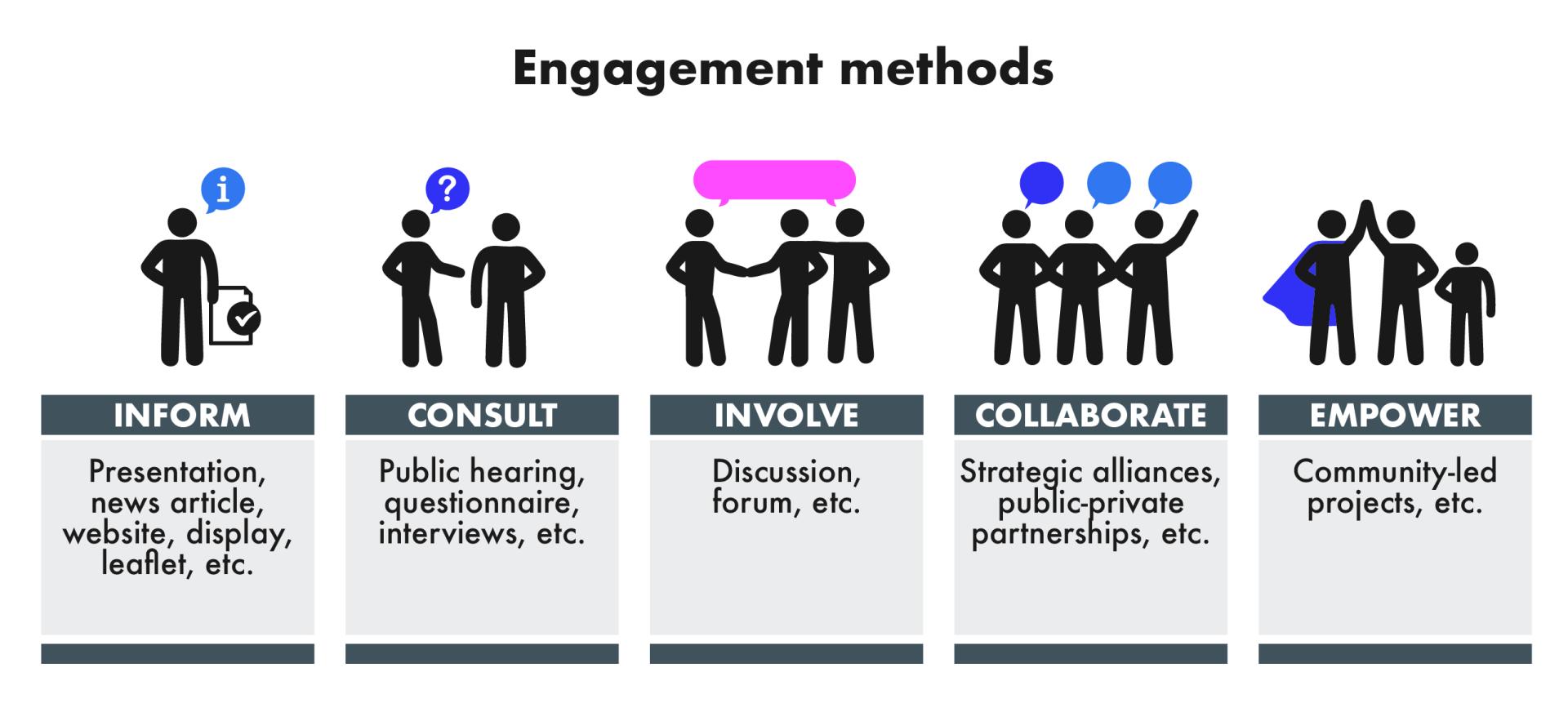
Figure 5.4 Engagement methods for rights-holders, local communities and other stakeholders. Engagement can take various forms throughout a planning process. Different approaches will be needed for different individuals and groups, but techniques that provide people with an active role are generally preferable to the passive provision of information. Source: Guidance and Toolkit for Impact Les effets ou les conséquences d’un facteur sur les attributs du site du patrimoine, tant sur le plan de l’état de conservation des attributs que sur celui de leur capacité à transmettre les valeurs de patrimoine/conservation. L’impact représente la différence entre l’état environnemental futur suite à la mise en oeuvre d’un projet de développement et l’état futur en l’absence de ce projet. Il convient de noter qu’un impact implique l’existence d’une source d’impact (par exemple, les nuisances sonores d’un site industriel), d’un récepteur ou d’un attribut du bien du patrimoine mondial qui en est affecté (par exemple, les habitants vivant à proximité) et d’un support ou parcours par lequel l’intervention ou le matériau préjudiciable peut atteindre le récepteur (par exemple, l’air). Les impacts peuvent être positifs ou négatifs, ainsi que directs ou indirects, actuels ou potentiels, et provenir du site du patrimoine, de toute zone tampon existante et au-delà.Voir également : Impacts indirects Les impacts indirects sont des impacts sur l’environnement qui ne sont pas le résultat direct du projet, et qui sont souvent générés à distance ou à la suite d’un parcours complexe.
Ils sont parfois qualifiés d’impacts de deuxième ou de troisième niveau, ou d’impacts
secondaires.Voir également : Impact, impacts directs, impacts cumulatifs
, impacts indirects, impacts cumulatifs
Assessments in a World Heritage All inherited assets that people value for reasons beyond mere utility. Heritage is a broad concept and includes shared legacies from the natural environment, the creations of humans and the creations and interactions of humans and nature. It encompasses built, terrestrial, freshwater and marine environments, landscapes and seascapes, biodiversity, geodiversity, collections, cultural practices, knowledge, living experiences, etc. Context
(2022).

Regardless of who takes the lead in developing the management plan, all managers will need to be involved in the entire planning process. The plan will be much more effective if developed jointly by the people who are going to be responsible for its implementation. Implementation often depends on the planning process behind it: people may feel less committed to implement a plan they did not help develop.

Legal requirements for public participation are often limited to consultation on the final draft of the management plan before it is approved. However, genuine participation takes different forms at different stages, involving actors in a variety of ways according to their rights, roles and responsibilities. For example, issue briefs might be developed and shared to consult on key matters or community focus groups convened to gauge and effectively incorporate their views. Too often, rights-holders may
be heard but their views and proposals are not effectively included in the resulting management plans. When consulting rights-holders, remember that they also have the right to know how their input is being included in the plan. Where Indigenous Peoples are affected, the planning process must be adapted to ensure their full and effective participation, through their own freely chosen representatives and institutions and in a climate of mutual trust and transparency.

For participation to be meaningful it is necessary that communication and the draft plans are available to people in their own language and in a timely manner, with any meetings organized in a way that is sympathetic to people’s needs. It is also crucial that people’s contributions are taken seriously so that strong relationships are built among all actors, facilitating management over time.

As well as producing a more effective plan, participatory planning processes offer the following benefits:

  • a better understanding of the heritage values and acceptance of the measures included in the plan;
  • a mechanism for rights-holders and local communities to participate effectively in management and decision-making processes;
  • opportunities to develop new ideas and thinking that can lead to innovation and new approaches to challenges;
  • collaboration that can increase access to financial and other resources, and their effective, just and equitable use.
5.3.4
Where to start?

The starting point for any management plan must be a thorough understanding of the heritage place, as discussed in Part 3, as well as of the management system in place. This will involve:

  • understanding the Outstanding Universal Value (OUV) and other important heritage values of the World Heritage property A cultural, natural or mixed heritage place inscribed on the World Heritage List and therefore considered to be of OUV for humanity. The responsibility for nominating a property to the World Heritage List falls upon the State(s) Party(ies) where it is located. The World Heritage Committee decides whether a property should be inscribed on the World Heritage List, taking into account the technical recommendations of the Advisory Bodies following rigorous evaluation processes.
    When used as a general term, World Heritage refers to all the natural, cultural and mixed properties inscribed on the World Heritage List.
    , and the attributes that convey it;
  • understanding the broader social, cultural, economic and environmental context;
  • understanding the governance arrangements (including all the actors involved), applicable legislations and regulations, and the broader planning framework within which the management plan will be integrated;
  • determining the current state of conservation of the property;
  • analysing in detail the factors affecting the property, how they affect the property positively or negatively and what are the impacts on the attributes.
     

Gaining a detailed understanding of all these aspects is a lengthy and ongoing task, and not all of the information gathered will need to be included in the main text of the management plan. However, it is essential to inform the overall management planning process and ensure that the programme of actions included in the plan is effective. Since heritage places are affected by a range of factors, regular monitoring of the situation is needed with adjustments where necessary and within defined criteria and at precise moments of the management cycle.

5.3.5
Setting management objectives and defining desired outcomes according to the timeframe of the plan

It is essential to have a clear understanding of what needs to be done to protect a heritage place, something which is influenced by its typology, size and range of heritage values. The sharing of this understanding becomes particularly important when multiple managers are involved. For this reason, the definition of objectives guiding the actions of the management system is very important (see 2.3). These objectives may be relatively generic as they serve as guiding principles for the whole management system. That is why they need to be complemented with desired outcomes, determining what is to be achieved within the duration of the plan being developed.

Setting desired outcomes is dependent on the duration of the management plan. A management plan with a time-frame of 3-5 years is likelier to be of a more operational nature, containing more detailed actions in response to existing challenges – since managers are more certain about what may happen in the near future. For management plans with a longer duration (5-10 years), short- and medium-term desired outcomes can be important milestones or measures of progress to evaluate whether the implementation of concrete actions is delivering what was expected and the overall effectiveness of the management plan. For long-term plans, monitoring of the shorter-term outputs regularly offers timely opportunities to reassess if circumstances have changed over time and if adjustments are needed.

For example, in a heritage place that constitutes an outstanding example of a traditional settlement constructed in wood, one of the management objectives of the management system might be to maintain the traditional carpentry techniques used. However, if the number of carpenters with the required skills is decreasing and is insufficient to meet the demand for reparation or maintenance works, something needs to be done. Therefore, a desired outcome to be included in the next management plan could be to increase the number of carpenters trained in traditional building techniques by at least 20% in 5 years.

Ensuring that desired outcomes are aligned with management objectives is fundamental. The objectives provide the possibility to adopt long-term thinking in anticipating future challenges and opportunities, rather than responding to problems as they arise.

5.3.6
Developing the programme of action and subsidiary work plans to ensure implementation

Once desired management outcomes have been clearly defined, actions need to be identified that will ensure that those outcomes are achieved. Any type of plan can be accompanied by a practical programme of actions to be implemented, detailing who will be responsible for their implementation, when they are to be implemented, what human capacity and financial resources are needed and who will provide those resources. The programme of actions should be included as a section of a management plan. For short- and medium-term management plans (i.e. 3-5 years), the programme of actions can be detailed enough to guide implementation. However, in the case of plans covering long time-frames (i.e. 5-10 years or more), it is difficult to plan in detail so far ahead and the pr gramme of actions will likely include strategic provisions for what is to be implemented, rather than detailed actions. In such cases, the programme of actions will need to be complemented by more detailed annual or biennial work plans, linked to annual or multiyear budgeting processes.

The work plans help translate the strategic provisions of the management plan into an operational programme of actions. A sequence of work plans can be developed one at a time in response to the current situation and t in anticipation of he immediate period ahead. For example, a ten-year plan might be accompanied by five biennial work plans that are developed and implemented one after another. Many institutions develop short-term work plans (i.e. generally 1-2 years) once there is certainty about the resources available and budgets have been approved. This offers an opportunity to reassess if circumstances have changed compared to the provisions included in the management plan and if adjustments are needed. The work plan can then detail a programme of actions that is feasible to implement; that will produce the outputs of the management plan, which measures the productivity of the management system.

Many heritage places use other important subsidiary plans (e.g. DRM plan, fire, invasive species, visitor management, interpretation) that need to be carefully integrated and harmonized with the management plan and must be executed. In these situations, work plans can play a critical role as an instrument to consolidate all of the programmes of actions included in the different plans and ensure that the overall number of actions to be implemented per year is evenly distributed, without creating an unrealistic workload or over-allocating budget.

For heritage places managed mainly by a single institution, the logic and flow of developing and implementing the management plan, as well as any subsidiary plans and subsequent work plans, should be relatively straightforward. However, many heritage places have complex governance arrangements, where the implementation of any plan requires the collective effort of different managers. It can also happen that managers hold responsibilities that extend beyond the World Heritage property A cultural, natural or mixed heritage place inscribed on the World Heritage List and therefore considered to be of OUV for humanity. The responsibility for nominating a property to the World Heritage List falls upon the State(s) Party(ies) where it is located. The World Heritage Committee decides whether a property should be inscribed on the World Heritage List, taking into account the technical recommendations of the Advisory Bodies following rigorous evaluation processes.
When used as a general term, World Heritage refers to all the natural, cultural and mixed properties inscribed on the World Heritage List.
, such as, for example, a nature conservation agency responsible for the management of a regional network of protected areas or a municipality that manages several conservation areas within a wider historic urban
landscape. This can make implementation of any plan more complex. In such cases, the more detailed the programme of actions and subsidiary works plans are, the easier implementation will be.

5.3.7
Finalizing the development and adopting the management plan

The finalized management plan should be adopted and authorized by the relevant institution and key decision-makers. For World Heritage All inherited assets that people value for reasons beyond mere utility. Heritage is a broad concept and includes shared legacies from the natural environment, the creations of humans and the creations and interactions of humans and nature. It encompasses built, terrestrial, freshwater and marine environments, landscapes and seascapes, biodiversity, geodiversity, collections, cultural practices, knowledge, living experiences, etc. , some countries require management plans to be approved at the national level. Having a formal process to adopt and authorize the management plan will ensure the support of the key decision-makers and enable its implementation, monitoring and evaluation. It will also facilitate the allocation of necessary resources needed to implement the plan.

REFLECTION QUESTIONS
  • Have all managers contributed to and been appropriately involved in the development of the management plan?
  • Have all rights-holders and key stakeholders been identified and appropriately engaged in the development of the management plan?
  • Are the management objectives clearly linked to the values and attributes of the property?
  • Are the management objectives specific enough to guide the management system for the property?
  • Does the management plan have a defined time-frame for its implementation? Why is this timeframe established?
  • Are the desired outcomes and the programme of actions within the heritage place’s management plan adequately detailed to guide implementation? If needed, are work plans developed to complement the programme of actions?
  • Are clear priorities agreed upon, in line with the objectives for the heritage place, so that the plan includes a realistic programme of actions that matches the human resources and funds likely to be available?
  • Are subsidiary plans (e.g. on tourism, DRM or threatened species recovery, etc.) consistent with the heritage place’s provisions in the main management plan?
  • Is the programme of actions in the management plan realistic in terms of available resources (budget, technical capacity, time-frames)?
  • Is the management plan formally adopted/authorized by the relevant institution?
  • If discrepancies exist between the provisions included in the management plan and those in other plans, is it clear that the provisions in the management plan should prevail?
ADDITIONAL RESOURCES
  • IUCN The International Union for Conservation of Nature (IUCN) is an international membership association composed of both government and civil society organizations. It harnesses the experience, resources and reach of its member organizations and the input of its experts to promote nature conservation and accelerate the transition to sustainable development. The headquarters of the IUCN Secretariat are located in Gland, Switzerland.Created in 1948, IUCN has evolved into the world’s largest environmental network: IUCN experts are organized into six commissions dedicated to species survival, environmental law, protected areas, social and economic policy, ecosystem management and education and communication. Protected Areas Programme (2008), Management Planning for Natural World Heritage Properties, pp 35. Gland (Switzerland), IUCN The International Union for Conservation of Nature (IUCN) is an international membership association composed of both government and civil society organizations. It harnesses the experience, resources and reach of its member organizations and the input of its experts to promote nature conservation and accelerate the transition to sustainable development. The headquarters of the IUCN Secretariat are located in Gland, Switzerland.Created in 1948, IUCN has evolved into the world’s largest environmental network: IUCN experts are organized into six commissions dedicated to species survival, environmental law, protected areas, social and economic policy, ecosystem management and education and communication. .
  • UNESCO, ICCROM The International Centre for the Study of the Preservation and Restoration of Cultural Property (ICCROM) is an intergovernmental organization created to promote the conservation of all forms of cultural heritage worldwide. Its headquarters are located in Rome, Italy.Its mission is to provide Member States with the best tools, knowledge, skills and enabling environment to preserve their cultural heritage in all of its forms, for the benefit of all people. It achieves this by working with institutions and professionals on the ground, nationally and internationally along three lines of action:studying and promoting cultural heritage conservation;mobilizing and coordinating expertise to address critical issues of conservation;providing the training and research tools for implementation to strengthen the
    professional community.
    , ICOMOS The International Council on Monuments and Sites (ICOMOS) is an international nongovernmental organization bringing together cultural heritage professionals from across the world. Its headquarters are located in Charenton le Pont, near Paris, France.ICOMOS was founded in 1965 after the adoption of the Venice Charter, in order to promote the doctrine and the techniques of conservation. It advises the World Heritage Committee The main decision-making body of the World Heritage Convention The Convention Concerning the Protection of the World Cultural and Natural Heritage is an international treaty adopted by the UN in 1972 that defines the kind of natural or cultural sites which can be considered for inscription on the World Heritage List for their Outstanding Universal Value for all humankind. Commonly known as the World Heritage Convention, it establishes how the international community as a whole is responsible for
    the protection of such heritage and sets out the duties of States Parties in identifying potential sites that may be eligible for inscription onto the World Heritage List and their role in protecting and preserving them. By signing the Convention, each country pledges to conserve not only the sites situated on its territory that have been recognized as being of Outstanding Universal Value, but also to protect its national heritage and to be involved in international efforts to protect, conserve and promote the heritage of humankind.
    , it consists of representatives from 21 of the States Parties to the Convention elected for terms up to six years, but voluntarily reduced to 4 years to ensure equitable representation.The Committee meets at least once a year. It is one of the key implementing actors of the World Heritage Convention The Convention Concerning the Protection of the World Cultural and Natural Heritage is an international treaty adopted by the UN in 1972 that defines the kind of natural or cultural sites which can be considered for inscription on the World Heritage List for their Outstanding Universal Value for all humankind. Commonly known as the World Heritage Convention, it establishes how the international community as a whole is responsible for
    the protection of such heritage and sets out the duties of States Parties in identifying potential sites that may be eligible for inscription onto the World Heritage List and their role in protecting and preserving them. By signing the Convention, each country pledges to conserve not only the sites situated on its territory that have been recognized as being of Outstanding Universal Value, but also to protect its national heritage and to be involved in international efforts to protect, conserve and promote the heritage of humankind.
    , allocates financial assistance from the World Heritage Fund A trust fund established according to article 15 of the World Heritage Convention in conformity with the provisions of the Financial Regulations of UNESCO to assist in the protection of properties forming part of the World Cultural and Natural Heritage of Outstanding Universal Value.The Fund for the Protection of the World Natural and Cultural Heritage of Outstanding Universal Value, commonly known as World Heritage Fund, consists of compulsory and voluntary contributions made by States Parties to the Convention, and any other resources authorized by the Fund’s regulations. These include resources received from UNESCO, UN organisations, public or private bodies or individuals, funds raised for the benefit of the Fund, any other source acceptable to the World Heritage Committee. The Fund may be used for purposes defined by the World Heritage Committee and may include studies, provision of expertise and skilled labour, training activities, low-interest or interest- free loans or, in exceptional cases and for special reasons of non- repayable subsidies for the protection, conservation, presentation and rehabilitation of the World Natural and Cultural Heritage. and has the final say on whether a site shall be inscribed on the World Heritage List. It examines reports on the state of conservation of inscribed sites and decides on the inscription or removal of properties on the List of World Heritage in Danger.The main functions of the Convention, in cooperation with States Parties, are to:decide, on the basis of Tentative Lists and nominations submitted by States Parties, which cultural and natural properties of Outstanding Universal Value are to be inscribed on the World Heritage List and therefore protected under the Convention;examine the state of conservation of properties inscribed on the World Heritage List through processes of Reactive Monitoring and Periodic Reporting;decide which properties inscribed on the World Heritage List are to be inscribed
    on, or removed from the List of World Heritage in Danger;decide whether a property should be deleted from the World Heritage List;define the procedure by which requests for International Assistance are to be
    considered and carry out studies and consultations as necessary before coming to a decision;determine how the resources of the World Heritage Fund A trust fund established according to article 15 of the World Heritage Convention in conformity with the provisions of the Financial Regulations of UNESCO to assist in the protection of properties forming part of the World Cultural and Natural Heritage of Outstanding Universal Value.The Fund for the Protection of the World Natural and Cultural Heritage of Outstanding Universal Value, commonly known as World Heritage Fund, consists of compulsory and voluntary contributions made by States Parties to the Convention, and any other resources authorized by the Fund’s regulations. These include resources received from UNESCO, UN organisations, public or private bodies or individuals, funds raised for the benefit of the Fund, any other source acceptable to the World Heritage Committee. The Fund may be used for purposes defined by the World Heritage Committee and may include studies, provision of expertise and skilled labour, training activities, low-interest or interest- free loans or, in exceptional cases and for special reasons of non- repayable subsidies for the protection, conservation, presentation and rehabilitation of the World Natural and Cultural Heritage. can be used most advantageously to assist States Parties in the protection of their properties of Outstanding Universal Value;seek ways to increase the World Heritage Fund A trust fund established according to article 15 of the World Heritage Convention in conformity with the provisions of the Financial Regulations of UNESCO to assist in the protection of properties forming part of the World Cultural and Natural Heritage of Outstanding Universal Value.The Fund for the Protection of the World Natural and Cultural Heritage of Outstanding Universal Value, commonly known as World Heritage Fund, consists of compulsory and voluntary contributions made by States Parties to the Convention, and any other resources authorized by the Fund’s regulations. These include resources received from UNESCO, UN organisations, public or private bodies or individuals, funds raised for the benefit of the Fund, any other source acceptable to the World Heritage Committee. The Fund may be used for purposes defined by the World Heritage Committee and may include studies, provision of expertise and skilled labour, training activities, low-interest or interest- free loans or, in exceptional cases and for special reasons of non- repayable subsidies for the protection, conservation, presentation and rehabilitation of the World Natural and Cultural Heritage. ;submit a report on its activities every two years to the General Assembly of States
    Parties and to the UNESCO General Conference;review and evaluate periodically the implementation of the Convention;revise and adopt the Operational Guidelines.
    by carrying out technical evaluations of properties with cultural values proposed for inscription on the World Heritage List, as well as with comparative studies, technical assistance and reporting on the state of conservation of inscribed properties. In order to tackle the numerous facets of immovable cultural heritage and to develop the necessary scientific knowledge and methodological approaches for its protection, conservation and interpretation, ICOMOS has established scientific international committees on various cultural heritage themes and issues. The international scientific committees are ICOMOS technical bodies. As such, they undertake research, develop conservation theory, guidelines and charters, foster training for better heritage conservation, promote international exchange of scientific information and carry out common projects.
    , IUCN The International Union for Conservation of Nature (IUCN) is an international membership association composed of both government and civil society organizations. It harnesses the experience, resources and reach of its member organizations and the input of its experts to promote nature conservation and accelerate the transition to sustainable development. The headquarters of the IUCN Secretariat are located in Gland, Switzerland.Created in 1948, IUCN has evolved into the world’s largest environmental network: IUCN experts are organized into six commissions dedicated to species survival, environmental law, protected areas, social and economic policy, ecosystem management and education and communication. (2013). Appendix A: A framework for developing, implementing and monitoring a management plan. Managing Cultural World Heritage. Paris, UNESCO.