Image

If you need to know how to
In order to understand the risk of a disaster occurring and therefore be better prepared, it is necessary to understand the key components that come together to cause a disaster. These concepts can be analysed for a particular heritage place in order to understand how likely it is that a disaster will occur with negative impacts on the heritage and the people there. To understand the processes of disaster risk management (DRM), it is useful to understand some key concepts with specific definitions in the field.
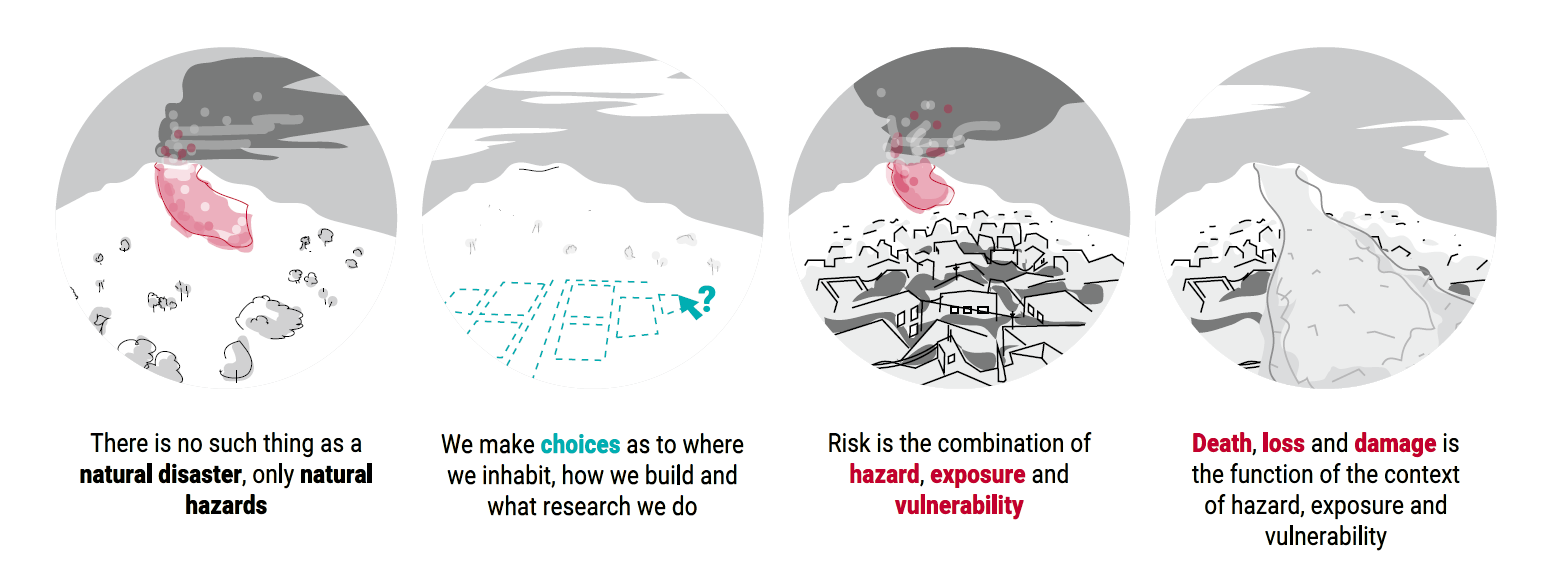
Figure 5.5 is widely recognized as the consequence of the interaction between a hazard and the characteristics that make people and places vulnerable and exposed. Source: UNDRR Global Assessment Report on Disaster Reduction (2019).
for heritage is a product of the interplay between hazard, exposure and vulnerability. Hazards trigger disasters but various factors determine exposure and vulnerability. It is critical to analyse risk in terms of how certain hazards interact with different types of heritage places, their values and the attributes that carry those values. In most cases this will entail an analysis of the full spectrum of recognized heritage values of a site. In the case of a , it is all three pillars of Outstanding Universal Value (OUV) that must be considered and appropriately prioritized – so not just the values themselves but equally their integrity and authenticity, as well as the capacity to protect and manage those values. A deeper analysis will normally be required to appreciate the susceptibility to risk of the various attributes that underpin heritage values. A single disaster response may address multiple threats to different attributes and values.
Among the factors affecting heritage places, natural and human-made hazards represent disaster risks. The interaction between rapidly developing urbanization and climate change is mutually reinforcing. This causes risks to increase, by influencing exposure and aggravating vulnerabilities to more frequent and intense hazards, from altered weather patterns to the erosion of built structures. The cumulative impacts of different factors increase the risk of disasters at heritage places and therefore action is needed to strengthen resilience and ensure greater protection for heritage places and the people who live in and around them.
management (DRM) provides general principles and a methodology that managers can apply to a specific heritage place to reduce risks. This methodology aims to reduce existing risks and prevent new ones, while strengthening a heritage place’s disaster preparedness, response and recovery practices. DRM for heritage places aims to do this by working in four areas to:
While management cannot eliminate a hazard, it can help to proactively reduce vulnerabilities and enhance resilience so that the disaster risk is lower. In the event of a disaster, mitigation and preparedness measures in place will contribute to achieve the best possible outcomes for people and heritage places. can also be part of reducing disaster risks, where Indigenous, local and traditional knowledge systems and nature-based solutions can reduce vulnerability and enhance resilience in place-specific considerations, while ensuring better protection for the heritage itself. Furthermore, natural and cultural heritage can play an important role in post-disaster recovery, contributing to healing and social cohesion.
Much like the heritage management processes, effective DRM is a continuous and iterative process of planning, coordinating, implementing and progressive improvement summarized in the following sequence of actions (5.6.3–5.6.6).
Before any disaster happens, risks posed by hazards need to be identified and assessed. A wide understanding of the hazards triggering, and the factors contributing to, specific disasters relevant to the heritage place is required. Hazard trends should also be assessed. Information needs to be collected from a wide range of sources, including community, traditional and/or Indigenous knowledge. All of this information needs to be collected from the elements of the heritage place (see Part 3).
Plausible scenarios should be developed, with planning informed by worst-case scenarios. From this a systematic assessment of risks and prioritization can be made, based on the likelihood of a hazard occurring versus its potential impacts. The levels of exposure and response capacity of both heritage values and human communities should also be factored in.
Lastly, it is important to understand the cause-and-effect relationships between disaster risk and indirect influences, such as development choices within the heritage place and at wider scales, and the influence of impact assessment measures.
Having assessed the potential impacts of certain disaster risk scenarios for the heritage place, it is vital to proceed to the next phase of deciding what actionable steps can be taken to avoid or mitigate impacts. It is important to have a full understanding of the range of available measures and interventions and then tailor these to different heritage values and attributes.
Engaging with the broadest range of actors is critical not only to gain the best available knowledge and expertise but also to ensure that the disaster risk prevention and mitigation measures have the backing of the communities who will be called upon to actively support disaster responses and post-disaster recovery. In this regard, it is important to recall that World
properties need support that ranges from local to global, and to stress the importance of broad engagement and the opportunity to marshal
support at all levels in coping with disasters. It is essential to respectfully empower rights-holders and embed Indigenous, local and/or traditional knowledge and practices into response strategies.
The fast-moving chaos that accompanies some disasters can be extremely difficult to cope with. Therefore, it is important to plan in advance for the type of structured, disciplined and short chain-of-command systems that are needed in an emergency and ensure that heritage managers are fully acquainted with these measures. Structured multi-agency responses are typically needed during an emergency and managers must ensure that good coordination is in place across heritage, emergency response, humanitarian and other sectors. The expertise and resources that are available or which can be mobilized across these sectors need to be harnessed toward cohesive DRM.
Actions taken immediately following an emergency or incident must be carefully considered to prioritize protection of life and property but equally to safeguard heritage values in the short and medium term. Forethought is needed in relation to heritage to guarantee long-term recovery and protection and avoid any unintended consequences from poorly considered or hasty post-disaster actions. This includes deciding who should be involved in the preparation and implementation of the DRM plan; ensuring that governance arrangements support the plan’s authority; clarifying and respecting physical boundaries and jurisdictional mandates; and mobilizing the resources necessary to execute the plan.
The processes of information gathering, outreach and analysis need to come together in a single, cohesive DRM plan for the . This should clearly describe the assessment of disaster risk and resilience, disaster preparedness and mitigation measures, and outline emergency response and recovery, as discussed above. DRM planning processes take similar steps to management planning processes and, therefore, it is important to ensure that these processes are coordinated and work towards mutually beneficial objectives.
In order to ensure that the plan is effective and can be implemented, consideration needs to be given to the day-to-day mechanics of operationalizing it and measuring effectiveness. Crucially, capacities need to be built among all actors in parallel, including sharing knowledge and practice.
As the DRM process is a crucial contribution to the maintenance of heritage values, the DRM plan needs to sit under the umbrella of the heritage place’s main management plan. A DRM plan for the heritage place can be considered as a subsidiary or complementary plan that needs to be carefully integrated within the management plan, keeping in sight not only the fundamental objectives of sustaining OUV and other heritage values but also alignment in terms of time-frames and implementation to check it can be delivered with existing human capacity and financial resources. There is also a risk if the timing of implementation of all plans is not harmonized, which could prohibit certain actions from starting until others are concluded and obstruct the achievement of desired outcomes. In order to avoid these problems, it is essential that there is strong coordination between managers and planning teams that link between the complementary planning processes to ensure they are mutually supportive.
For World properties and other heritage places, managers can use the forthcoming resource manual on Managing and Building for World for detailed measures. The manual takes into account the emerging challenges of climate change that are amplifying the frequency and intensity of many types of disasters and adopts the heritage place approach for the management of World properties, which recognizes wider settings and their intrinsic linkages between nature and culture. A wider perspective helps to understand how values, vulnerability and capacity interact as World properties cope with and then rebound from disasters. The updated manual benefits from a deeper understanding of heritage values and the attributes that carry them. It also explores the scope of heritage to support post-disaster recovery and societal healing and emphasizes the important role and potential that World properties can play in building resilience to impact, through the provision of ecosystem services and nature-based solutions.
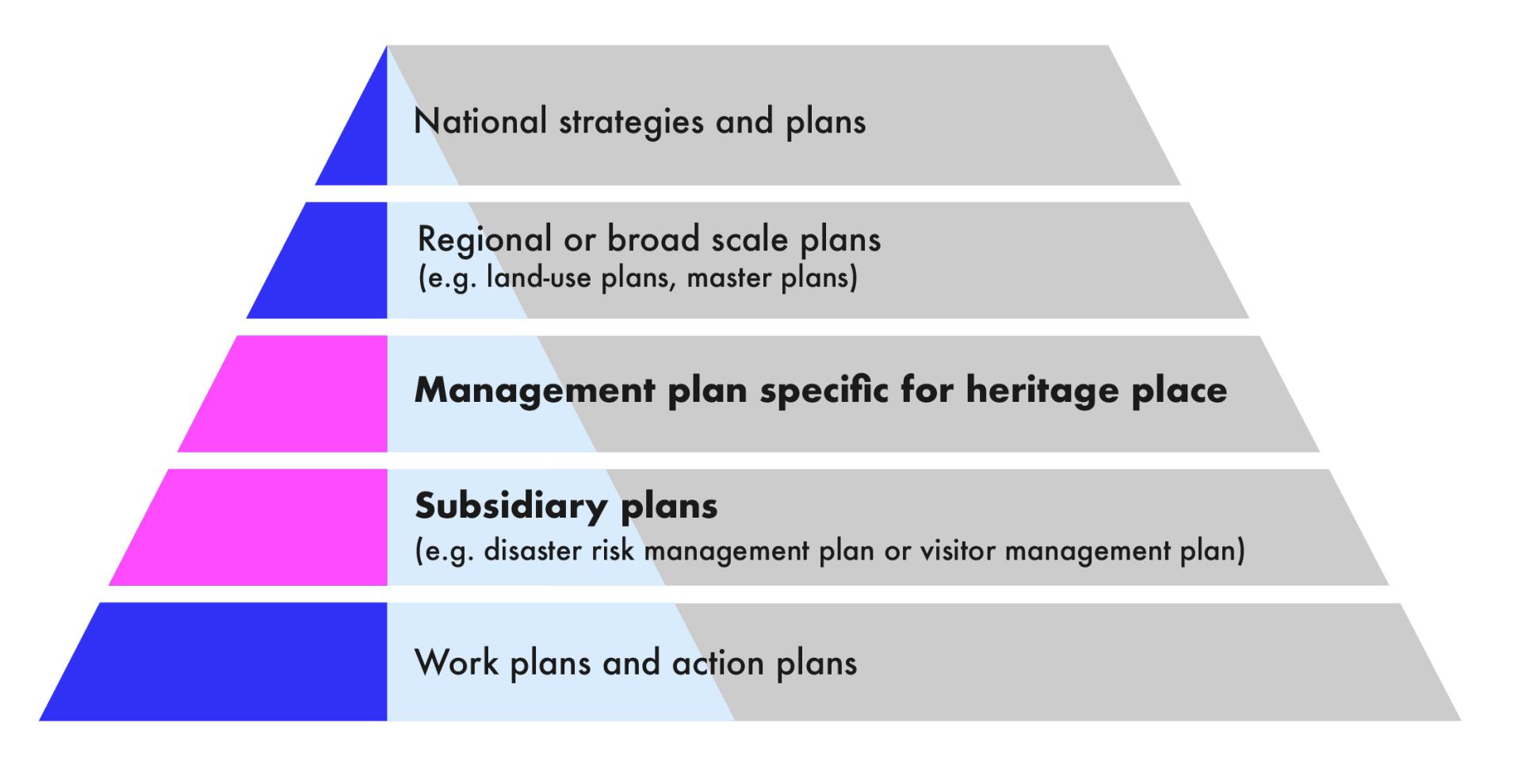
Figure 5.6 A diagram showing the relationships between policies and plans at different levels and how the management plan specific for the heritage place and its subsidiary plans should be interlinked with them to ensure effective implementation. Source: adapted from Warboys et al. (2015)
The manual sets out a clear methodology for identifying, assessing and then mitigating disaster risks to World properties, which strengthens the capacity of managers and enhances their skills in managing disasters. It advocates well-considered DRM planning as a key tool to anticipate, plan and prepare for disasters.