Image

If you need to know how to
Broadly speaking, there are two main types of impact assessment that can be carried out at different scales, depending on the nature of the proposed action, and can focus on specific issues, including heritage:
i) Environmental and Social Impact Assessment (ESIA); if the assessment focuses on heritage it may be called a
(HIA).
ii) Strategic Environmental Assessment (SEA)
Environmental and Social Impact Assessment (ESIA), also known as an Environmental Impact Assessment (EIA), refers to an assessment of the impacts of a specific proposed action at a project level. The assessment is normally carried out on larger projects, with significant potential environmental impacts, but in some cases can cover small-scale projects at sensitive locations. Almost every country in the world has an existing ESIA system that aims to protect the both the natural, as well as the cultural, environment. Large multilateral financial institutions, such as development banks, typically require an impact assessment – including an assessment of impacts on natural and cultural heritage – for particular kinds of projects. Indeed, many international banks that have signed the Equator Principles now include impact assessment as a standard planning tool and use it to screen proposed actions. ESIAs often include assessment of impacts on heritage, as well as other environmental and social considerations. Section 5 of this Guidance explains how World Heritage and OUV should be considered as part of a wider ESIA.
Heritage impact assessments are project-specific assessments that focus on the potential effect on a heritage place’s OUV and other heritage/conservation values. In the context of World Heritage properties, a
should focus on identifying and assessing negative and positive impacts on the attributes which convey the Outstanding Universal Value of the
. Section 6 discusses how to consider World Heritage issues as part of such an assessment.
In addition to an ESIA, a growing number of countries also require impact assessment of the preceding policies, plans and/or programmes that set the context for individual projects – this is referred to as a Strategic Environmental Assessment (SEA). By proactively considering heritage issues early in the planning process, SEA can inform better decision-making when projects are being considered.
SEA is also better suited than ESIA to assessing the cumulative impacts of multiple projects at a landscape/regional scale (including those that do not require ESIA); and at setting strategic and generic mitigation measures that can apply consistently to all projects. Figure 4.2 summarizes the main differences between ESIA and SEA.
In impact assessment the word ‘environment’ includes physical, biological, resource use, social, cultural, health, and economic dimensions, so it can be applied equally to both natural and cultural World .
In impact assessment the word ‘environment’ includes physical, biological, resource use, social, cultural, health, and economic dimensions, so it can be applied equally to both natural and cultural World .
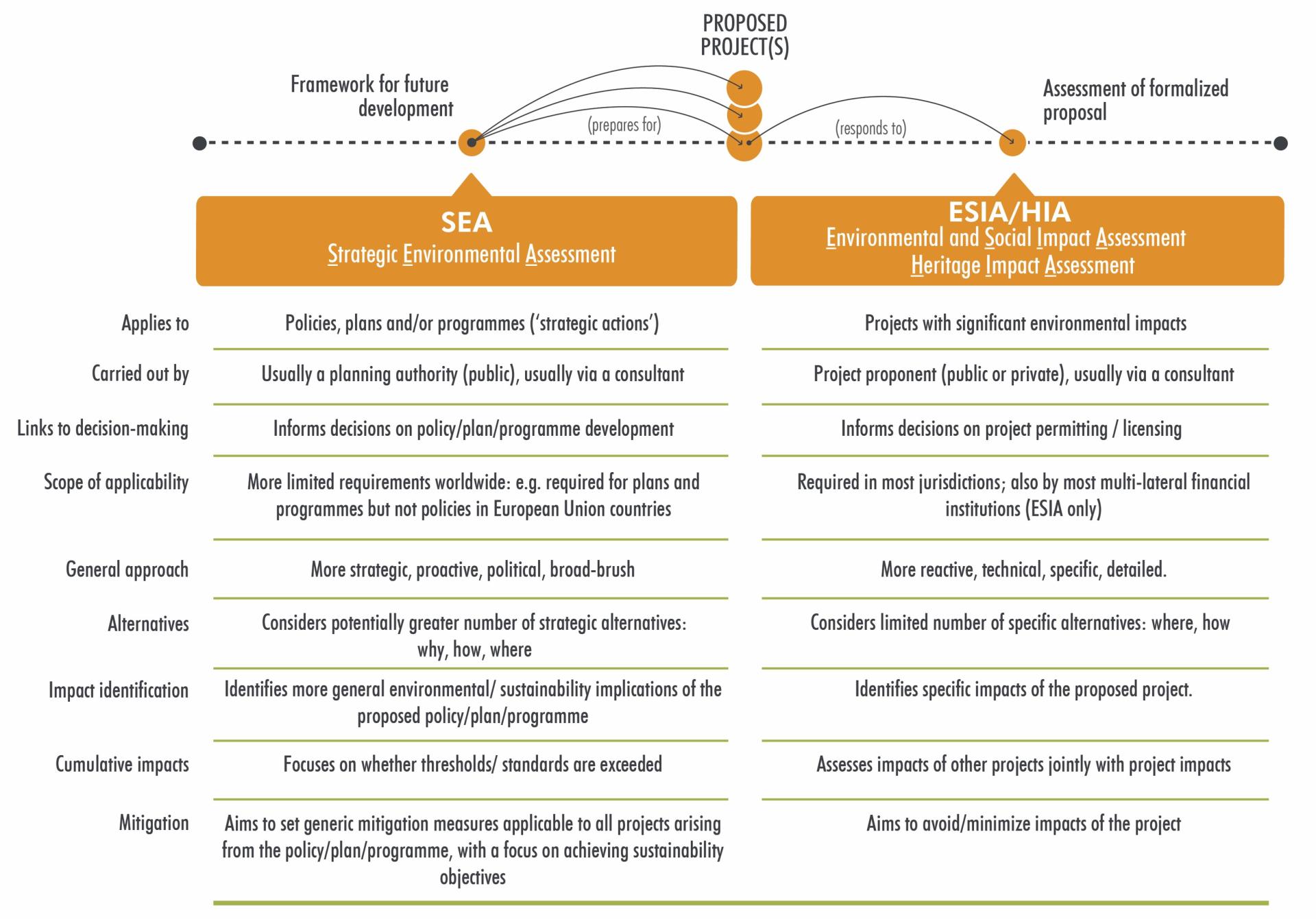
Figure 4.2. The difference between SEA and ESIA. Source: Content adapted from CSIR, 1996; World Leadership.
As Figure 4.2 shows, SEA can provide a context and framework for considering individual projects and their ESIAs. SEA and ESIA are complementary processes that can be applied at the same
when appropriate, and on multiple occasions. SEA has the advantage of being more proactive and strategic, and can consider issues on a larger landscape scale, potentially reducing external pressure on World Heritage and supporting decision-making before any specific projects are proposed. ESIA can then help understand a specific proposed action in detail and ensure there are no potential negative impacts on Outstanding Universal Value. For example, an SEA for a regional or national transport network can provide a framework for the impact assessments of individual transport projects by identifying environmental constraints, preferred alternatives, and likely cumulative impacts. It can also set conditions (‘mitigation measures’) for subsequent projects that help to protect valued assets, including heritage. However, the SEA will not remove the need to undertake ESIAs for the individual transport projects.
The principles and overall approaches outlined in this Guidance are relevant to SEA and a future guidance document will be prepared to address SEA in more detail.
Finally, the various national, regional and international standards developed by the finance sector should be noted. All forms of impact assessment should meet these as minimum requirements and, in a World Heritage context, assessments should aim to reach the most exemplary standards.