
KEY POINTS
  • An integrated approach to planning and management is essential to ensure maintenance of all aspects of the OUV and other heritage values and, in this way, to provide guidance on what needs to persist and what can change in World Heritage All inherited assets that people value for reasons beyond mere utility. Heritage is a broad concept and includes shared legacies from the natural environment, the creations of humans and the creations and interactions of humans and nature. It encompasses built, terrestrial, freshwater and marine environments, landscapes and seascapes, biodiversity, geodiversity, collections, cultural practices, knowledge, living experiences, etc. properties and other heritage places over time.
  • Planning is required at various geographic scales and organizational levels and in thematic areas, all of which can affect the management of the heritage place. It is important that heritage is considered within broader planning instruments because what happens around the heritage place can deeply influence its state of conservation.
  • In many cases, management plans are a legal requirement within national laws for natural and cultural heritage protection, and the specificities of World Heritage All inherited assets that people value for reasons beyond mere utility. Heritage is a broad concept and includes shared legacies from the natural environment, the creations of humans and the creations and interactions of humans and nature. It encompasses built, terrestrial, freshwater and marine environments, landscapes and seascapes, biodiversity, geodiversity, collections, cultural practices, knowledge, living experiences, etc. , including the OUV and attributes, need to be reflected in such plans.
  • Any subsidiary plans will need to be carefully integrated within the management plan and aligned in terms of time-frames and implementation.
  • Planning is a continuous process, a sequence of iterative steps, not a one-time event. It can include developing a management plan or other management instruments or actions to achieve management objectives. The cyclical participative process to develop various plans is as important as the plans themselves.
  • Management planning The process used to establish how to get from the present situation (here) to a desired state or point in the future (there). This requires a clear understanding of the present situation and deciding what is to be achieved, within a specific budget, what actions to take and what the time-frame will be. Planning for a World Heritage property A cultural, natural or mixed heritage place inscribed on the World Heritage List and therefore considered to be of OUV for humanity. The responsibility for nominating a property to the World Heritage List falls upon the State(s) Party(ies) where it is located. The World Heritage Committee decides whether a property should be inscribed on the World Heritage List, taking into account the technical recommendations of the Advisory Bodies following rigorous evaluation processes.
    When used as a general term, World Heritage refers to all the natural, cultural and mixed properties inscribed on the World Heritage List.
    or other heritage place can involve many different types of planning at various geographic scales and organizational levels.The management plan is the main product of the management planning process for a World Heritage property A cultural, natural or mixed heritage place inscribed on the World Heritage List and therefore considered to be of OUV for humanity. The responsibility for nominating a property to the World Heritage List falls upon the State(s) Party(ies) where it is located. The World Heritage Committee decides whether a property should be inscribed on the World Heritage List, taking into account the technical recommendations of the Advisory Bodies following rigorous evaluation processes.
    When used as a general term, World Heritage refers to all the natural, cultural and mixed properties inscribed on the World Heritage List.
    . As a process, management planning does not end with the production of the management plan but continues through its implementation, monitoring and evaluation. The management plan can be accompanied by a number of other plans or related documents that derive from or support it, such as conservation plans, disaster risk management plans, sustainable tourism or visitor management plans or strategies, interpretation plans, business plans, etc.
    needs long-term thinking, so that heritage places are conserved for future generations, combined with an understanding of the practical steps that need to be taken in the short and medium term.
5.2.1
Why does management need planning?

The Operational Guidelines state that an integrated approach to planning and management is essential to help guide the continuity and changes that take place at properties over time and to ensure maintenance of all aspects of their Outstanding Universal Value (OUV). As such, management planning is for:

  • directing management towards a desired future rather than simply r acting to problems as they arise;
  • ensuring that management measures are based on a clear understanding of the present state of conservation of the property and that priority is placed on protecting the OUV;
  • anticipating potential factors affecting the property as well as future problems and opportunities, thereby providing guidance for managers to frame long-term strategic thinking, as well as day-today operations;
  • strengthening collaboration and promoting joint action, particularly in properties with complex governance arrangements, where management responsibilities may be shared among several managers;
  • transparently and continuously communicating how a property will be managed to retain its OUV:
  • promoting continuity and maintaining commitments, particularly in contexts with high political pressure and/or staff turnover;
  • promoting management effectiveness by collaboratively defining desired outcomes and subsequently monitoring whether they have been achieved or not.
5.2.2
Broader policy and planning frameworks

Before starting to plan for a specific heritage place, it is helpful to consider the broader policy and planning context, in particular the broader planning framework or hierarchy, which can extend beyond the heritage place.

Planning is required at various geographic scales and organizational levels, as well as in thematic areas, all of which can affect the management of the heritage place. At national, regional and local levels, spatial planning activities determine which areas of land and sea will be used for what purposes and outline strategies, rules and regulations for development. Management planning The process used to establish how to get from the present situation (here) to a desired state or point in the future (there). This requires a clear understanding of the present situation and deciding what is to be achieved, within a specific budget, what actions to take and what the time-frame will be. Planning for a World Heritage property A cultural, natural or mixed heritage place inscribed on the World Heritage List and therefore considered to be of OUV for humanity. The responsibility for nominating a property to the World Heritage List falls upon the State(s) Party(ies) where it is located. The World Heritage Committee decides whether a property should be inscribed on the World Heritage List, taking into account the technical recommendations of the Advisory Bodies following rigorous evaluation processes.
When used as a general term, World Heritage refers to all the natural, cultural and mixed properties inscribed on the World Heritage List.
or other heritage place can involve many different types of planning at various geographic scales and organizational levels.The management plan is the main product of the management planning process for a World Heritage property A cultural, natural or mixed heritage place inscribed on the World Heritage List and therefore considered to be of OUV for humanity. The responsibility for nominating a property to the World Heritage List falls upon the State(s) Party(ies) where it is located. The World Heritage Committee decides whether a property should be inscribed on the World Heritage List, taking into account the technical recommendations of the Advisory Bodies following rigorous evaluation processes.
When used as a general term, World Heritage refers to all the natural, cultural and mixed properties inscribed on the World Heritage List.
. As a process, management planning does not end with the production of the management plan but continues through its implementation, monitoring and evaluation. The management plan can be accompanied by a number of other plans or related documents that derive from or support it, such as conservation plans, disaster risk management plans, sustainable tourism or visitor management plans or strategies, interpretation plans, business plans, etc.
for heritage places should be seen as a part of these broader planning processes to ensure they are harmonized and not in conflict. As a result, several overlapping plans can coexist with a heritage management plan, as in the case of large areas, such as natural protected areas, cultural landscapes or urban settlements.

Broader planning instruments often go beyond the specific heritage place both in terms of scale and scope. However, it is important that heritage is considered within such planning because what happens around the heritage place can deeply influence its state of conservation. By way of example, a regional government may develop a tourism strategy at regional scale with visitor projections and tourism infrastructure proposals that would seriously affect the heritage place.

5.2.3
Defining management objectives for planning

Planning is a continuous process, not a one-time event. If heritage places are to be conserved for future generations, long-term thinking is needed, combined with an understanding of the practical steps that need to be taken in the short and medium term. To understand the difference and harness planning for long-, short- and medium-term time-frames, it is necessary to clarify the following:

  • The overall management objectives for the whole management system, which broadly define: what must be done to maintain the OUV of the World Heritage property A cultural, natural or mixed heritage place inscribed on the World Heritage List and therefore considered to be of OUV for humanity. The responsibility for nominating a property to the World Heritage List falls upon the State(s) Party(ies) where it is located. The World Heritage Committee decides whether a property should be inscribed on the World Heritage List, taking into account the technical recommendations of the Advisory Bodies following rigorous evaluation processes.
    When used as a general term, World Heritage refers to all the natural, cultural and mixed properties inscribed on the World Heritage List.
    as well as other important heritage values; what management measures are necessary to conserve the attributes; and how the property can contribute to sustainable development and what benefits it aims to generate (see 3.5).
  • The strategies (or strategic directions or goals) to guide the change and continuity of the heritage place over a twenty- or thirty-year time-frame, in view of anticipated future challenges and opportunities. Long-term thinking is also important to deal with issues that need to be addressed over a long period of time, involving more than one management cycle. For instance, any possible regeneration of coral reefs after bleaching events usually requires many years. Similarly, introducing mitigation and adaptation measures to deal with the effects of climate change on a cultural landscape will also require longer-term and more strategic management responses.
  • The desired outcomes, that is, what needs to be achieved over a specific management cycle, which is the subject of a management plan and its time-frame. 

Being clear about the distinction between long-, medium- and short-term steps requires a clear understanding of:

  • the present situation at the heritage place, particularly with regard to heritage values and attributes and the factors affecting them;
  • whether the management instruments need to operate on a more strategic or operational level;
  • what actions need to be taken and the outputs it will produce;
  • what the time-frame will be for carrying out the actions;
  • what inputs/resources are needed;
  • who will be responsible for the implementation of the defined actions, and how monitoring and evaluation will be carried out.

Once the time-frame for planning has been decided, appropriate actions can be identified for meeting the needs. For example, a long-term action may include revising relevant legislation or setting up a collaborative management structure, whereas short-term actions may include adopting emergency shelters for heritage places impacted by a disaster or hiring temporary staff for priority interventions.

In addition, planning is dependent on other processes of the management system for the heritage place. For example, the state of conservation will need to be actively monitored in order to know what factors are affecting the heritage place, and these can only be properly identified if there is a good understanding of its values and attributes. Therefore, planning is not a linear series of steps towards the preparation of a management plan; it is an iterative and dynamic process with different feedback loops, where different elements interact and inform each other.
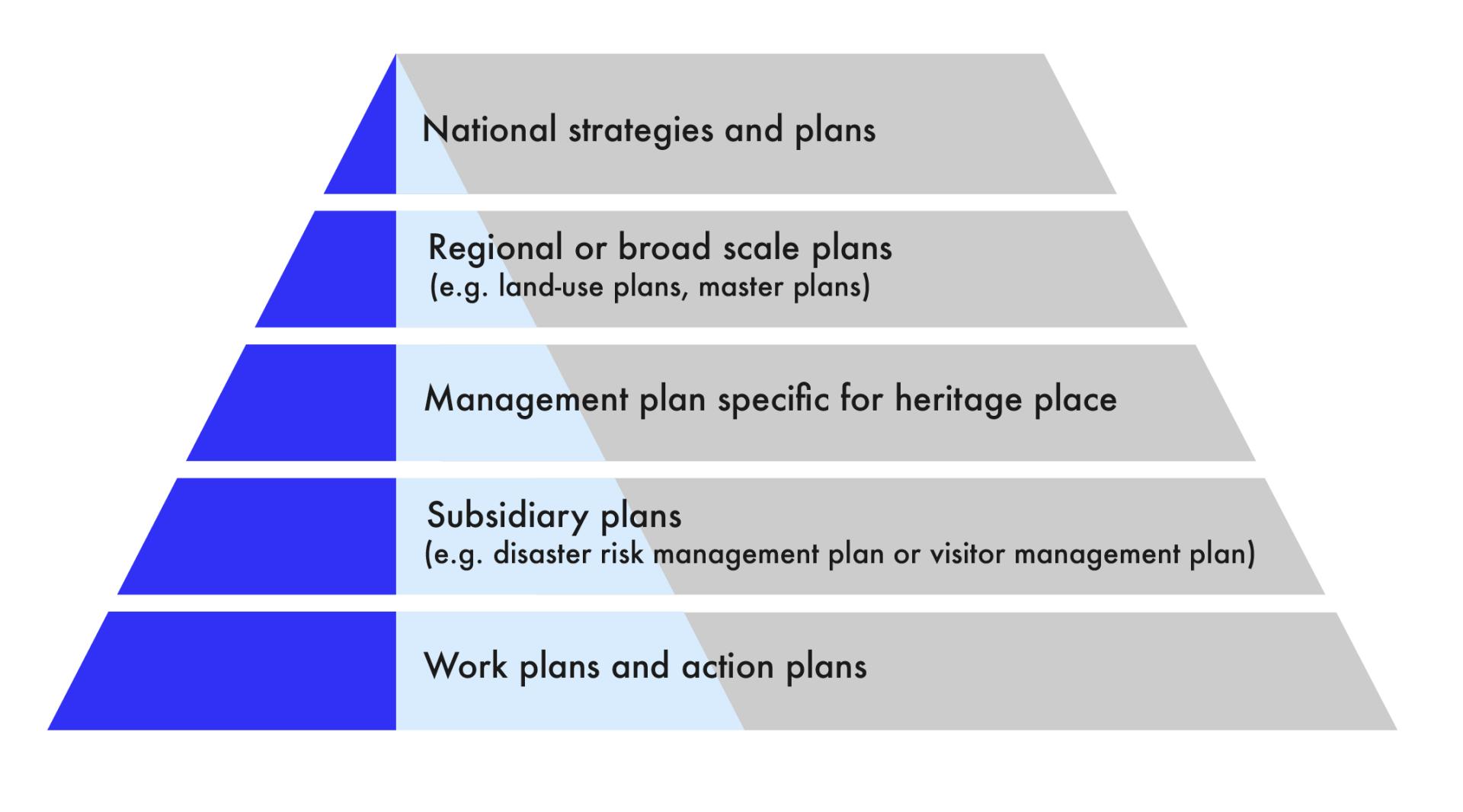
Figure 5.1 The relationships between policies and plans at different levels. Source: adapted from Worboys et al. (2015).

5.2.4
Linking to complementary processes

Heritage All inherited assets that people value for reasons beyond mere utility. Heritage is a broad concept and includes shared legacies from the natural environment, the creations of humans and the creations and interactions of humans and nature. It encompasses built, terrestrial, freshwater and marine environments, landscapes and seascapes, biodiversity, geodiversity, collections, cultural practices, knowledge, living experiences, etc. practitioners undertake many other processes that also contribute to maintaining the values of a heritage place, such as providing tourism and visitor services, mitigating risks, reducing impacts from disasters, carrying out research, fostering the engagement of local communities or facilitating educational activities. Many heritage places, therefore, have other thematic or subsidiary plans that address these issues, for example, a DRM plan (see 5.6), tourism strategy and heritage interpretation plan (see 5.9). It is very important that such plans sit under the umbrella of the heritage place’s main management plan.

Any subsidiary or complementary plans will need to be carefully integrated within the management plan with the fundamental objectives of sustaining the OUV and other heritage values and aligning them in terms of time-frames and implementation. If they have diverging timelines, there is a risk that the plans include more actions than can be delivered with existing human capacity and financial resources.

There is also a risk that the timing of their implementation is not harmonized, preventing certain actions from starting until others are concluded and hindering them in achieving their desired outcomes. In order to avoid these problems, it is essential that there is strong coordination between managers and planning teams that link between the complementary planning processes and ensure they are mutually supportive.

The following aspects, therefore, are it is of great importance: who is involved in planning; what knowledge and information is used; what procedures are followed; what criteria are used to decide what is to be achieved; the best course of action to get there; and who has the power to decide on all these aspects. All this is dependent on many things, such as:

  • the governance arrangements for the heritage place (see 4.1, 4.2, 4.3 and 4.4);
  • how effective other elements of the management system are (see EoH Toolkit 2.0);
  • what approach is taken towards preparing the management plan (e.g. if developed directly by managers, government agencies or external consultants; see 5.2);
  • the resources available (if there is a need to look for extraordinary funding to develop the plan; see 5.4);
  • the purpose of the plan within the larger planning framework (see 3.1, 3.2, 3.3, 3.4, 5.1 and EoH Toolkit 2.0, Tool 6).
5.2.5
How to link all the processes and timeframes effectively

To link all processes and time-frames more effectively it can be useful if the outputs of the management planning can envisage a number of key instruments:

  • A long-term strategy or strategic plan: a short document to tackle existing and anticipated management challenges that require a long-term perspective as well as sustained efforts over a long period of time (perhaps over twenty to thirty years).
  • A management plan: a slightly longer document that identifies desired management outcomes for a shorter period of time (perhaps five to ten years). In addition, for serial and transboundary World Heritage All inherited assets that people value for reasons beyond mere utility. Heritage is a broad concept and includes shared legacies from the natural environment, the creations of humans and the creations and interactions of humans and nature. It encompasses built, terrestrial, freshwater and marine environments, landscapes and seascapes, biodiversity, geodiversity, collections, cultural practices, knowledge, living experiences, etc. properties, it may be necessary to have a management planning framework to guide management across the different component parts of the property.
  • An operational or work plan: a much more detailed but practical document that specifies how to implement the management plan in detail. It lists exactly who will do what, in what way and with what funding over a one-to-two-year period. When a management plan itself covers a short period of time (three to five years), it may include a programme of actions (sometimes also called an action plan), directly showing how the plan is to be implemented.
  • Subsidiary plans: in some cases, particular attention needs paying to specific areas of activity (from DRM to heritage interpretation) and in these cases additional plans might be written. However, they must all be well coordinated with the content of the main management plan.

The managers of each heritage place will need to decide which of these instruments are helpful in supporting management and conservation efforts.

Box 5.1 Examples of Management Objectives and Desired Management Outcomes

Distinguishing between management objectives and management outcomes is important. The examples given here are for highlighting the differences, where the objectives and desired outcomes do not directly correspond to each other.

Examples of management objectives

  • To preserve the traditional building techniques associated with wooden architecture.
  • To protect the mangroves along the coastline of the property.
  • To maintain the historic green spaces within the city centre.
  • To maintain the townscape character of the traditional human settlement.
  • To maintain the wine-making industry as the key economic activity within the cultural landscape.
  • To preserve the pilgrimage routes to the sacred places.
  • To maintain the habitat necessary to the survival of the endangered species.

Examples of desired management outcomes

  • Number of skilled crafts people increased by at least 20% by 2026.
  • Mangroves restored back to 60% of original extent by 2030.
  • Historic garden within northern area of the historic urban centre fully rehabilitated by 2027.
  • Overfishing of a particular species (state which one) significantly reduced by 2025 by working in collaboration with fishing communities.
  • Interpretation of the property enhanced by working with rights-holders to improve the quality of guided visits within the property.
  • Gazettement of the community-conserved areas within the buffer zone of the property completed.
  • Visitor management enhanced through the construction of a new visitor centre.
REFLECTION QUESTIONS
  • Have management objectives for the World Heritage property A cultural, natural or mixed heritage place inscribed on the World Heritage List and therefore considered to be of OUV for humanity. The responsibility for nominating a property to the World Heritage List falls upon the State(s) Party(ies) where it is located. The World Heritage Committee decides whether a property should be inscribed on the World Heritage List, taking into account the technical recommendations of the Advisory Bodies following rigorous evaluation processes.
    When used as a general term, World Heritage refers to all the natural, cultural and mixed properties inscribed on the World Heritage List.
    or heritage place been identified?
  • Are the objectives clearly linked to the values and attributes of the property?
  • Are the objectives specific enough to guide the management system for the property?
  • How many different broad-scale plans affect your heritage place? Do they take heritage into consideration?
  • Is it clear which is the main planning instrument that guides the management of the property?
  • Is the management plan well integrated with those other planning instruments that influence the
    management of the property (including plans with a broad territorial scope, such as a land-use plan, regional tourism plan or a master plan)?
  • Is the overall planning framework adequate to manage the property effectively?
  • Is the planning framework adequate to manage any existing buffer zone(s) effectively?
  • Who is involved in the planning process for the heritage place?
  • What kind of subsidiary plans does your heritage place have?
  • What is the time-frame of the management cycle at your heritage place? Is it connected with that of broader scale plans and especially with the time-frame of subsidiary plans?
  • Is there sufficient time to develop and approve a new plan before the time-frame of the previous plan ends?
ADDITIONAL RESOURCES
  • UNESCO, ICCROM The International Centre for the Study of the Preservation and Restoration of Cultural Property (ICCROM) is an intergovernmental organization created to promote the conservation of all forms of cultural heritage worldwide. Its headquarters are located in Rome, Italy.Its mission is to provide Member States with the best tools, knowledge, skills and enabling environment to preserve their cultural heritage in all of its forms, for the benefit of all people. It achieves this by working with institutions and professionals on the ground, nationally and internationally along three lines of action:studying and promoting cultural heritage conservation;mobilizing and coordinating expertise to address critical issues of conservation;providing the training and research tools for implementation to strengthen the
    professional community.
    , ICOMOS The International Council on Monuments and Sites (ICOMOS) is an international nongovernmental organization bringing together cultural heritage professionals from across the world. Its headquarters are located in Charenton le Pont, near Paris, France.ICOMOS was founded in 1965 after the adoption of the Venice Charter, in order to promote the doctrine and the techniques of conservation. It advises the World Heritage Committee The main decision-making body of the World Heritage Convention The Convention Concerning the Protection of the World Cultural and Natural Heritage is an international treaty adopted by the UN in 1972 that defines the kind of natural or cultural sites which can be considered for inscription on the World Heritage List for their Outstanding Universal Value for all humankind. Commonly known as the World Heritage Convention, it establishes how the international community as a whole is responsible for
    the protection of such heritage and sets out the duties of States Parties in identifying potential sites that may be eligible for inscription onto the World Heritage List and their role in protecting and preserving them. By signing the Convention, each country pledges to conserve not only the sites situated on its territory that have been recognized as being of Outstanding Universal Value, but also to protect its national heritage and to be involved in international efforts to protect, conserve and promote the heritage of humankind.
    , it consists of representatives from 21 of the States Parties to the Convention elected for terms up to six years, but voluntarily reduced to 4 years to ensure equitable representation.The Committee meets at least once a year. It is one of the key implementing actors of the World Heritage Convention The Convention Concerning the Protection of the World Cultural and Natural Heritage is an international treaty adopted by the UN in 1972 that defines the kind of natural or cultural sites which can be considered for inscription on the World Heritage List for their Outstanding Universal Value for all humankind. Commonly known as the World Heritage Convention, it establishes how the international community as a whole is responsible for
    the protection of such heritage and sets out the duties of States Parties in identifying potential sites that may be eligible for inscription onto the World Heritage List and their role in protecting and preserving them. By signing the Convention, each country pledges to conserve not only the sites situated on its territory that have been recognized as being of Outstanding Universal Value, but also to protect its national heritage and to be involved in international efforts to protect, conserve and promote the heritage of humankind.
    , allocates financial assistance from the World Heritage Fund A trust fund established according to article 15 of the World Heritage Convention in conformity with the provisions of the Financial Regulations of UNESCO to assist in the protection of properties forming part of the World Cultural and Natural Heritage of Outstanding Universal Value.The Fund for the Protection of the World Natural and Cultural Heritage of Outstanding Universal Value, commonly known as World Heritage Fund, consists of compulsory and voluntary contributions made by States Parties to the Convention, and any other resources authorized by the Fund’s regulations. These include resources received from UNESCO, UN organisations, public or private bodies or individuals, funds raised for the benefit of the Fund, any other source acceptable to the World Heritage Committee. The Fund may be used for purposes defined by the World Heritage Committee and may include studies, provision of expertise and skilled labour, training activities, low-interest or interest- free loans or, in exceptional cases and for special reasons of non- repayable subsidies for the protection, conservation, presentation and rehabilitation of the World Natural and Cultural Heritage. and has the final say on whether a site shall be inscribed on the World Heritage List. It examines reports on the state of conservation of inscribed sites and decides on the inscription or removal of properties on the List of World Heritage in Danger.The main functions of the Convention, in cooperation with States Parties, are to:decide, on the basis of Tentative Lists and nominations submitted by States Parties, which cultural and natural properties of Outstanding Universal Value are to be inscribed on the World Heritage List and therefore protected under the Convention;examine the state of conservation of properties inscribed on the World Heritage List through processes of Reactive Monitoring and Periodic Reporting;decide which properties inscribed on the World Heritage List are to be inscribed
    on, or removed from the List of World Heritage in Danger;decide whether a property should be deleted from the World Heritage List;define the procedure by which requests for International Assistance are to be
    considered and carry out studies and consultations as necessary before coming to a decision;determine how the resources of the World Heritage Fund A trust fund established according to article 15 of the World Heritage Convention in conformity with the provisions of the Financial Regulations of UNESCO to assist in the protection of properties forming part of the World Cultural and Natural Heritage of Outstanding Universal Value.The Fund for the Protection of the World Natural and Cultural Heritage of Outstanding Universal Value, commonly known as World Heritage Fund, consists of compulsory and voluntary contributions made by States Parties to the Convention, and any other resources authorized by the Fund’s regulations. These include resources received from UNESCO, UN organisations, public or private bodies or individuals, funds raised for the benefit of the Fund, any other source acceptable to the World Heritage Committee. The Fund may be used for purposes defined by the World Heritage Committee and may include studies, provision of expertise and skilled labour, training activities, low-interest or interest- free loans or, in exceptional cases and for special reasons of non- repayable subsidies for the protection, conservation, presentation and rehabilitation of the World Natural and Cultural Heritage. can be used most advantageously to assist States Parties in the protection of their properties of Outstanding Universal Value;seek ways to increase the World Heritage Fund A trust fund established according to article 15 of the World Heritage Convention in conformity with the provisions of the Financial Regulations of UNESCO to assist in the protection of properties forming part of the World Cultural and Natural Heritage of Outstanding Universal Value.The Fund for the Protection of the World Natural and Cultural Heritage of Outstanding Universal Value, commonly known as World Heritage Fund, consists of compulsory and voluntary contributions made by States Parties to the Convention, and any other resources authorized by the Fund’s regulations. These include resources received from UNESCO, UN organisations, public or private bodies or individuals, funds raised for the benefit of the Fund, any other source acceptable to the World Heritage Committee. The Fund may be used for purposes defined by the World Heritage Committee and may include studies, provision of expertise and skilled labour, training activities, low-interest or interest- free loans or, in exceptional cases and for special reasons of non- repayable subsidies for the protection, conservation, presentation and rehabilitation of the World Natural and Cultural Heritage. ;submit a report on its activities every two years to the General Assembly of States
    Parties and to the UNESCO General Conference;review and evaluate periodically the implementation of the Convention;revise and adopt the Operational Guidelines.
    by carrying out technical evaluations of properties with cultural values proposed for inscription on the World Heritage List, as well as with comparative studies, technical assistance and reporting on the state of conservation of inscribed properties. In order to tackle the numerous facets of immovable cultural heritage and to develop the necessary scientific knowledge and methodological approaches for its protection, conservation and interpretation, ICOMOS has established scientific international committees on various cultural heritage themes and issues. The international scientific committees are ICOMOS technical bodies. As such, they undertake research, develop conservation theory, guidelines and charters, foster training for better heritage conservation, promote international exchange of scientific information and carry out common projects.
    , IUCN The International Union for Conservation of Nature (IUCN) is an international membership association composed of both government and civil society organizations. It harnesses the experience, resources and reach of its member organizations and the input of its experts to promote nature conservation and accelerate the transition to sustainable development. The headquarters of the IUCN Secretariat are located in Gland, Switzerland.Created in 1948, IUCN has evolved into the world’s largest environmental network: IUCN experts are organized into six commissions dedicated to species survival, environmental law, protected areas, social and economic policy, ecosystem management and education and communication. (2023). Tool 6 Management The combination of processes, activities and actions taken in relation to decision-making, planning, allocating resources, implementing and monitoring to protect a heritage place for present and future generations. Planning Framework and Tool 8 Decision making processes in Enhancing Our Heritage Toolkit 2.0. Paris, UNESCO.
  • Spoelder, P., Lockwood, M., Cowell, S., Gregerson, P and Henchman, A. (2015) Planning, in G. L. Worboys, M. Lockwood, A. Kothari, S. Feary and I. Pulsford (eds) Protected Area A clearly defined geographical space recognized, dedicated and managed, through legal and other effective means, to achieve the long-term conservation of nature with associated ecosystem services and cultural values. Governance The interactions among structures, processes and traditions that determine how power and responsibilities are exercised, how decisions are taken and how different actors have their say in relation to the identification, protection and management of the World Heritage All inherited assets that people value for reasons beyond mere utility. Heritage is a broad concept and includes shared legacies from the natural environment, the creations of humans and the creations and interactions of humans and nature. It encompasses built, terrestrial, freshwater and marine environments, landscapes and seascapes, biodiversity, geodiversity, collections, cultural practices, knowledge, living experiences, etc. property or the heritage place. and Management The combination of processes, activities and actions taken in relation to decision-making, planning, allocating resources, implementing and monitoring to protect a heritage place for present and future generations. , pp. 381–412. Canberra (Australia), ANU Press.
  • UNESCO, ICCROM The International Centre for the Study of the Preservation and Restoration of Cultural Property (ICCROM) is an intergovernmental organization created to promote the conservation of all forms of cultural heritage worldwide. Its headquarters are located in Rome, Italy.Its mission is to provide Member States with the best tools, knowledge, skills and enabling environment to preserve their cultural heritage in all of its forms, for the benefit of all people. It achieves this by working with institutions and professionals on the ground, nationally and internationally along three lines of action:studying and promoting cultural heritage conservation;mobilizing and coordinating expertise to address critical issues of conservation;providing the training and research tools for implementation to strengthen the
    professional community.
    , ICOMOS The International Council on Monuments and Sites (ICOMOS) is an international nongovernmental organization bringing together cultural heritage professionals from across the world. Its headquarters are located in Charenton le Pont, near Paris, France.ICOMOS was founded in 1965 after the adoption of the Venice Charter, in order to promote the doctrine and the techniques of conservation. It advises the World Heritage Committee The main decision-making body of the World Heritage Convention The Convention Concerning the Protection of the World Cultural and Natural Heritage is an international treaty adopted by the UN in 1972 that defines the kind of natural or cultural sites which can be considered for inscription on the World Heritage List for their Outstanding Universal Value for all humankind. Commonly known as the World Heritage Convention, it establishes how the international community as a whole is responsible for
    the protection of such heritage and sets out the duties of States Parties in identifying potential sites that may be eligible for inscription onto the World Heritage List and their role in protecting and preserving them. By signing the Convention, each country pledges to conserve not only the sites situated on its territory that have been recognized as being of Outstanding Universal Value, but also to protect its national heritage and to be involved in international efforts to protect, conserve and promote the heritage of humankind.
    , it consists of representatives from 21 of the States Parties to the Convention elected for terms up to six years, but voluntarily reduced to 4 years to ensure equitable representation.The Committee meets at least once a year. It is one of the key implementing actors of the World Heritage Convention The Convention Concerning the Protection of the World Cultural and Natural Heritage is an international treaty adopted by the UN in 1972 that defines the kind of natural or cultural sites which can be considered for inscription on the World Heritage List for their Outstanding Universal Value for all humankind. Commonly known as the World Heritage Convention, it establishes how the international community as a whole is responsible for
    the protection of such heritage and sets out the duties of States Parties in identifying potential sites that may be eligible for inscription onto the World Heritage List and their role in protecting and preserving them. By signing the Convention, each country pledges to conserve not only the sites situated on its territory that have been recognized as being of Outstanding Universal Value, but also to protect its national heritage and to be involved in international efforts to protect, conserve and promote the heritage of humankind.
    , allocates financial assistance from the World Heritage Fund A trust fund established according to article 15 of the World Heritage Convention in conformity with the provisions of the Financial Regulations of UNESCO to assist in the protection of properties forming part of the World Cultural and Natural Heritage of Outstanding Universal Value.The Fund for the Protection of the World Natural and Cultural Heritage of Outstanding Universal Value, commonly known as World Heritage Fund, consists of compulsory and voluntary contributions made by States Parties to the Convention, and any other resources authorized by the Fund’s regulations. These include resources received from UNESCO, UN organisations, public or private bodies or individuals, funds raised for the benefit of the Fund, any other source acceptable to the World Heritage Committee. The Fund may be used for purposes defined by the World Heritage Committee and may include studies, provision of expertise and skilled labour, training activities, low-interest or interest- free loans or, in exceptional cases and for special reasons of non- repayable subsidies for the protection, conservation, presentation and rehabilitation of the World Natural and Cultural Heritage. and has the final say on whether a site shall be inscribed on the World Heritage List. It examines reports on the state of conservation of inscribed sites and decides on the inscription or removal of properties on the List of World Heritage in Danger.The main functions of the Convention, in cooperation with States Parties, are to:decide, on the basis of Tentative Lists and nominations submitted by States Parties, which cultural and natural properties of Outstanding Universal Value are to be inscribed on the World Heritage List and therefore protected under the Convention;examine the state of conservation of properties inscribed on the World Heritage List through processes of Reactive Monitoring and Periodic Reporting;decide which properties inscribed on the World Heritage List are to be inscribed
    on, or removed from the List of World Heritage in Danger;decide whether a property should be deleted from the World Heritage List;define the procedure by which requests for International Assistance are to be
    considered and carry out studies and consultations as necessary before coming to a decision;determine how the resources of the World Heritage Fund A trust fund established according to article 15 of the World Heritage Convention in conformity with the provisions of the Financial Regulations of UNESCO to assist in the protection of properties forming part of the World Cultural and Natural Heritage of Outstanding Universal Value.The Fund for the Protection of the World Natural and Cultural Heritage of Outstanding Universal Value, commonly known as World Heritage Fund, consists of compulsory and voluntary contributions made by States Parties to the Convention, and any other resources authorized by the Fund’s regulations. These include resources received from UNESCO, UN organisations, public or private bodies or individuals, funds raised for the benefit of the Fund, any other source acceptable to the World Heritage Committee. The Fund may be used for purposes defined by the World Heritage Committee and may include studies, provision of expertise and skilled labour, training activities, low-interest or interest- free loans or, in exceptional cases and for special reasons of non- repayable subsidies for the protection, conservation, presentation and rehabilitation of the World Natural and Cultural Heritage. can be used most advantageously to assist States Parties in the protection of their properties of Outstanding Universal Value;seek ways to increase the World Heritage Fund A trust fund established according to article 15 of the World Heritage Convention in conformity with the provisions of the Financial Regulations of UNESCO to assist in the protection of properties forming part of the World Cultural and Natural Heritage of Outstanding Universal Value.The Fund for the Protection of the World Natural and Cultural Heritage of Outstanding Universal Value, commonly known as World Heritage Fund, consists of compulsory and voluntary contributions made by States Parties to the Convention, and any other resources authorized by the Fund’s regulations. These include resources received from UNESCO, UN organisations, public or private bodies or individuals, funds raised for the benefit of the Fund, any other source acceptable to the World Heritage Committee. The Fund may be used for purposes defined by the World Heritage Committee and may include studies, provision of expertise and skilled labour, training activities, low-interest or interest- free loans or, in exceptional cases and for special reasons of non- repayable subsidies for the protection, conservation, presentation and rehabilitation of the World Natural and Cultural Heritage. ;submit a report on its activities every two years to the General Assembly of States
    Parties and to the UNESCO General Conference;review and evaluate periodically the implementation of the Convention;revise and adopt the Operational Guidelines.
    by carrying out technical evaluations of properties with cultural values proposed for inscription on the World Heritage List, as well as with comparative studies, technical assistance and reporting on the state of conservation of inscribed properties. In order to tackle the numerous facets of immovable cultural heritage and to develop the necessary scientific knowledge and methodological approaches for its protection, conservation and interpretation, ICOMOS has established scientific international committees on various cultural heritage themes and issues. The international scientific committees are ICOMOS technical bodies. As such, they undertake research, develop conservation theory, guidelines and charters, foster training for better heritage conservation, promote international exchange of scientific information and carry out common projects.
    , IUCN The International Union for Conservation of Nature (IUCN) is an international membership association composed of both government and civil society organizations. It harnesses the experience, resources and reach of its member organizations and the input of its experts to promote nature conservation and accelerate the transition to sustainable development. The headquarters of the IUCN Secretariat are located in Gland, Switzerland.Created in 1948, IUCN has evolved into the world’s largest environmental network: IUCN experts are organized into six commissions dedicated to species survival, environmental law, protected areas, social and economic policy, ecosystem management and education and communication. (2012). Section 3.2 on Management The combination of processes, activities and actions taken in relation to decision-making, planning, allocating resources, implementing and monitoring to protect a heritage place for present and future generations. Planning. Managing Natural World Heritage, pp. 39-44. Paris, UNESCO.
  • UNESCO, ICCROM The International Centre for the Study of the Preservation and Restoration of Cultural Property (ICCROM) is an intergovernmental organization created to promote the conservation of all forms of cultural heritage worldwide. Its headquarters are located in Rome, Italy.Its mission is to provide Member States with the best tools, knowledge, skills and enabling environment to preserve their cultural heritage in all of its forms, for the benefit of all people. It achieves this by working with institutions and professionals on the ground, nationally and internationally along three lines of action:studying and promoting cultural heritage conservation;mobilizing and coordinating expertise to address critical issues of conservation;providing the training and research tools for implementation to strengthen the
    professional community.
    , ICOMOS The International Council on Monuments and Sites (ICOMOS) is an international nongovernmental organization bringing together cultural heritage professionals from across the world. Its headquarters are located in Charenton le Pont, near Paris, France.ICOMOS was founded in 1965 after the adoption of the Venice Charter, in order to promote the doctrine and the techniques of conservation. It advises the World Heritage Committee The main decision-making body of the World Heritage Convention The Convention Concerning the Protection of the World Cultural and Natural Heritage is an international treaty adopted by the UN in 1972 that defines the kind of natural or cultural sites which can be considered for inscription on the World Heritage List for their Outstanding Universal Value for all humankind. Commonly known as the World Heritage Convention, it establishes how the international community as a whole is responsible for
    the protection of such heritage and sets out the duties of States Parties in identifying potential sites that may be eligible for inscription onto the World Heritage List and their role in protecting and preserving them. By signing the Convention, each country pledges to conserve not only the sites situated on its territory that have been recognized as being of Outstanding Universal Value, but also to protect its national heritage and to be involved in international efforts to protect, conserve and promote the heritage of humankind.
    , it consists of representatives from 21 of the States Parties to the Convention elected for terms up to six years, but voluntarily reduced to 4 years to ensure equitable representation.The Committee meets at least once a year. It is one of the key implementing actors of the World Heritage Convention The Convention Concerning the Protection of the World Cultural and Natural Heritage is an international treaty adopted by the UN in 1972 that defines the kind of natural or cultural sites which can be considered for inscription on the World Heritage List for their Outstanding Universal Value for all humankind. Commonly known as the World Heritage Convention, it establishes how the international community as a whole is responsible for
    the protection of such heritage and sets out the duties of States Parties in identifying potential sites that may be eligible for inscription onto the World Heritage List and their role in protecting and preserving them. By signing the Convention, each country pledges to conserve not only the sites situated on its territory that have been recognized as being of Outstanding Universal Value, but also to protect its national heritage and to be involved in international efforts to protect, conserve and promote the heritage of humankind.
    , allocates financial assistance from the World Heritage Fund A trust fund established according to article 15 of the World Heritage Convention in conformity with the provisions of the Financial Regulations of UNESCO to assist in the protection of properties forming part of the World Cultural and Natural Heritage of Outstanding Universal Value.The Fund for the Protection of the World Natural and Cultural Heritage of Outstanding Universal Value, commonly known as World Heritage Fund, consists of compulsory and voluntary contributions made by States Parties to the Convention, and any other resources authorized by the Fund’s regulations. These include resources received from UNESCO, UN organisations, public or private bodies or individuals, funds raised for the benefit of the Fund, any other source acceptable to the World Heritage Committee. The Fund may be used for purposes defined by the World Heritage Committee and may include studies, provision of expertise and skilled labour, training activities, low-interest or interest- free loans or, in exceptional cases and for special reasons of non- repayable subsidies for the protection, conservation, presentation and rehabilitation of the World Natural and Cultural Heritage. and has the final say on whether a site shall be inscribed on the World Heritage List. It examines reports on the state of conservation of inscribed sites and decides on the inscription or removal of properties on the List of World Heritage in Danger.The main functions of the Convention, in cooperation with States Parties, are to:decide, on the basis of Tentative Lists and nominations submitted by States Parties, which cultural and natural properties of Outstanding Universal Value are to be inscribed on the World Heritage List and therefore protected under the Convention;examine the state of conservation of properties inscribed on the World Heritage List through processes of Reactive Monitoring and Periodic Reporting;decide which properties inscribed on the World Heritage List are to be inscribed
    on, or removed from the List of World Heritage in Danger;decide whether a property should be deleted from the World Heritage List;define the procedure by which requests for International Assistance are to be
    considered and carry out studies and consultations as necessary before coming to a decision;determine how the resources of the World Heritage Fund A trust fund established according to article 15 of the World Heritage Convention in conformity with the provisions of the Financial Regulations of UNESCO to assist in the protection of properties forming part of the World Cultural and Natural Heritage of Outstanding Universal Value.The Fund for the Protection of the World Natural and Cultural Heritage of Outstanding Universal Value, commonly known as World Heritage Fund, consists of compulsory and voluntary contributions made by States Parties to the Convention, and any other resources authorized by the Fund’s regulations. These include resources received from UNESCO, UN organisations, public or private bodies or individuals, funds raised for the benefit of the Fund, any other source acceptable to the World Heritage Committee. The Fund may be used for purposes defined by the World Heritage Committee and may include studies, provision of expertise and skilled labour, training activities, low-interest or interest- free loans or, in exceptional cases and for special reasons of non- repayable subsidies for the protection, conservation, presentation and rehabilitation of the World Natural and Cultural Heritage. can be used most advantageously to assist States Parties in the protection of their properties of Outstanding Universal Value;seek ways to increase the World Heritage Fund A trust fund established according to article 15 of the World Heritage Convention in conformity with the provisions of the Financial Regulations of UNESCO to assist in the protection of properties forming part of the World Cultural and Natural Heritage of Outstanding Universal Value.The Fund for the Protection of the World Natural and Cultural Heritage of Outstanding Universal Value, commonly known as World Heritage Fund, consists of compulsory and voluntary contributions made by States Parties to the Convention, and any other resources authorized by the Fund’s regulations. These include resources received from UNESCO, UN organisations, public or private bodies or individuals, funds raised for the benefit of the Fund, any other source acceptable to the World Heritage Committee. The Fund may be used for purposes defined by the World Heritage Committee and may include studies, provision of expertise and skilled labour, training activities, low-interest or interest- free loans or, in exceptional cases and for special reasons of non- repayable subsidies for the protection, conservation, presentation and rehabilitation of the World Natural and Cultural Heritage. ;submit a report on its activities every two years to the General Assembly of States
    Parties and to the UNESCO General Conference;review and evaluate periodically the implementation of the Convention;revise and adopt the Operational Guidelines.
    by carrying out technical evaluations of properties with cultural values proposed for inscription on the World Heritage List, as well as with comparative studies, technical assistance and reporting on the state of conservation of inscribed properties. In order to tackle the numerous facets of immovable cultural heritage and to develop the necessary scientific knowledge and methodological approaches for its protection, conservation and interpretation, ICOMOS has established scientific international committees on various cultural heritage themes and issues. The international scientific committees are ICOMOS technical bodies. As such, they undertake research, develop conservation theory, guidelines and charters, foster training for better heritage conservation, promote international exchange of scientific information and carry out common projects.
    , IUCN The International Union for Conservation of Nature (IUCN) is an international membership association composed of both government and civil society organizations. It harnesses the experience, resources and reach of its member organizations and the input of its experts to promote nature conservation and accelerate the transition to sustainable development. The headquarters of the IUCN Secretariat are located in Gland, Switzerland.Created in 1948, IUCN has evolved into the world’s largest environmental network: IUCN experts are organized into six commissions dedicated to species survival, environmental law, protected areas, social and economic policy, ecosystem management and education and communication. (2012). Section 4.3 on The three processes of a heritage management system. Managing Cultural World Heritage, pp. 82-102. Paris, UNESCO.