Image

If you need to know how to
The manual Enhancing Our Heritage Toolkit 2.0 (EoH 2.0) offers a detailed management effectiveness methodology that is suited to the specific needs of World Heritage properties but can be applied to all other natural and cultural heritage places. It contains twelve tools that can be used separately or collectively to evaluate the effectiveness of a management system. Each tool has a specific purpose and includes guidance to help managers engage in full and open discussion about the most critical elements of the management system. To facilitate their use, the tools are accompanied by worksheets and prompt questions to help compile information in a systematic way and to help managers identify opportunities for improvement and necessary actions. Together, the tools offer an iterative methodology that will enable managers to identify what is working well and what can be done better.
EoH 2.0 has three important qualities:
The results of the follow-up actions and recommendations defined to address the gaps and challenges throughout the assessment can only be measured after implementation, which requires time. This is why management effectiveness assessments should be embedded in the management cycle and linked with scheduled timings for revisions of the management plan. If there is a great array of gaps and challenges, it will not be possible to address them all in a single management cycle, and longer periods of time will be required. This reinforces the need to repeat the assessments at regular intervals in order to evaluate how management effectiveness is progressing.
Therefore, all assessments must conclude with the development of an action plan or strategy to prioritize and implement findings and follow-up actions. Some of these actions can be included in the next management plan; others may require dedicated efforts, for example, if related to changes in the boundaries or in the legal framework.
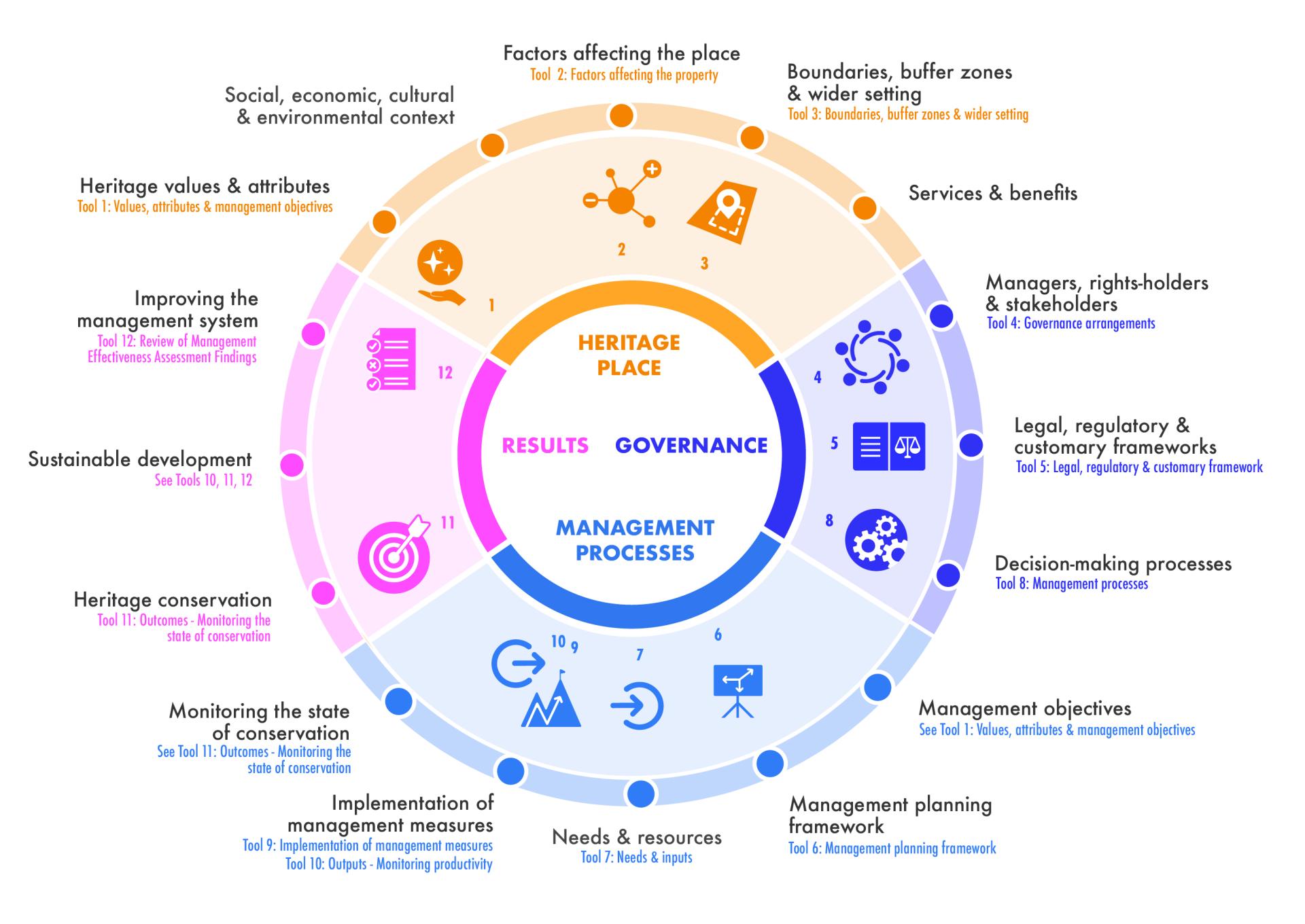
Figure 6.1 The twelve tools from the manual Enhancing our Toolkit 2.0 can be used separately orcollectively to evaluate the effectiveness of the management system. The tools can be used to analyse the most critical elements of the management system. The social, economic, cultural and environmental context together with services and benefits of the heritage place are overarching aspects that can be drawn out by using the tools collectively.