Image

If you need to know how to
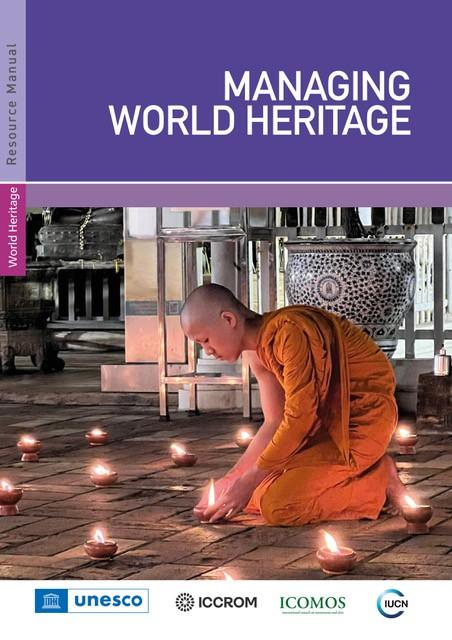
The two existing manuals providing guidance on management Managing Natural World Heritage (2012) and Managing Cultural World Heritage (2013), were produced over a decade ago and much has changed since then. Most notably, at an international level the heritage sector has made great efforts towards overcoming the artificial division of cultural and natural heritage that has all too often constrained good management of heritage places, and limited the recognition of diverse world-views in conservation practice. This new manual now combines aspects of both previous manuals, acknowledging that most heritage places are a product of both natural and cultural phenomena, and need integrated and people-centred approaches to their protection and management. However, certain sector-specific approaches, tools and techniques will still be needed to address the characteristics of each place.
In this new manual there is also a significant shift in attention to the context of heritage places. This is in recognition of the increasing challenges of managing heritage in isolation from the wider natural and built environment. There are many factors negatively impacting on heritage for which solutions can only be found through understanding the dynamics between the heritage places and the wider setting, and responding appropriately and responsibly.
Heritage management must also be informed by new international agreements and policies that call for more urgent action on issues such as protecting biodiversity as well as cultural diversity, promoting social equity, addressing climate change effects and refining approaches to sustainable development. New holistic approaches to management are needed to optimize the role of heritage for the achievement of global goals. There is also an important need and opportunity for a better understanding of the intangible cultural heritage of different communities, including how to support intercultural dialogue and encourage mutual respect for different views and ways of life. This manual is based on the premise that a
World Heritage property
A cultural, natural or mixed heritage place inscribed on the World Heritage List and therefore considered to be of OUV for humanity. The responsibility for nominating a property to the World Heritage List falls upon the State(s) Party(ies) where it is located. The World Heritage Committee decides whether a property should be inscribed on the World Heritage List, taking into account the technical recommendations of the Advisory Bodies following rigorous evaluation processes.
When used as a general term, World Heritage refers to all the natural, cultural and mixed properties inscribed on the World Heritage List.
may be part of a larger heritage place, which can be valued for many reasons.
Finally, this manual recognizes that heritage management requires input not only from heritage practitioners but also multiple other actors. While heritage management has in the past frequently placed an emphasis on the work of heritage professionals, there is now acknowledgement that it is essential to respect the rights, roles and knowledge of Indigenous Peoples and local and other associated communities in protecting heritage. Decisions on heritage are affected by larger-scale policies and planning decisions that go beyond the scope of the heritage sector. By understanding the many groups and individuals connected to the heritage place, effective and more equitable decision-making can be achieved. The content of this new manual integrates participatory approaches to heritage, in other words, how people with diverse roles can be part of its governance and management. For heritage places in and around urban areas and settlements, this manual can be used in conjunction with the UNESCO Urban Heritage Atlas.
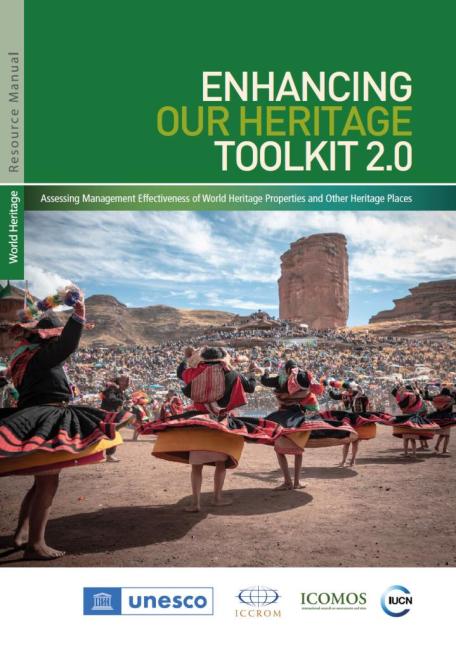
This manual is linked with the Enhancing Our Heritage Toolkit 2.0 (hereafter ʻEoH 2.0’ or ʻthe Toolkit’), which is a self-assessment methodology used to identify how well a
World Heritage property
A cultural, natural or mixed heritage place inscribed on the World Heritage List and therefore considered to be of OUV for humanity. The responsibility for nominating a property to the World Heritage List falls upon the State(s) Party(ies) where it is located. The World Heritage Committee decides whether a property should be inscribed on the World Heritage List, taking into account the technical recommendations of the Advisory Bodies following rigorous evaluation processes.
When used as a general term, World Heritage refers to all the natural, cultural and mixed properties inscribed on the World Heritage List.
or other heritage place is being managed. The Toolkit is a revision from the initial Enhancing Our Heritage Toolkit developed in 2008 by the
IUCN
The International Union for Conservation of Nature (IUCN) is an international membership association composed of both government and civil society organizations. It harnesses the experience, resources and reach of its member organizations and the input of its experts to promote nature conservation and accelerate the transition to sustainable development. The headquarters of the IUCN Secretariat are located in Gland, Switzerland.Created in 1948, IUCN has evolved into the world’s largest environmental network: IUCN experts are organized into six commissions dedicated to species survival, environmental law, protected areas, social and economic policy, ecosystem management and education and communication.
World Commission on Protected Areas together with UNESCO. EoH 2.0 continues to be structured in the same way as the original version, while offering a flexible methodology that can be applied to the specific needs of each heritage place, regardless of its category and designation. It also draws elements from and establishes links with other existing methodologies to facilitate their integration, such as the World Heritage
Periodic Reporting
A statutory requirement of the
World Heritage Convention
The Convention Concerning the Protection of the World Cultural and Natural Heritage is an international treaty adopted by the UN in 1972 that defines the kind of natural or cultural sites which can be considered for inscription on the World Heritage List for their Outstanding Universal Value for all humankind. Commonly known as the World Heritage Convention, it establishes how the international community as a whole is responsible for
the protection of such heritage and sets out the duties of States Parties in identifying potential sites that may be eligible for inscription onto the World Heritage List and their role in protecting and preserving them. By signing the Convention, each country pledges to conserve not only the sites situated on its territory that have been recognized as being of Outstanding Universal Value, but also to protect its national heritage and to be involved in international efforts to protect, conserve and promote the heritage of humankind.
that requests
States Parties
The countries that have ratified the
World Heritage Convention
The Convention Concerning the Protection of the World Cultural and Natural Heritage is an international treaty adopted by the UN in 1972 that defines the kind of natural or cultural sites which can be considered for inscription on the World Heritage List for their Outstanding Universal Value for all humankind. Commonly known as the World Heritage Convention, it establishes how the international community as a whole is responsible for
the protection of such heritage and sets out the duties of States Parties in identifying potential sites that may be eligible for inscription onto the World Heritage List and their role in protecting and preserving them. By signing the Convention, each country pledges to conserve not only the sites situated on its territory that have been recognized as being of Outstanding Universal Value, but also to protect its national heritage and to be involved in international efforts to protect, conserve and promote the heritage of humankind.
. By ratifying the Convention, States Parties commit themselves to undertake actions directed to:identifying, knowing, protecting and promoting the cultural and natural heritage located on their territories;adopting a general policy aiming to give their cultural and natural heritage a function in the life of the community;integrating the protection of that heritage into comprehensive planning programmes;setting up services for the protection, conservation and presentation of the cultural and natural heritage with an appropriate staff and possessing the means to carry out their functions;developing scientific and technical studies and research to counteract the dangers that threaten their cultural or natural heritage;taking the appropriate legal, scientific, technical, administrative and financial measures necessary for the identification, protection, conservation, presentation and rehabilitation of their heritage;
• fostering the establishment or development of national or regional centres for
training in the protection, conservation and presentation of their cultural and
natural heritage;encouraging scientific research in this field.As members of the international community and while respecting the sovereignty of each State, States Parties to the Convention also recognize their duty to collectively contribute to the protection of the properties inscribed on the World Heritage List. Therefore, upon request by other States Parties to the
World Heritage Convention
The Convention Concerning the Protection of the World Cultural and Natural Heritage is an international treaty adopted by the UN in 1972 that defines the kind of natural or cultural sites which can be considered for inscription on the World Heritage List for their Outstanding Universal Value for all humankind. Commonly known as the World Heritage Convention, it establishes how the international community as a whole is responsible for
the protection of such heritage and sets out the duties of States Parties in identifying potential sites that may be eligible for inscription onto the World Heritage List and their role in protecting and preserving them. By signing the Convention, each country pledges to conserve not only the sites situated on its territory that have been recognized as being of Outstanding Universal Value, but also to protect its national heritage and to be involved in international efforts to protect, conserve and promote the heritage of humankind.
, they may provide their help in the identification, protection, conservation and presentation of the cultural and natural heritage located on the territory of those countries. Each State Party to the
World Heritage Convention
The Convention Concerning the Protection of the World Cultural and Natural Heritage is an international treaty adopted by the UN in 1972 that defines the kind of natural or cultural sites which can be considered for inscription on the World Heritage List for their Outstanding Universal Value for all humankind. Commonly known as the World Heritage Convention, it establishes how the international community as a whole is responsible for
the protection of such heritage and sets out the duties of States Parties in identifying potential sites that may be eligible for inscription onto the World Heritage List and their role in protecting and preserving them. By signing the Convention, each country pledges to conserve not only the sites situated on its territory that have been recognized as being of Outstanding Universal Value, but also to protect its national heritage and to be involved in international efforts to protect, conserve and promote the heritage of humankind.
undertakes not to take any deliberate measures that might damage, directly or indirectly, the cultural and natural heritage situated on the territory of other States Parties to the Convention.States Parties identify and nominate sites on their national territory to be considered for inscription on the World Heritage List. Once inscribed, States Parties assume the primary responsibility for the protection of those properties and to do all they can to achieve this purpose. They are also requested to report periodically on the state of conservation of those properties as well as on the provisions they have adopted to implement the Convention.
to submit a report usually every six years on the legislative and administrative provisions they have adopted and other actions that they have taken for the application of the Convention, including the state of conservation of the World Heritage properties located on their territories.
questionnaire and the
IUCN
The International Union for Conservation of Nature (IUCN) is an international membership association composed of both government and civil society organizations. It harnesses the experience, resources and reach of its member organizations and the input of its experts to promote nature conservation and accelerate the transition to sustainable development. The headquarters of the IUCN Secretariat are located in Gland, Switzerland.Created in 1948, IUCN has evolved into the world’s largest environmental network: IUCN experts are organized into six commissions dedicated to species survival, environmental law, protected areas, social and economic policy, ecosystem management and education and communication.
Green List Standard. The Toolkit contains twelve tools that can be used separately or collectively to evaluate the effectiveness of the management system. The use of the Toolkit helps managers to put into practice many of the conceptual approaches included in this manual: where applicable, the relevant tools or worksheets of EoH 2.0 are suggested to facilitate an integrated use of these two resource manuals to inform future management measures and to make improvements to the management system.