
3.2

Social, cultural, economic and environmental context

KEY POINTS
  • Management The combination of processes, activities and actions taken in relation to decision-making, planning, allocating resources, implementing and monitoring to protect a heritage place for present and future generations. of heritage places must draw on knowledge of the particular social, cultural, economic and environmental context of each place, and recognize the positive and negative influences that it can have, in order to tackle the current challenges to heritage conservation.
  • Conservation is more successful in protected areas that are connected to their wider landscape and integrated into wider management networks, than at isolated sites.
  • Conservation of heritage places is dependent on the degree to which different people and associated communities collectively support and care for those places, so building relationships with communities and other sectors is important.
  • Economic resources are needed to ensure adequate protection, conservation and management of heritage places. Heritage All inherited assets that people value for reasons beyond mere utility. Heritage is a broad concept and includes shared legacies from the natural environment, the creations of humans and the creations and interactions of humans and nature. It encompasses built, terrestrial, freshwater and marine environments, landscapes and seascapes, biodiversity, geodiversity, collections, cultural practices, knowledge, living experiences, etc. managers also need to be aware of economic trends that influence the types of change and developments proposed in and around heritage places.
  • Heritage All inherited assets that people value for reasons beyond mere utility. Heritage is a broad concept and includes shared legacies from the natural environment, the creations of humans and the creations and interactions of humans and nature. It encompasses built, terrestrial, freshwater and marine environments, landscapes and seascapes, biodiversity, geodiversity, collections, cultural practices, knowledge, living experiences, etc. practitioners should always be proactive in building relationships with other sectors so that their concerns can be fully reflected in decision-making processes that may affect World Heritage All inherited assets that people value for reasons beyond mere utility. Heritage is a broad concept and includes shared legacies from the natural environment, the creations of humans and the creations and interactions of humans and nature. It encompasses built, terrestrial, freshwater and marine environments, landscapes and seascapes, biodiversity, geodiversity, collections, cultural practices, knowledge, living experiences, etc. .
3.2.1
Why is it necessary to consider the context of the heritage place?

Social, cultural, economic, and environmental challenges are interwoven. The World Heritage Convention The Convention Concerning the Protection of the World Cultural and Natural Heritage is an international treaty adopted by the UN in 1972 that defines the kind of natural or cultural sites which can be considered for inscription on the World Heritage List for their Outstanding Universal Value for all humankind. Commonly known as the World Heritage Convention, it establishes how the international community as a whole is responsible for
the protection of such heritage and sets out the duties of States Parties in identifying potential sites that may be eligible for inscription onto the World Heritage List and their role in protecting and preserving them. By signing the Convention, each country pledges to conserve not only the sites situated on its territory that have been recognized as being of Outstanding Universal Value, but also to protect its national heritage and to be involved in international efforts to protect, conserve and promote the heritage of humankind.
was based on the awareness that cultural and natural heritage were increasingly threatened with destruction not only by the traditional causes of decay, but also by changing social and economic conditions that aggravate the situation. Half a century later, human-induced climate change and biodiversity loss add to those pressures, with conflict, poverty, environmental degradation and globalization. Economic challenges, limited priority-setting for heritage and decision-making favouring exploitation of resources, in or around heritage places, significantly influence the ability of managers to protect heritage places. The displacement and dispossession of communities in the face of nonrecognition of their rights adds complexity to these issues. Current challenges to heritage conservation require, more than ever, an in-depth understanding of the contexts of heritage places, since they will all
be shaped by particular social, cultural, economic, and environmental dynamics. In order to identify, govern, conserve and manage heritage well, it is important to understand those dynamics and the positive and negative influences they can have, especially as the underlying causes of factors that can affect a heritage place.

Context will also deeply influence the ways in which the management system is structured and how it operates. When the context is understood in parallel with an assessment of the services and benefits flowing from the protection of the heritage place, it can provide additional insights that can strengthen management efforts. Although heritage managers most likely do not have the mandate or responsibility for issues within the context, when they work proactively with those in other sectors, they can gain greater results for heritage management and benefits for society (see 3.5).

The following sections indicate some of the contextual issues that affect many heritage places and their management and merit careful consideration. However, the approach needs to be tailored for each heritage place in order to understand the specific context in which it is located, which positive aspects can be taken advantage of and consolidated, which negative aspects require attention and where improvements might need to be made in order to strengthen the management system.
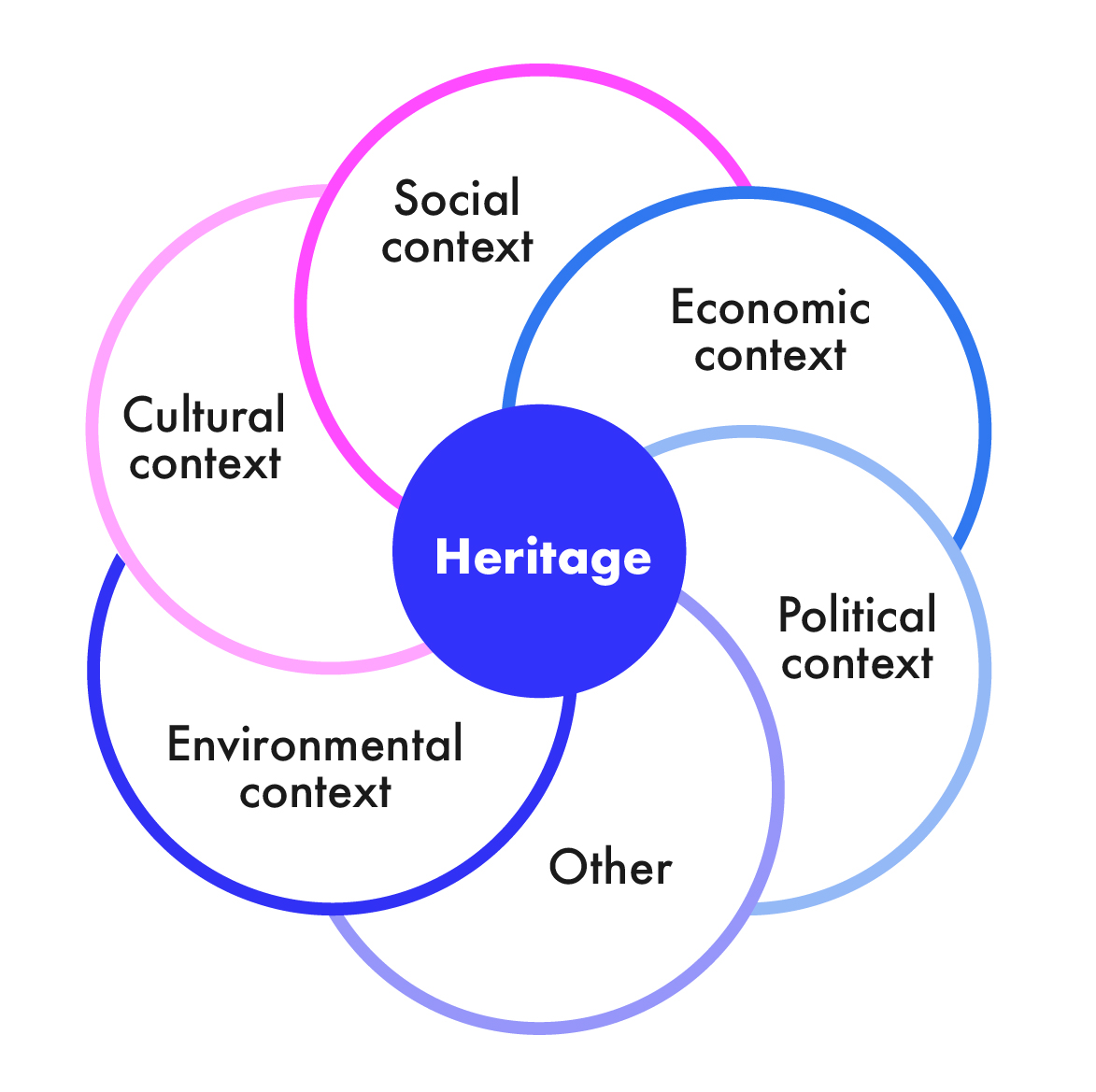
Figure 3.2 More than ever before, heritage conservation requires before a nuanced and dynamic understanding of the contexts of heritage places, which will all be shaped by particular social, economic, cultural and environmental dynamics.

3.2.2
How do environmental dynamics influence heritage conservation?

The approach to cultural and natural heritage conservation that depended on the protection of defined and bounded areas, monuments and sites has developed over time to include landscape approaches and the recognition of the importance of their territorial contexts. Cultural heritage conservation is evolving from the conventional concept of protecting isolated monuments to one of considering the cultural significance of a wide variety of places, even large landscapes. Importance L’importance globale d’un lieu de patrimoine, déterminée par la combinaison et les interactions entre ses différentes valeurs patrimoniales. L’importance comprend souvent plusieurs niveaux, parfois reconnus à différentes échelles : internationale, nationale, régionale et locale. C’est le cas des biens du patrimoine mondial, dont l’inscription sur la Liste du patrimoine mondial s’appuie principalement sur leur valeur universelle exceptionnelle. Cependant, ce bien aura invariablement un ensemble de valeurs avec différents niveaux d’importance qui font partie de sa signification globale. Ces autres valeurs doivent également être bien comprises – une bonne pratique de conservation nécessite la protection, la conservation et la gestion harmonieuses de toutes les valeurs. is being placed on integrating heritage conservation with urban and territorial planning systems, focusing on landscapes or larger territories and recognizing the dynamic relationship between people and heritage.

In the nature sector, changes in thinking about protected areas have emerged in part due to the growing importance of ensuring connectivity that can help to link habitats across whole landscapes, enabling species and their ecosystems to move or adapt as conditions change. Ecological connectivity is now more important than ever because of climate change: positioning protected areas in a practical sense within their larger ecosystems, interconnecting landscapes and seascapes. Protected areas are now more often viewed as part of a system and developed as networks. They may have diverse governance approaches and be integrated into the surrounding sustainably managed land, delivering a wide range of services and benefits.

Plastic now makes up 80 per cent of all marine debris that cause critical harm to marine species and to coastal areas, which suffer enormous amounts of marine litter washing up on their shores. Increased globalization has also caused the rapid spread of invasive species to new areas, combined with changing weather patterns and rising temperatures, both of which are bringing about changes that prompt different approaches to the material conservation of heritage.

Climate change Climate change refers to a change in the state of the climate that can be identified (e.g. by using statistical tests) by changes in the mean and/or the variability of its properties, and that persists for an extended period, typically decades or longer. Climate change may be due to natural internal processes or external forces, or to persistent anthropogenic changes in the composition of the atmosphere or in land use -related events are impacting both cultural and natural places at unprecedented levels, causing floods, droughts, heatwaves, melting glaciers, sea level rise and ocean acidification. The frequency, intensity and timing of these events are also changing. While climate change is a global problem requiring collective action, its impacts are localized and vary from one place to the other. Although World Heritage All inherited assets that people value for reasons beyond mere utility. Heritage is a broad concept and includes shared legacies from the natural environment, the creations of humans and the creations and interactions of humans and nature. It encompasses built, terrestrial, freshwater and marine environments, landscapes and seascapes, biodiversity, geodiversity, collections, cultural practices, knowledge, living experiences, etc. properties cannot be safeguarded from climate impact in isolation, they can make significant contributions to addressing this unprecedented global threat.

3.2.3
How do social dynamics influence heritage conservation?

Conservation of heritage places is dependent on the degree to which different people and associated communities collectively support and care for those places. In many heritage places, Indigenous Peoples and local communities are still their everyday stewards. However, social trends can undermine the attachments and associations these communities hold for their heritage places and lead to neglect or loss of maintenance practices. For example, the increasing professionalization of the heritage sector and the consolidated role of government institutions in protecting and managing heritage places – and particularly World Heritage All inherited assets that people value for reasons beyond mere utility. Heritage is a broad concept and includes shared legacies from the natural environment, the creations of humans and the creations and interactions of humans and nature. It encompasses built, terrestrial, freshwater and marine environments, landscapes and seascapes, biodiversity, geodiversity, collections, cultural practices, knowledge, living experiences, etc. properties, for which the state is ultimately responsible for – have sometimes undermined traditional practices and the roles that communities can play in the care of their own heritage.

Changing human demographics are among the most important social trends influencing heritage places but seldom receive the attention they deserve. As mobility increases worldwide, communities that were the holders of heritage values can change or move away, increasing the risk of diminishing the sense of place. Younger generations often move in search of better educational or economic opportunities. In some parts of the world, ageing populations raise concerns about the transmission of local and Indigenous knowledge, the continuation of cultural traditions, the progressive abandonment of agricultural landscapes and traditional human settlements, and the loss of know-how and craftmanship needed to conserve built heritage. In other heritage places, growing populations can lead to increased pressures on scarce resources, human–wildlife conflicts, land-use change or encroachment (through agriculture or urban development) and the demolition of heritage-listed buildings to make way for higher-density buildings.

Meanings attributed to and associations with heritage places, and knowledge about them, need to be maintained if they are to be passed on to future generations. However, customary rules, uses and practices critical to the values and management of heritage places can slowly erode as they are influenced by social changes and alternative livelihoods that are less dependent on local resources. Regrettably, heritage management may also be isolated from the broader political context. For example, the heritage sector often operates without strong connections to other public administration sectors and development domains, even though policy decisions relating to economic growth, agriculture, energy, land use, housing, sanitation, water supply or transportation can have deep and long-lasting effects. Heritage All inherited assets that people value for reasons beyond mere utility. Heritage is a broad concept and includes shared legacies from the natural environment, the creations of humans and the creations and interactions of humans and nature. It encompasses built, terrestrial, freshwater and marine environments, landscapes and seascapes, biodiversity, geodiversity, collections, cultural practices, knowledge, living experiences, etc. management systems need to adopt models of governance that promote collaboration with other sectors and strengthen the integration of legal and planning instruments at broader scales.

3.2.4
How to approach economic considerations in heritage management?

Economic resources are needed to ensure adequate protection, conservation and management of heritage places. As for the other contextual dynamics, economic trends can profoundly influence the types of change and developments proposed in and around heritage places.

Communities All forms of groups of people who possess a direct connection to the heritage place. They may range from Indigenous or traditional Peoples to groups of local peoples who live or work in the heritage place, or who hold associations with it. That connection may be tangible as well as intangible or spiritual and often has endured over time. have aspirations to improve their quality of life, particularly where there are people living in poverty. Pursuing short-term economic benefits can compromise sustainable development and long term benefits to wider groups of people as well as future generations. In all cases, income-generating activities are important for the heritage place and the local economy, but these need to be accompanied by an awareness of their compatibility with the management objectives defined for the heritage place (see 2.3). In some circumstances, diminishing public budgets can lead to expedient decisions that are detrimental to the conservation of the heritage place; for example, ambitious and inappropriate tourism strategies, destructive exploitation of natural resources or large-scale infrastructure projects. In some cases where extractive industries, large-scale dam and hydro developments, cable cars and transportation infrastructure projects such as highways and bridges were proposed in or near World Heritage properties, the World Heritage Committee The main decision-making body of the World Heritage Convention The Convention Concerning the Protection of the World Cultural and Natural Heritage is an international treaty adopted by the UN in 1972 that defines the kind of natural or cultural sites which can be considered for inscription on the World Heritage List for their Outstanding Universal Value for all humankind. Commonly known as the World Heritage Convention, it establishes how the international community as a whole is responsible for
the protection of such heritage and sets out the duties of States Parties in identifying potential sites that may be eligible for inscription onto the World Heritage List and their role in protecting and preserving them. By signing the Convention, each country pledges to conserve not only the sites situated on its territory that have been recognized as being of Outstanding Universal Value, but also to protect its national heritage and to be involved in international efforts to protect, conserve and promote the heritage of humankind.
, it consists of representatives from 21 of the States Parties to the Convention elected for terms up to six years, but voluntarily reduced to 4 years to ensure equitable representation.The Committee meets at least once a year. It is one of the key implementing actors of the World Heritage Convention The Convention Concerning the Protection of the World Cultural and Natural Heritage is an international treaty adopted by the UN in 1972 that defines the kind of natural or cultural sites which can be considered for inscription on the World Heritage List for their Outstanding Universal Value for all humankind. Commonly known as the World Heritage Convention, it establishes how the international community as a whole is responsible for
the protection of such heritage and sets out the duties of States Parties in identifying potential sites that may be eligible for inscription onto the World Heritage List and their role in protecting and preserving them. By signing the Convention, each country pledges to conserve not only the sites situated on its territory that have been recognized as being of Outstanding Universal Value, but also to protect its national heritage and to be involved in international efforts to protect, conserve and promote the heritage of humankind.
, allocates financial assistance from the World Heritage Fund A trust fund established according to article 15 of the World Heritage Convention in conformity with the provisions of the Financial Regulations of UNESCO to assist in the protection of properties forming part of the World Cultural and Natural Heritage of Outstanding Universal Value.The Fund for the Protection of the World Natural and Cultural Heritage of Outstanding Universal Value, commonly known as World Heritage Fund, consists of compulsory and voluntary contributions made by States Parties to the Convention, and any other resources authorized by the Fund’s regulations. These include resources received from UNESCO, UN organisations, public or private bodies or individuals, funds raised for the benefit of the Fund, any other source acceptable to the World Heritage Committee. The Fund may be used for purposes defined by the World Heritage Committee and may include studies, provision of expertise and skilled labour, training activities, low-interest or interest- free loans or, in exceptional cases and for special reasons of non- repayable subsidies for the protection, conservation, presentation and rehabilitation of the World Natural and Cultural Heritage. and has the final say on whether a site shall be inscribed on the World Heritage List. It examines reports on the state of conservation of inscribed sites and decides on the inscription or removal of properties on the List of World Heritage in Danger.The main functions of the Convention, in cooperation with States Parties, are to:decide, on the basis of Tentative Lists and nominations submitted by States Parties, which cultural and natural properties of Outstanding Universal Value are to be inscribed on the World Heritage List and therefore protected under the Convention;examine the state of conservation of properties inscribed on the World Heritage List through processes of Reactive Monitoring and Periodic Reporting;decide which properties inscribed on the World Heritage List are to be inscribed
on, or removed from the List of World Heritage in Danger;decide whether a property should be deleted from the World Heritage List;define the procedure by which requests for International Assistance are to be
considered and carry out studies and consultations as necessary before coming to a decision;determine how the resources of the World Heritage Fund A trust fund established according to article 15 of the World Heritage Convention in conformity with the provisions of the Financial Regulations of UNESCO to assist in the protection of properties forming part of the World Cultural and Natural Heritage of Outstanding Universal Value.The Fund for the Protection of the World Natural and Cultural Heritage of Outstanding Universal Value, commonly known as World Heritage Fund, consists of compulsory and voluntary contributions made by States Parties to the Convention, and any other resources authorized by the Fund’s regulations. These include resources received from UNESCO, UN organisations, public or private bodies or individuals, funds raised for the benefit of the Fund, any other source acceptable to the World Heritage Committee. The Fund may be used for purposes defined by the World Heritage Committee and may include studies, provision of expertise and skilled labour, training activities, low-interest or interest- free loans or, in exceptional cases and for special reasons of non- repayable subsidies for the protection, conservation, presentation and rehabilitation of the World Natural and Cultural Heritage. can be used most advantageously to assist States Parties in the protection of their properties of Outstanding Universal Value;seek ways to increase the World Heritage Fund A trust fund established according to article 15 of the World Heritage Convention in conformity with the provisions of the Financial Regulations of UNESCO to assist in the protection of properties forming part of the World Cultural and Natural Heritage of Outstanding Universal Value.The Fund for the Protection of the World Natural and Cultural Heritage of Outstanding Universal Value, commonly known as World Heritage Fund, consists of compulsory and voluntary contributions made by States Parties to the Convention, and any other resources authorized by the Fund’s regulations. These include resources received from UNESCO, UN organisations, public or private bodies or individuals, funds raised for the benefit of the Fund, any other source acceptable to the World Heritage Committee. The Fund may be used for purposes defined by the World Heritage Committee and may include studies, provision of expertise and skilled labour, training activities, low-interest or interest- free loans or, in exceptional cases and for special reasons of non- repayable subsidies for the protection, conservation, presentation and rehabilitation of the World Natural and Cultural Heritage. ;submit a report on its activities every two years to the General Assembly of States
Parties and to the UNESCO General Conference;review and evaluate periodically the implementation of the Convention;revise and adopt the Operational Guidelines.
has made clear decisions that such activities should not take place because of their negative impacts on the Outstanding Universal Value (OUV). There are also a growing number of instances where industries have themselves made pledges to totally avoid certain activities within World Heritage properties. In some cases, significant and inappropriate developments have resulted in the removal of properties from the World Heritage List.

Heritage professionals often do not have the mandate or necessary power to address these issues directly, but by being aware of them they can anticipate problems derived from certain economic trends and others that can potentially affect the heritage places if not monitored or left unaddressed. Solutions to such problems almost always depend on more collaboration with actors from other sectors and on better integration of management planning instruments at different scales. States Parties The countries that have ratified the World Heritage Convention The Convention Concerning the Protection of the World Cultural and Natural Heritage is an international treaty adopted by the UN in 1972 that defines the kind of natural or cultural sites which can be considered for inscription on the World Heritage List for their Outstanding Universal Value for all humankind. Commonly known as the World Heritage Convention, it establishes how the international community as a whole is responsible for
the protection of such heritage and sets out the duties of States Parties in identifying potential sites that may be eligible for inscription onto the World Heritage List and their role in protecting and preserving them. By signing the Convention, each country pledges to conserve not only the sites situated on its territory that have been recognized as being of Outstanding Universal Value, but also to protect its national heritage and to be involved in international efforts to protect, conserve and promote the heritage of humankind.
. By ratifying the Convention, States Parties commit themselves to undertake actions directed to:
identifying, knowing, protecting and promoting the cultural and natural heritage located on their territories;adopting a general policy aiming to give their cultural and natural heritage a function in the life of the community;integrating the protection of that heritage into comprehensive planning programmes;setting up services for the protection, conservation and presentation of the cultural and natural heritage with an appropriate staff and possessing the means to carry out their functions;developing scientific and technical studies and research to counteract the dangers that threaten their cultural or natural heritage;taking the appropriate legal, scientific, technical, administrative and financial measures necessary for the identification, protection, conservation, presentation and rehabilitation of their heritage;
• fostering the establishment or development of national or regional centres for
training in the protection, conservation and presentation of their cultural and
natural heritage;encouraging scientific research in this field.As members of the international community and while respecting the sovereignty of each State, States Parties to the Convention also recognize their duty to collectively contribute to the protection of the properties inscribed on the World Heritage List. Therefore, upon request by other States Parties to the World Heritage Convention The Convention Concerning the Protection of the World Cultural and Natural Heritage is an international treaty adopted by the UN in 1972 that defines the kind of natural or cultural sites which can be considered for inscription on the World Heritage List for their Outstanding Universal Value for all humankind. Commonly known as the World Heritage Convention, it establishes how the international community as a whole is responsible for
the protection of such heritage and sets out the duties of States Parties in identifying potential sites that may be eligible for inscription onto the World Heritage List and their role in protecting and preserving them. By signing the Convention, each country pledges to conserve not only the sites situated on its territory that have been recognized as being of Outstanding Universal Value, but also to protect its national heritage and to be involved in international efforts to protect, conserve and promote the heritage of humankind.
, they may provide their help in the identification, protection, conservation and presentation of the cultural and natural heritage located on the territory of those countries. Each State Party to the World Heritage Convention The Convention Concerning the Protection of the World Cultural and Natural Heritage is an international treaty adopted by the UN in 1972 that defines the kind of natural or cultural sites which can be considered for inscription on the World Heritage List for their Outstanding Universal Value for all humankind. Commonly known as the World Heritage Convention, it establishes how the international community as a whole is responsible for
the protection of such heritage and sets out the duties of States Parties in identifying potential sites that may be eligible for inscription onto the World Heritage List and their role in protecting and preserving them. By signing the Convention, each country pledges to conserve not only the sites situated on its territory that have been recognized as being of Outstanding Universal Value, but also to protect its national heritage and to be involved in international efforts to protect, conserve and promote the heritage of humankind.
undertakes not to take any deliberate measures that might damage, directly or indirectly, the cultural and natural heritage situated on the territory of other States Parties to the Convention.
States Parties identify and nominate sites on their national territory to be considered for inscription on the World Heritage List. Once inscribed, States Parties assume the primary responsibility for the protection of those properties and to do all they can to achieve this purpose. They are also requested to report periodically on the state of conservation of those properties as well as on the provisions they have adopted to implement the Convention.
to the World Heritage Convention The Convention Concerning the Protection of the World Cultural and Natural Heritage is an international treaty adopted by the UN in 1972 that defines the kind of natural or cultural sites which can be considered for inscription on the World Heritage List for their Outstanding Universal Value for all humankind. Commonly known as the World Heritage Convention, it establishes how the international community as a whole is responsible for
the protection of such heritage and sets out the duties of States Parties in identifying potential sites that may be eligible for inscription onto the World Heritage List and their role in protecting and preserving them. By signing the Convention, each country pledges to conserve not only the sites situated on its territory that have been recognized as being of Outstanding Universal Value, but also to protect its national heritage and to be involved in international efforts to protect, conserve and promote the heritage of humankind.
commit to ensuring that heritage plays a function in the life of communities, and, when this happens, public and private investment in its conservation is more likely to occur. If heritage conservation is integrated into sustainable development agendas, both aspects can be complementary rather than conflictual. Development can take many potential pathways; it is a matter of reflecting on which are appropriate, more sustainable and bring better outcomes to both heritage and people. For World Heritage properties, the Policy for the Integration of a Sustainable Development Perspective into the Processes of the World Heritage Convention (paragraph 4, p. 2) recognizes their inherent potential to contribute to all dimensions of sustainable development and works to harness the collective benefits for society; however, their OUV should not be compromised as a result.

Heritage conservation is often viewed as an obstacle to economic development, perhaps due to the perception that it hinders change. A thorough understanding of heritage values and attributes can help to identify the limits of acceptable change. In this way, rather than positioning change merely as either negative or positive, the question can be asked about what type, pace and degree of change is appropriate for that particular place in relation to its heritage values and for associated communities. 

Trying to understand the social, economic, cultural and environmental context of heritage places is not beyond the scope of heritage conservation: it is a necessity. Heritage practitioners are not responsible for the decisions made in other sectors but they should always be proactive and take part in decision-making processes that may affect World Heritage properties, so that their concerns can be fully reflected in those decisions and in order to prevent or mitigate the impacts such decisions may have.

REFLECTION QUESTIONS
  • What measures have been taken to identify how social, political and economic trends influence the management of the heritage place?
  • Is heritage conservation integrated into appropriate social, political, economic and environmental agendas that are set at national and regional levels?
  • Have the needs for ecological connectivity and other dynamics been considered in relation to the management of the heritage place and its territorial context?
  • Are the limits of acceptable change, which ensure the continued conservation of the heritage place while adapting to new needs, understood?
  • How can heritage managers contribute to decision-making processes that are made outside the heritage sector?
ADDITIONAL RESOURCES
  • UNESCO (2015). Policy for the Integration of a Sustainable Development Perspective into the Processes of the World Heritage Convention.
  • UNESCO (2011). UNESCO Recommendation on the Historic Urban Landscape.
  • UNESCO (2022). UNESCO Guidance for the World Heritage ‘No-Go’ Commitment: Global standards for corporate sustainability.
  • Crawhall, N. (2015) ‘Social and economic influences shaping protected areas’, in G. L. Worboys, M. Lockwood, A. Kothari, S. Feary and I. Pulsford (eds) Protected Area A clearly defined geographical space recognized, dedicated and managed, through legal and other effective means, to achieve the long-term conservation of nature with associated ecosystem services and cultural values. Governance The interactions among structures, processes and traditions that determine how power and responsibilities are exercised, how decisions are taken and how different actors have their say in relation to the identification, protection and management of the World Heritage property A cultural, natural or mixed heritage place inscribed on the World Heritage List and therefore considered to be of OUV for humanity. The responsibility for nominating a property to the World Heritage List falls upon the State(s) Party(ies) where it is located. The World Heritage Committee decides whether a property should be inscribed on the World Heritage List, taking into account the technical recommendations of the Advisory Bodies following rigorous evaluation processes.
    When used as a general term, World Heritage refers to all the natural, cultural and mixed properties inscribed on the World Heritage List.
    or the heritage place.
    and Management The combination of processes, activities and actions taken in relation to decision-making, planning, allocating resources, implementing and monitoring to protect a heritage place for present and future generations. , pp. 117–144, Canberra (Australia), ANU Press.
  • UNESCO Urban Heritage Atlas.