
KEY POINTS
  • The protection and management of heritage places require the collective work of a variety of actors, who can be individuals, institutions and/or other groups.
  • Actors Refers broadly to all the people, and the institutions and groups they represent, involved directly and indirectly with a World Heritage All inherited assets that people value for reasons beyond mere utility. Heritage is a broad concept and includes shared legacies from the natural environment, the creations of humans and the creations and interactions of humans and nature. It encompasses built, terrestrial, freshwater and marine environments, landscapes and seascapes, biodiversity, geodiversity, collections, cultural practices, knowledge, living experiences, etc. property or heritage place. Three broad categories of actors are defined in relation to the management of a World Heritage All inherited assets that people value for reasons beyond mere utility. Heritage is a broad concept and includes shared legacies from the natural environment, the creations of humans and the creations and interactions of humans and nature. It encompasses built, terrestrial, freshwater and marine environments, landscapes and seascapes, biodiversity, geodiversity, collections, cultural practices, knowledge, living experiences, etc. property or heritage place: managers, rights-holders and stakeholders.

    See also Communities All forms of groups of people who possess a direct connection to the heritage place. They may range from Indigenous or traditional Peoples to groups of local peoples who live or work in the heritage place, or who hold associations with it. That connection may be tangible as well as intangible or spiritual and often has endured over time. , Managers The institution(s) or other type(s) of entity(ies) and group(s), as well as the individuals working within them, with legal or customary authority or recognized responsibilities for managing the heritage as a whole or in part. Rights-holders Actors socially endowed with legal or customary rights with respect to heritage resources. In the case of Indigenous Peoples, they have the right to free, prior and informed consent before approval of designating a place affecting their lands or territories and other resources as heritage, and need to participate in its governance and management. with recognized responsibilities for managing the property or heritage place or heritage resources within the place may be considered as managers. , Rights-holders Actors socially endowed with legal or customary rights with respect to heritage resources. In the case of Indigenous Peoples, they have the right to free, prior and informed consent before approval of designating a place affecting their lands or territories and other resources as heritage, and need to participate in its governance and management. , Stakeholders In a World Heritage context, stakeholders are those who possess direct or indirect interests and concerns about heritage resources, but do not necessarily enjoy a legally or socially recognized entitlement to them. In impact assessment, stakeholders are individuals or groups that may be affected by a project or someone or an organization that represents such people. Collectively, the two are sometimes referred to as ‘interested and affected parties’. .
    for heritage can be grouped in three broad categories: those who hold responsibilities (managers), those with rights over heritage (rights-holders) and those with interests in a heritage place but without rights over it (stakeholders).
  • In some cases, the categories may overlap: rights-holders can also be managers if socially and legally empowered to be responsible and accountable for the conservation of the heritage place.
  • The roles and responsibilities of managers for the heritage place are established through legal and/or customary instruments and need to be analysed in order to understand if the management system of the heritage place is effective.
  • Collaboration and coordination between actors are the key to effective and equitable governance.
  • Indigenous and community-based heritage management is increasingly recognized as effective for the conservation of heritage places and can bring many advantages.
  • International human rights agreements must be respected for World Heritage All inherited assets that people value for reasons beyond mere utility. Heritage is a broad concept and includes shared legacies from the natural environment, the creations of humans and the creations and interactions of humans and nature. It encompasses built, terrestrial, freshwater and marine environments, landscapes and seascapes, biodiversity, geodiversity, collections, cultural practices, knowledge, living experiences, etc. conservation and management.
4.2.1
Actors in a heritage place: what are their roles and responsibilities in relation to management?

Protecting and managing heritage places involves a variety of actors, among which there may be public institutions at various levels, elected officials, Indigenous Peoples, local communities, women and youth, private owners, businesses, non-profit organizations, non-governmental organizations (NGOs), professional, religious or educational groups, and sometimes even intergovernmental international agencies. In the context of World Heritage All inherited assets that people value for reasons beyond mere utility. Heritage is a broad concept and includes shared legacies from the natural environment, the creations of humans and the creations and interactions of humans and nature. It encompasses built, terrestrial, freshwater and marine environments, landscapes and seascapes, biodiversity, geodiversity, collections, cultural practices, knowledge, living experiences, etc. , the term ‘actors’ may refer to individuals, institutions or groups that hold rights, responsibilities and interests in the property and/or are involved in the conservation and management of the property. Such actors may hold such rights, influence, authority or responsibilities over the property through laws, plans, norms, traditions and other similar instruments, which determine their roles and the powers at their disposal.

Actors Refers broadly to all the people, and the institutions and groups they represent, involved directly and indirectly with a World Heritage All inherited assets that people value for reasons beyond mere utility. Heritage is a broad concept and includes shared legacies from the natural environment, the creations of humans and the creations and interactions of humans and nature. It encompasses built, terrestrial, freshwater and marine environments, landscapes and seascapes, biodiversity, geodiversity, collections, cultural practices, knowledge, living experiences, etc. property or heritage place. Three broad categories of actors are defined in relation to the management of a World Heritage All inherited assets that people value for reasons beyond mere utility. Heritage is a broad concept and includes shared legacies from the natural environment, the creations of humans and the creations and interactions of humans and nature. It encompasses built, terrestrial, freshwater and marine environments, landscapes and seascapes, biodiversity, geodiversity, collections, cultural practices, knowledge, living experiences, etc. property or heritage place: managers, rights-holders and stakeholders.

See also Communities All forms of groups of people who possess a direct connection to the heritage place. They may range from Indigenous or traditional Peoples to groups of local peoples who live or work in the heritage place, or who hold associations with it. That connection may be tangible as well as intangible or spiritual and often has endured over time. , Managers The institution(s) or other type(s) of entity(ies) and group(s), as well as the individuals working within them, with legal or customary authority or recognized responsibilities for managing the heritage as a whole or in part. Rights-holders Actors socially endowed with legal or customary rights with respect to heritage resources. In the case of Indigenous Peoples, they have the right to free, prior and informed consent before approval of designating a place affecting their lands or territories and other resources as heritage, and need to participate in its governance and management. with recognized responsibilities for managing the property or heritage place or heritage resources within the place may be considered as managers. , Rights-holders Actors socially endowed with legal or customary rights with respect to heritage resources. In the case of Indigenous Peoples, they have the right to free, prior and informed consent before approval of designating a place affecting their lands or territories and other resources as heritage, and need to participate in its governance and management. , Stakeholders In a World Heritage context, stakeholders are those who possess direct or indirect interests and concerns about heritage resources, but do not necessarily enjoy a legally or socially recognized entitlement to them. In impact assessment, stakeholders are individuals or groups that may be affected by a project or someone or an organization that represents such people. Collectively, the two are sometimes referred to as ‘interested and affected parties’. .
can be grouped in three broad categories: managers, rights-holders and stakeholders. Often the term ‘stakeholder’ is used to refer to all these categories, but the term ‘actors’ allows a distinction to be made between those who hold responsibilities (managers), those endowed with rights over heritage resources (rights-holders) and those with interests in a heritage place but without rights over it (stakeholders).

Managers The institution(s) or other type(s) of entity(ies) and group(s), as well as the individuals working within them, with legal or customary authority or recognized responsibilities for managing the heritage as a whole or in part. Rights-holders Actors socially endowed with legal or customary rights with respect to heritage resources. In the case of Indigenous Peoples, they have the right to free, prior and informed consent before approval of designating a place affecting their lands or territories and other resources as heritage, and need to participate in its governance and management. with recognized responsibilities for managing the property or heritage place or heritage resources within the place may be considered as managers. are institutions and other types of entities, as well as the individuals working within them, that are recognized, responsible and accountable for protecting and managing the heritage place. Institutions responsible for managing the heritage place can be government-run, privately-owned and community-based. Indigenous Peoples, local and other community groups may also be managers by this definition, operating through customary and traditional frameworks, if they are recognized by the broader society as accountable for the management of the heritage place. Managers The institution(s) or other type(s) of entity(ies) and group(s), as well as the individuals working within them, with legal or customary authority or recognized responsibilities for managing the heritage as a whole or in part. Rights-holders Actors socially endowed with legal or customary rights with respect to heritage resources. In the case of Indigenous Peoples, they have the right to free, prior and informed consent before approval of designating a place affecting their lands or territories and other resources as heritage, and need to participate in its governance and management. with recognized responsibilities for managing the property or heritage place or heritage resources within the place may be considered as managers. can work at all levels including site, local, regional or national level, depending on the institutional framework and the country where the heritage place is located.
Managers The institution(s) or other type(s) of entity(ies) and group(s), as well as the individuals working within them, with legal or customary authority or recognized responsibilities for managing the heritage as a whole or in part. Rights-holders Actors socially endowed with legal or customary rights with respect to heritage resources. In the case of Indigenous Peoples, they have the right to free, prior and informed consent before approval of designating a place affecting their lands or territories and other resources as heritage, and need to participate in its governance and management. with recognized responsibilities for managing the property or heritage place or heritage resources within the place may be considered as managers. hold specific responsibilities towards the heritage place, which is established through legal and/or customary instruments that provide such authority and accountability. The powers vested in managers can vary considerably depending on the type of heritage place, the nature of the governance arrangements and the distribution and balance of legal and customary authority they exercise.

Rights-holders Actors socially endowed with legal or customary rights with respect to heritage resources. In the case of Indigenous Peoples, they have the right to free, prior and informed consent before approval of designating a place affecting their lands or territories and other resources as heritage, and need to participate in its governance and management. hold formal legal and/or customary rights over the heritage place or resources within it. Rights-holders Actors socially endowed with legal or customary rights with respect to heritage resources. In the case of Indigenous Peoples, they have the right to free, prior and informed consent before approval of designating a place affecting their lands or territories and other resources as heritage, and need to participate in its governance and management. can be Indigenous Peoples with a long-lasting relationship to the heritage place, private owners, people residing in or around the heritage place, a religious group or entity responsible for upholding a sacred place, and groups with rights to use resources within the property or buffer zone, among others.

Stakeholders In a World Heritage context, stakeholders are those who possess direct or indirect interests and concerns about heritage resources, but do not necessarily enjoy a legally or socially recognized entitlement to them. In impact assessment, stakeholders are individuals or groups that may be affected by a project or someone or an organization that represents such people. Collectively, the two are sometimes referred to as ‘interested and affected parties’. have direct or indirect interests, concerns and influence over the heritage place but do not enjoy a legally or socially recognized entitlement to the heritage resources. Stakeholders In a World Heritage context, stakeholders are those who possess direct or indirect interests and concerns about heritage resources, but do not necessarily enjoy a legally or socially recognized entitlement to them. In impact assessment, stakeholders are individuals or groups that may be affected by a project or someone or an organization that represents such people. Collectively, the two are sometimes referred to as ‘interested and affected parties’. in a heritage context can be, for example, interest groups, businesses or tourism operators.

4.2.2
Understanding who holds power

Managing a heritage place requires navigating between myriad interests and expectations of different actors with different powers to influence decision-making processes. Power can take many forms and operates both through formal and informal systems, through established institutions and rules, and personal relationships and cultural norms. In the context of heritage management, power is present in the interactions and relationships between actors and within groups and institutions. Understanding these power relationships is important when analysing governance arrangements and decision-making processes related to the management of the heritage place, but there may be hidden or implicit elements, which can be difficult to identify. For instance, in some situations, certain groups of rights-holders that have the advantage of economic resources may voice their interests more strongly than economically deprived ones. Or certain business companies whose interests align with political agendas may hold more lobbying powers than rights-holders or managers.

In order to consider these complex situations and identify power relationships it can be helpful to carry out an analysis. An example of how this might be done is given in Figure 4.1, where different actors have been positioned in a matrix according to their relative decision-making power about the management of the heritage place and interest in conserving the heritage place. This analysis can be used to prompt improvements in heritage management while respecting rights-holders’ legitimacy to benefit from using heritage resources.
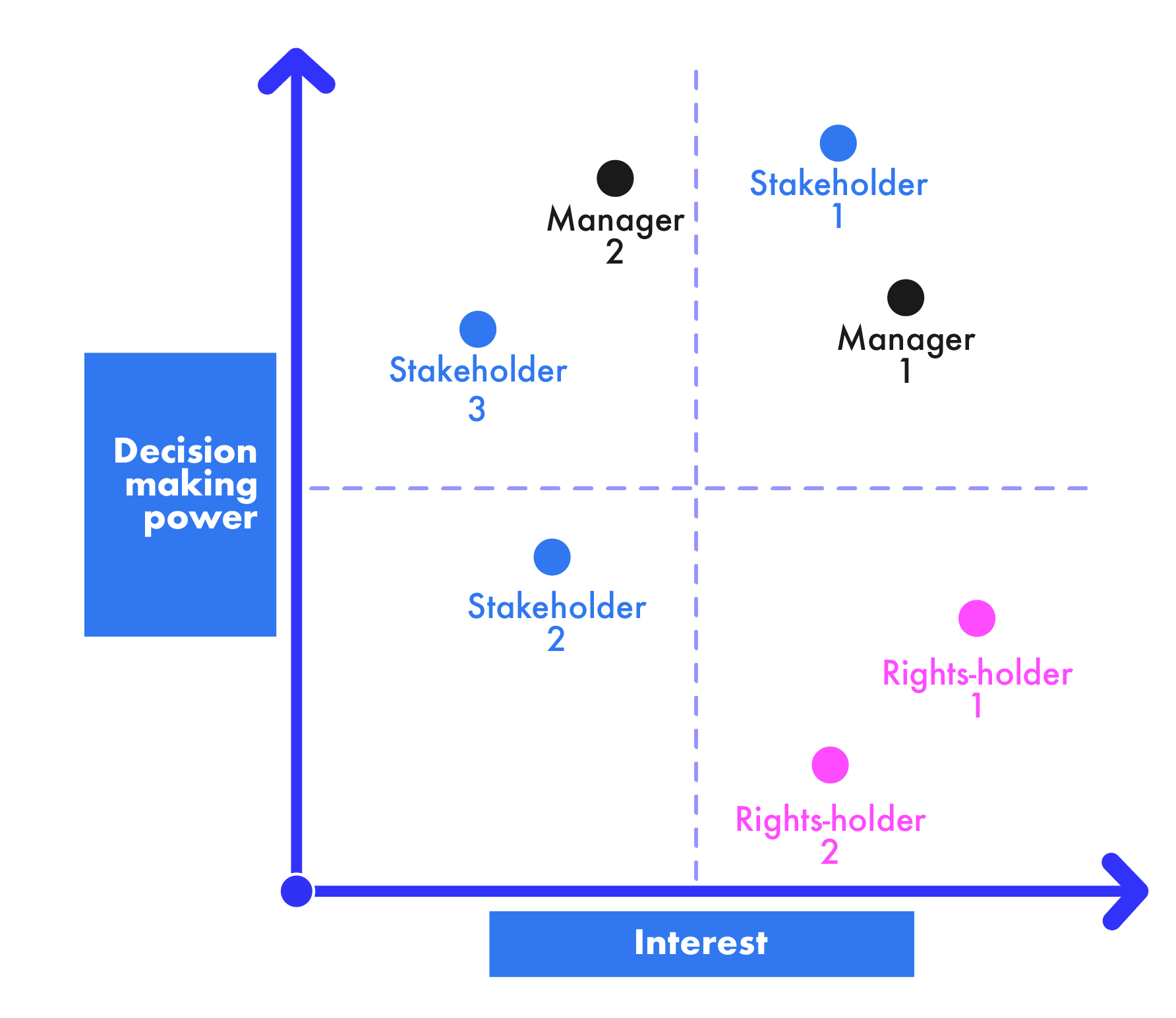
Figure 4.1 A hypothetical analysis of the actors of a heritage place in terms of their relative power and interest. Such analysis can be a helpful first step in understanding their influence on decision-making. Consideration of the current state of play can lead to reflection on which actors need to be supported in their roles and responsibilities towards the heritage place – and where caution might be needed

Some examples of how such analysis can be applied are given here, on the basis of the hypothetical analysis in Figure 4.1:

  • Rights-holders Actors socially endowed with legal or customary rights with respect to heritage resources. In the case of Indigenous Peoples, they have the right to free, prior and informed consent before approval of designating a place affecting their lands or territories and other resources as heritage, and need to participate in its governance and management. 1 and 2 have less decision-making power than Stakeholders In a World Heritage context, stakeholders are those who possess direct or indirect interests and concerns about heritage resources, but do not necessarily enjoy a legally or socially recognized entitlement to them. In impact assessment, stakeholders are individuals or groups that may be affected by a project or someone or an organization that represents such people. Collectively, the two are sometimes referred to as ‘interested and affected parties’. 2 and 3, despite having rights over heritage resources and having more interest in conserving the place; this calls into question whether governance arrangements should be adjusted to recognize their rights and involve them more in decision-making.
  • Manager 2 holds a lot of power but is not very interested in conserving the heritage place, maybe because their mandate is not heritage specific and they don’t fully understand the significance of the heritage place; efforts are needed to involve this manager more, and to explain why the place is important.
  • Stakeholder 1 has no rights or heritage responsibilities over the management of the place and little interest in conserving it but has a disproportionate amount of power; governance arrangements need to be revised to ensure that decision-making processes are transparent and inclusive in order to balance the interests of different actors and to avoid decisions that could have negative impacts on the heritage place and rights of associated communities.
4.2.3
Who holds responsibilities and is accountable for managing the heritage place?

Governance The interactions among structures, processes and traditions that determine how power and responsibilities are exercised, how decisions are taken and how different actors have their say in relation to the identification, protection and management of the World Heritage All inherited assets that people value for reasons beyond mere utility. Heritage is a broad concept and includes shared legacies from the natural environment, the creations of humans and the creations and interactions of humans and nature. It encompasses built, terrestrial, freshwater and marine environments, landscapes and seascapes, biodiversity, geodiversity, collections, cultural practices, knowledge, living experiences, etc. property or the heritage place. arrangements can vary considerably from one heritage place to another. Some heritage places are mainly managed by one or more government institution whereas others are under shared governance by different actors, including a mix of governmental, non-governmental and private actors. For World Heritage All inherited assets that people value for reasons beyond mere utility. Heritage is a broad concept and includes shared legacies from the natural environment, the creations of humans and the creations and interactions of humans and nature. It encompasses built, terrestrial, freshwater and marine environments, landscapes and seascapes, biodiversity, geodiversity, collections, cultural practices, knowledge, living experiences, etc. properties, there is always some governmental oversight – even when on a regular basis they are managed by private entities, religious associations or groups acting on behalf of Indigenous Peoples or associated communities – since the ultimate responsibility for protecting the property lies with the State Party. Some governance arrangements could apply to the entire heritage place or there could be a mixture of arrangements for different parts of the heritage place. In such cases, understanding who is truly responsible for managing the heritage place is critical.

Managers The institution(s) or other type(s) of entity(ies) and group(s), as well as the individuals working within them, with legal or customary authority or recognized responsibilities for managing the heritage as a whole or in part. Rights-holders Actors socially endowed with legal or customary rights with respect to heritage resources. In the case of Indigenous Peoples, they have the right to free, prior and informed consent before approval of designating a place affecting their lands or territories and other resources as heritage, and need to participate in its governance and management. with recognized responsibilities for managing the property or heritage place or heritage resources within the place may be considered as managers. ’ responsibilities towards the heritage place are established through legal and/or customary instruments. These instruments also grant them powers and the degree of influence they can exert when managing the heritage place. Such powers can include:

  • planning powers, which refer to the capacity to establish management objectives and develop management plans and other planning instruments;
  • enforcement powers, which refer to the capacity to enforce decisions, rules and regulations through a variety of means, including social pressure, means of surveillance and the imposition of fines and other sanctions. In cases where managers do not directly hold this power, it is necessary to establish partnerships with legal institutions that can exercise this power (e.g. police);
  • spending powers, which refer to the capacity to use the resources allocated to plan management actions and implement them as well as to enforce rules, develop and maintain infrastructure and undertake capacity-building and research;
  • revenue-generating powers, which refer to the receipt of fees, licensing and issuing of permits to access and use the heritage place;
  • coordination power, which refers to convening other relevant actors and developing agreements with them, as well as delegating them some of the above-mentioned powers. This power is connected to knowledge and know-how and refers to the possession of relevant information and skills that enable managers to define what type of knowledge is needed, how it can be acquired and used to support specific decisions, and the communication of information related to decision-making or the use of dissemination platforms.

Unlike other actors, managers are expected to be in charge of a heritage place in full capacity. Most importantly, they are considered accountable for the management of the heritage place. This fundamental distinction is critical to distinguish between managers and rights-holders.

4.2.4
Recognizing and empowering Indigenous Peoples and associated communities as managers of the heritage place

Many heritage places are managed by institutions or groups acting on behalf of Indigenous Peoples and/or local communities through customary, legal, formal or informal mechanisms and rules. Community-based management is increasingly recognized as effective for the conservation of heritage places, especially when it follows more holistic approaches to the interconnections between cultural and natural heritage compared with conventional government-led management systems, which tend to divide the two, based on an administrative or institutional perspective.
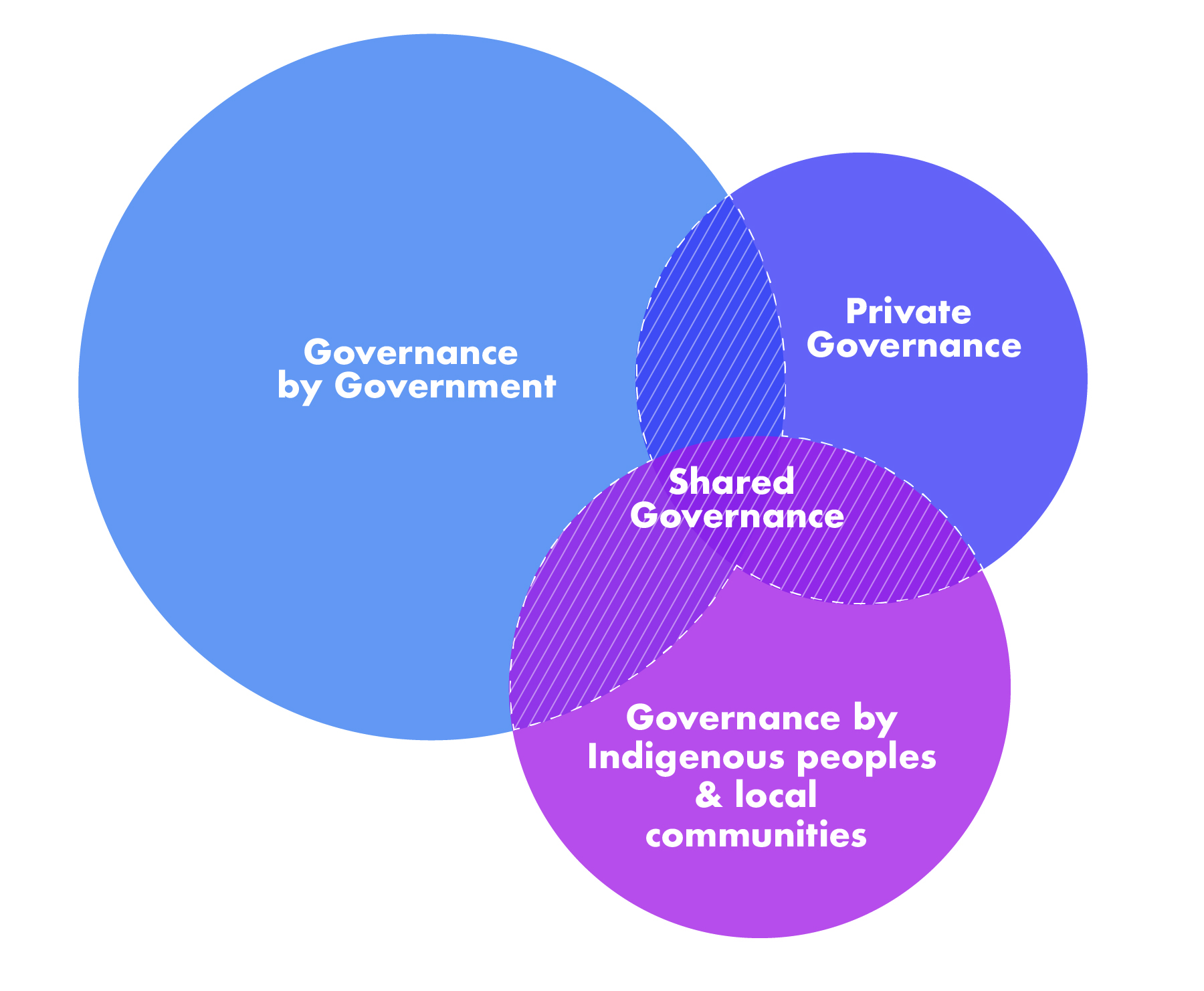
Figure 4.2 Different types of governance for heritage places. Source: adapted from Borrini et al. (2013) publication Governance The interactions among structures, processes and traditions that determine how power and responsibilities are exercised, how decisions are taken and how different actors have their say in relation to the identification, protection and management of the World Heritage All inherited assets that people value for reasons beyond mere utility. Heritage is a broad concept and includes shared legacies from the natural environment, the creations of humans and the creations and interactions of humans and nature. It encompasses built, terrestrial, freshwater and marine environments, landscapes and seascapes, biodiversity, geodiversity, collections, cultural practices, knowledge, living experiences, etc. property or the heritage place. of Protected Areas: From Understanding to Action A policy, plan, programme or project. .

There can be many advantages to Indigenous and community-based heritage management. Indigenous Peoples and other communities associated with heritage have capacities that can outlast political or professional governance structures and cycles. Many places now designated as heritage have been protected over long periods of time with resources, knowledge and skills provided by successive generations. The participation of these actors in management makes it possible to have multiple voices, views and forms of knowledge that allow good decisions to be made that have relevance for the entire heritage place. The diverse local, traditional and Indigenous knowledge systems, combined with science, can provide a powerful base to form locally appropriate, culturally diverse and sensitive management policy and actions.

Regrettably, in many heritage places certain rights-holders groups have been historically dispossessed from accessing and using ancestral lands, community areas or other heritage by government, private companies and other actors. Such actions have been subject to a mixture of approaches from soliciting voluntary limitations of their rights to enforcing actions with a degree of coercion. It is now fully recognized that Indigenous Peoples must give their free, prior and informed consent (FPIC) to designate a place as heritage and should never be forced or coerced by violent means to do so. Fortunately, customary rights relating to heritage protection, land tenure and use or resource exploitation are increasingly being recognized, nationally and internationally, although stronger and sustained efforts to protect these rights are continuously needed.

In order to empower Indigenous Peoples and associated communities to take the lead over the management of their heritage places, government institutions officially responsible for the heritage place need to transfer or share responsibility for decision-making in a variety of ways. Such processes need to be formally recognized and accompanied by adequate technical and financial inputs/resources, to ensure that the groups or institutions acting as representatives of the Indigenous and associated
communities have the capacities to assume their roles and responsibilities as managers. There are many different forms of shared governance and co-management. In some cases, partnerships have been established between Indigenous Peoples and governmental institutions, so that the institutional resources can support the community’s decisions regarding heritage conservation. In other cases, legal title to the land within the boundaries of the heritage place has been transferred to Indigenous Peoples, sometimes with lease-back arrangements put in place.

With respect to community relocations, for the purpose of establishing heritage places or for any other conservation purpose, international human rights agreements, and in particular the United Nations Declaration on the Rights of Indigenous Peoples (UNDRIP), must be respected for World Heritage All inherited assets that people value for reasons beyond mere utility. Heritage is a broad concept and includes shared legacies from the natural environment, the creations of humans and the creations and interactions of humans and nature. It encompasses built, terrestrial, freshwater and marine environments, landscapes and seascapes, biodiversity, geodiversity, collections, cultural practices, knowledge, living experiences, etc. conservation and management. In accordance with these agreements, Indigenous Peoples shall not be removed from their lands or territories without their free, prior and informed consent.

REFLECTION QUESTIONS
  • Is it clear who the managers are in your heritage place? If not, why not?
  • In cases where there are several managers, is it clear which managers hold the primary responsibility for managing the World Heritage property A cultural, natural or mixed heritage place inscribed on the World Heritage List and therefore considered to be of OUV for humanity. The responsibility for nominating a property to the World Heritage List falls upon the State(s) Party(ies) where it is located. The World Heritage Committee decides whether a property should be inscribed on the World Heritage List, taking into account the technical recommendations of the Advisory Bodies following rigorous evaluation processes.
    When used as a general term, World Heritage refers to all the natural, cultural and mixed properties inscribed on the World Heritage List.
    ? Are those primary managers also responsible for the management of the buffer zone? If not, what challenges derive from a separation in management responsibility between the property and buffer zone?
  • Is it clear what instruments and powers grant each manager the authority, role and responsibilities over the property and/or the buffer zone? How do those instruments and powers make them accountable to the other actors?
  • Are there any conflicts or overlaps between the responsibilities of different managers?
  • Have all rights-holders groups been identified? Are the rights of each group well understood?
  • Are the rights of different groups respected by all managers? Are customary rights that support the conservation of the heritage place respected to the same extent as legal rights?
  • Is the practice of some customary rights in conflict with the management objectives for the property?
  • Are all rights-holders’ groups engaged in the management of the property? Do some feel excluded?
ADDITIONAL RESOURCES
  • UNESCO, ICCROM The International Centre for the Study of the Preservation and Restoration of Cultural Property (ICCROM) is an intergovernmental organization created to promote the conservation of all forms of cultural heritage worldwide. Its headquarters are located in Rome, Italy.Its mission is to provide Member States with the best tools, knowledge, skills and enabling environment to preserve their cultural heritage in all of its forms, for the benefit of all people. It achieves this by working with institutions and professionals on the ground, nationally and internationally along three lines of action:studying and promoting cultural heritage conservation;mobilizing and coordinating expertise to address critical issues of conservation;providing the training and research tools for implementation to strengthen the
    professional community.
    , ICOMOS The International Council on Monuments and Sites (ICOMOS) is an international nongovernmental organization bringing together cultural heritage professionals from across the world. Its headquarters are located in Charenton le Pont, near Paris, France.ICOMOS was founded in 1965 after the adoption of the Venice Charter, in order to promote the doctrine and the techniques of conservation. It advises the World Heritage Committee The main decision-making body of the World Heritage Convention The Convention Concerning the Protection of the World Cultural and Natural Heritage is an international treaty adopted by the UN in 1972 that defines the kind of natural or cultural sites which can be considered for inscription on the World Heritage List for their Outstanding Universal Value for all humankind. Commonly known as the World Heritage Convention, it establishes how the international community as a whole is responsible for
    the protection of such heritage and sets out the duties of States Parties in identifying potential sites that may be eligible for inscription onto the World Heritage List and their role in protecting and preserving them. By signing the Convention, each country pledges to conserve not only the sites situated on its territory that have been recognized as being of Outstanding Universal Value, but also to protect its national heritage and to be involved in international efforts to protect, conserve and promote the heritage of humankind.
    , it consists of representatives from 21 of the States Parties to the Convention elected for terms up to six years, but voluntarily reduced to 4 years to ensure equitable representation.The Committee meets at least once a year. It is one of the key implementing actors of the World Heritage Convention The Convention Concerning the Protection of the World Cultural and Natural Heritage is an international treaty adopted by the UN in 1972 that defines the kind of natural or cultural sites which can be considered for inscription on the World Heritage List for their Outstanding Universal Value for all humankind. Commonly known as the World Heritage Convention, it establishes how the international community as a whole is responsible for
    the protection of such heritage and sets out the duties of States Parties in identifying potential sites that may be eligible for inscription onto the World Heritage List and their role in protecting and preserving them. By signing the Convention, each country pledges to conserve not only the sites situated on its territory that have been recognized as being of Outstanding Universal Value, but also to protect its national heritage and to be involved in international efforts to protect, conserve and promote the heritage of humankind.
    , allocates financial assistance from the World Heritage Fund A trust fund established according to article 15 of the World Heritage Convention in conformity with the provisions of the Financial Regulations of UNESCO to assist in the protection of properties forming part of the World Cultural and Natural Heritage of Outstanding Universal Value.The Fund for the Protection of the World Natural and Cultural Heritage of Outstanding Universal Value, commonly known as World Heritage Fund, consists of compulsory and voluntary contributions made by States Parties to the Convention, and any other resources authorized by the Fund’s regulations. These include resources received from UNESCO, UN organisations, public or private bodies or individuals, funds raised for the benefit of the Fund, any other source acceptable to the World Heritage Committee. The Fund may be used for purposes defined by the World Heritage Committee and may include studies, provision of expertise and skilled labour, training activities, low-interest or interest- free loans or, in exceptional cases and for special reasons of non- repayable subsidies for the protection, conservation, presentation and rehabilitation of the World Natural and Cultural Heritage. and has the final say on whether a site shall be inscribed on the World Heritage List. It examines reports on the state of conservation of inscribed sites and decides on the inscription or removal of properties on the List of World Heritage in Danger.The main functions of the Convention, in cooperation with States Parties, are to:decide, on the basis of Tentative Lists and nominations submitted by States Parties, which cultural and natural properties of Outstanding Universal Value are to be inscribed on the World Heritage List and therefore protected under the Convention;examine the state of conservation of properties inscribed on the World Heritage List through processes of Reactive Monitoring and Periodic Reporting;decide which properties inscribed on the World Heritage List are to be inscribed
    on, or removed from the List of World Heritage in Danger;decide whether a property should be deleted from the World Heritage List;define the procedure by which requests for International Assistance are to be
    considered and carry out studies and consultations as necessary before coming to a decision;determine how the resources of the World Heritage Fund A trust fund established according to article 15 of the World Heritage Convention in conformity with the provisions of the Financial Regulations of UNESCO to assist in the protection of properties forming part of the World Cultural and Natural Heritage of Outstanding Universal Value.The Fund for the Protection of the World Natural and Cultural Heritage of Outstanding Universal Value, commonly known as World Heritage Fund, consists of compulsory and voluntary contributions made by States Parties to the Convention, and any other resources authorized by the Fund’s regulations. These include resources received from UNESCO, UN organisations, public or private bodies or individuals, funds raised for the benefit of the Fund, any other source acceptable to the World Heritage Committee. The Fund may be used for purposes defined by the World Heritage Committee and may include studies, provision of expertise and skilled labour, training activities, low-interest or interest- free loans or, in exceptional cases and for special reasons of non- repayable subsidies for the protection, conservation, presentation and rehabilitation of the World Natural and Cultural Heritage. can be used most advantageously to assist States Parties in the protection of their properties of Outstanding Universal Value;seek ways to increase the World Heritage Fund A trust fund established according to article 15 of the World Heritage Convention in conformity with the provisions of the Financial Regulations of UNESCO to assist in the protection of properties forming part of the World Cultural and Natural Heritage of Outstanding Universal Value.The Fund for the Protection of the World Natural and Cultural Heritage of Outstanding Universal Value, commonly known as World Heritage Fund, consists of compulsory and voluntary contributions made by States Parties to the Convention, and any other resources authorized by the Fund’s regulations. These include resources received from UNESCO, UN organisations, public or private bodies or individuals, funds raised for the benefit of the Fund, any other source acceptable to the World Heritage Committee. The Fund may be used for purposes defined by the World Heritage Committee and may include studies, provision of expertise and skilled labour, training activities, low-interest or interest- free loans or, in exceptional cases and for special reasons of non- repayable subsidies for the protection, conservation, presentation and rehabilitation of the World Natural and Cultural Heritage. ;submit a report on its activities every two years to the General Assembly of States
    Parties and to the UNESCO General Conference;review and evaluate periodically the implementation of the Convention;revise and adopt the Operational Guidelines.
    by carrying out technical evaluations of properties with cultural values proposed for inscription on the World Heritage List, as well as with comparative studies, technical assistance and reporting on the state of conservation of inscribed properties. In order to tackle the numerous facets of immovable cultural heritage and to develop the necessary scientific knowledge and methodological approaches for its protection, conservation and interpretation, ICOMOS has established scientific international committees on various cultural heritage themes and issues. The international scientific committees are ICOMOS technical bodies. As such, they undertake research, develop conservation theory, guidelines and charters, foster training for better heritage conservation, promote international exchange of scientific information and carry out common projects.
    , IUCN The International Union for Conservation of Nature (IUCN) is an international membership association composed of both government and civil society organizations. It harnesses the experience, resources and reach of its member organizations and the input of its experts to promote nature conservation and accelerate the transition to sustainable development. The headquarters of the IUCN Secretariat are located in Gland, Switzerland.Created in 1948, IUCN has evolved into the world’s largest environmental network: IUCN experts are organized into six commissions dedicated to species survival, environmental law, protected areas, social and economic policy, ecosystem management and education and communication. (2023). Tool 4 Governance The interactions among structures, processes and traditions that determine how power and responsibilities are exercised, how decisions are taken and how different actors have their say in relation to the identification, protection and management of the World Heritage All inherited assets that people value for reasons beyond mere utility. Heritage is a broad concept and includes shared legacies from the natural environment, the creations of humans and the creations and interactions of humans and nature. It encompasses built, terrestrial, freshwater and marine environments, landscapes and seascapes, biodiversity, geodiversity, collections, cultural practices, knowledge, living experiences, etc. property or the heritage place. Arrangements in Enhancing Our Heritage Toolkit 2.0, pp. 46-56, Paris, UNESCO.
  • Borrini-Feyerabend, G. Dudley, N. Jaeger, T. Lassen, B. Pathak Broome, B. Phillips, A. and Sandwith, T. (2013). Governance of Protected Areas: From understanding to action, Gland (Switzerland), IUCN The International Union for Conservation of Nature (IUCN) is an international membership association composed of both government and civil society organizations. It harnesses the experience, resources and reach of its member organizations and the input of its experts to promote nature conservation and accelerate the transition to sustainable development. The headquarters of the IUCN Secretariat are located in Gland, Switzerland.Created in 1948, IUCN has evolved into the world’s largest environmental network: IUCN experts are organized into six commissions dedicated to species survival, environmental law, protected areas, social and economic policy, ecosystem management and education and communication.
  • UNESCO, ICCROM The International Centre for the Study of the Preservation and Restoration of Cultural Property (ICCROM) is an intergovernmental organization created to promote the conservation of all forms of cultural heritage worldwide. Its headquarters are located in Rome, Italy.Its mission is to provide Member States with the best tools, knowledge, skills and enabling environment to preserve their cultural heritage in all of its forms, for the benefit of all people. It achieves this by working with institutions and professionals on the ground, nationally and internationally along three lines of action:studying and promoting cultural heritage conservation;mobilizing and coordinating expertise to address critical issues of conservation;providing the training and research tools for implementation to strengthen the
    professional community.
    , ICOMOS The International Council on Monuments and Sites (ICOMOS) is an international nongovernmental organization bringing together cultural heritage professionals from across the world. Its headquarters are located in Charenton le Pont, near Paris, France.ICOMOS was founded in 1965 after the adoption of the Venice Charter, in order to promote the doctrine and the techniques of conservation. It advises the World Heritage Committee The main decision-making body of the World Heritage Convention The Convention Concerning the Protection of the World Cultural and Natural Heritage is an international treaty adopted by the UN in 1972 that defines the kind of natural or cultural sites which can be considered for inscription on the World Heritage List for their Outstanding Universal Value for all humankind. Commonly known as the World Heritage Convention, it establishes how the international community as a whole is responsible for
    the protection of such heritage and sets out the duties of States Parties in identifying potential sites that may be eligible for inscription onto the World Heritage List and their role in protecting and preserving them. By signing the Convention, each country pledges to conserve not only the sites situated on its territory that have been recognized as being of Outstanding Universal Value, but also to protect its national heritage and to be involved in international efforts to protect, conserve and promote the heritage of humankind.
    , it consists of representatives from 21 of the States Parties to the Convention elected for terms up to six years, but voluntarily reduced to 4 years to ensure equitable representation.The Committee meets at least once a year. It is one of the key implementing actors of the World Heritage Convention The Convention Concerning the Protection of the World Cultural and Natural Heritage is an international treaty adopted by the UN in 1972 that defines the kind of natural or cultural sites which can be considered for inscription on the World Heritage List for their Outstanding Universal Value for all humankind. Commonly known as the World Heritage Convention, it establishes how the international community as a whole is responsible for
    the protection of such heritage and sets out the duties of States Parties in identifying potential sites that may be eligible for inscription onto the World Heritage List and their role in protecting and preserving them. By signing the Convention, each country pledges to conserve not only the sites situated on its territory that have been recognized as being of Outstanding Universal Value, but also to protect its national heritage and to be involved in international efforts to protect, conserve and promote the heritage of humankind.
    , allocates financial assistance from the World Heritage Fund A trust fund established according to article 15 of the World Heritage Convention in conformity with the provisions of the Financial Regulations of UNESCO to assist in the protection of properties forming part of the World Cultural and Natural Heritage of Outstanding Universal Value.The Fund for the Protection of the World Natural and Cultural Heritage of Outstanding Universal Value, commonly known as World Heritage Fund, consists of compulsory and voluntary contributions made by States Parties to the Convention, and any other resources authorized by the Fund’s regulations. These include resources received from UNESCO, UN organisations, public or private bodies or individuals, funds raised for the benefit of the Fund, any other source acceptable to the World Heritage Committee. The Fund may be used for purposes defined by the World Heritage Committee and may include studies, provision of expertise and skilled labour, training activities, low-interest or interest- free loans or, in exceptional cases and for special reasons of non- repayable subsidies for the protection, conservation, presentation and rehabilitation of the World Natural and Cultural Heritage. and has the final say on whether a site shall be inscribed on the World Heritage List. It examines reports on the state of conservation of inscribed sites and decides on the inscription or removal of properties on the List of World Heritage in Danger.The main functions of the Convention, in cooperation with States Parties, are to:decide, on the basis of Tentative Lists and nominations submitted by States Parties, which cultural and natural properties of Outstanding Universal Value are to be inscribed on the World Heritage List and therefore protected under the Convention;examine the state of conservation of properties inscribed on the World Heritage List through processes of Reactive Monitoring and Periodic Reporting;decide which properties inscribed on the World Heritage List are to be inscribed
    on, or removed from the List of World Heritage in Danger;decide whether a property should be deleted from the World Heritage List;define the procedure by which requests for International Assistance are to be
    considered and carry out studies and consultations as necessary before coming to a decision;determine how the resources of the World Heritage Fund A trust fund established according to article 15 of the World Heritage Convention in conformity with the provisions of the Financial Regulations of UNESCO to assist in the protection of properties forming part of the World Cultural and Natural Heritage of Outstanding Universal Value.The Fund for the Protection of the World Natural and Cultural Heritage of Outstanding Universal Value, commonly known as World Heritage Fund, consists of compulsory and voluntary contributions made by States Parties to the Convention, and any other resources authorized by the Fund’s regulations. These include resources received from UNESCO, UN organisations, public or private bodies or individuals, funds raised for the benefit of the Fund, any other source acceptable to the World Heritage Committee. The Fund may be used for purposes defined by the World Heritage Committee and may include studies, provision of expertise and skilled labour, training activities, low-interest or interest- free loans or, in exceptional cases and for special reasons of non- repayable subsidies for the protection, conservation, presentation and rehabilitation of the World Natural and Cultural Heritage. can be used most advantageously to assist States Parties in the protection of their properties of Outstanding Universal Value;seek ways to increase the World Heritage Fund A trust fund established according to article 15 of the World Heritage Convention in conformity with the provisions of the Financial Regulations of UNESCO to assist in the protection of properties forming part of the World Cultural and Natural Heritage of Outstanding Universal Value.The Fund for the Protection of the World Natural and Cultural Heritage of Outstanding Universal Value, commonly known as World Heritage Fund, consists of compulsory and voluntary contributions made by States Parties to the Convention, and any other resources authorized by the Fund’s regulations. These include resources received from UNESCO, UN organisations, public or private bodies or individuals, funds raised for the benefit of the Fund, any other source acceptable to the World Heritage Committee. The Fund may be used for purposes defined by the World Heritage Committee and may include studies, provision of expertise and skilled labour, training activities, low-interest or interest- free loans or, in exceptional cases and for special reasons of non- repayable subsidies for the protection, conservation, presentation and rehabilitation of the World Natural and Cultural Heritage. ;submit a report on its activities every two years to the General Assembly of States
    Parties and to the UNESCO General Conference;review and evaluate periodically the implementation of the Convention;revise and adopt the Operational Guidelines.
    by carrying out technical evaluations of properties with cultural values proposed for inscription on the World Heritage List, as well as with comparative studies, technical assistance and reporting on the state of conservation of inscribed properties. In order to tackle the numerous facets of immovable cultural heritage and to develop the necessary scientific knowledge and methodological approaches for its protection, conservation and interpretation, ICOMOS has established scientific international committees on various cultural heritage themes and issues. The international scientific committees are ICOMOS technical bodies. As such, they undertake research, develop conservation theory, guidelines and charters, foster training for better heritage conservation, promote international exchange of scientific information and carry out common projects.
    , IUCN The International Union for Conservation of Nature (IUCN) is an international membership association composed of both government and civil society organizations. It harnesses the experience, resources and reach of its member organizations and the input of its experts to promote nature conservation and accelerate the transition to sustainable development. The headquarters of the IUCN Secretariat are located in Gland, Switzerland.Created in 1948, IUCN has evolved into the world’s largest environmental network: IUCN experts are organized into six commissions dedicated to species survival, environmental law, protected areas, social and economic policy, ecosystem management and education and communication. (2012). Managing Cultural World Heritage, UNESCO Paris, UNESCO.